Our School offers a variety of research labs that give students meaningful opportunities to engage deeply in scholarly work, collaborate with faculty, and build practical research skills. Whether you’re exploring ideas for future projects or preparing for thesis and dissertation work, participating in a lab provides hands-on experience, mentorship, and a supportive community of peers. These spaces allow students to develop their methodological expertise, contribute to ongoing research, and grow as emerging scholars across diverse areas of study.

Resistance Exercise Physiology Laboratory
Director: Christopher Ballmann, PhD
E-mail: cgb0002@uab.edu
This state-of-the-art research lab is equipped with custom power racks, calibrated competition plates, a lifting platform, and multi-use training equipment. The lab is roughly 750 square feet. It is designed to accommodate everything from athletes completing Olympic power lifts to training clinical populations with exercise intolerance.
From a performance perspective, the primary metrics that we monitor are movement velocity, muscle force production, isometric strength, dynamic muscular strength/endurance, explosive ability, vertical jump, power development, plyometric performance, and reaction time. From the clinical side, we assess functional movement ability, limb strength asymmetry, balance, and exercise tolerance. We collect blood and urine for hormone and protein analysis following resistance exercise and training.
The lab also serves as a classroom to support hands-on experience with resistance exercise and strength assessment for students in the kinesiology program. The lab emphasizes the inclusion of underrepresented populations in resistance exercise research including females and athletes with disabilities.

C-QuIL
Director: Mary Ann Bodine Al-Sharif, PhD
E-mail: drbas@uab.edu
C-QuIL is a space that fosters high-quality research capacity building for students at an inter/national level through in-person and online collaborative efforts. Through C-QuIL, the School of Education and Human Sciences can strive to advance critical qualitative and quantitative inquiry toward innovation, equity, and justice in the context of educational practice and policy.
Goals:
- To support capacity building for inter/national research within the SEHS
- To aid in advancing innovative, critical, qualitative, and quantitative methodologies
- To provide a space for critical discourse related to developing one’s research agenda
- To support graduate students in thesis and dissertation work
- To foster and support graduate students with interdisciplinary research work
- To provide 1-on-1 and small-group research support
- To further critical inquiry

Exercise and Nutritional Physiology Laboratory
Director: Gordon Fisher, PhD
strong>E-mail: grdnfs@uab.edu
This 900-square-foot facility, located in the Education and Engineering Complex, is equipped to study metabolic and cardiovascular regulation in blood, skeletal muscle, adipose, and liver tissue. Dr. Fisher's research focuses on the role of reactive oxygen species, mitochondrial dysfunction, and markers of inflammation in the pathogenesis of chronic metabolic diseases associated with obesity.
Our students have access to Oroboros Oxygraph-2k with DatLab software, a FluoroMate FS-2 Fluorescence Spectrometer, a BioRad Chemidoc XP digital imaging system, a SpectraMax M3 Microplate reader, a Corning Digital Microplate Shaker, a dissecting microscope (Stemi 2000), a Nanodrop Lite Spectrophotometer, a thermocycler (BioRad I-cycler), a 96-well quantitative real-time PRC unit (BioRad), BioRad power supplies, BioRad wet transfer cells, BioRad gel boxes, two PowerGen tissue homogenizers, cell and tissue culture, digital darkroom imaging, analytical balance scale, shakers/rotators, a minus 80°C and a minus 20°C freezer, two 4°C refrigerators, a Variable Flow Peristaltic Pump, and all other equipment necessary for immunoblotting and mRNA expression studies.

Human Performance Laboratory
Director: Gordon Fisher, PhD
strong>E-mail: grdnfs@uab.edu
The new 1,100-square-foot lab features more than 800 pounds of free weights and high-tech equipment including arm crank and cycle ergometers, computerized treadmills, skinfold calipers, and bioelectrical impedance scales for measuring body composition.
The lab also has a metabolic cart to measure energy expenditure during rest and exercise, portable handheld spirometry for pulmonary assessments, electrocardiography to analyze heart rhythms, pulse wave analysis for measures of vascular health, 24-hr ambulatory blood pressure monitoring systems, and an electromyography system and force platform for assessing motor unit activation during muscle contraction.

Wilkinson Wellness Lab
Director: Larrell L. Wilkinson, PhD, MSPH, CHES®
E-mail: larrellw@uab.edu
The Wilkinson Wellness Lab features a team of social/behavioral scientists and community health & human services students working to encourage individuals, families, organizations, and communities to adopt healthier lifestyles for optimal living. “The Lab” serves as a conduit for Dr. Larrell Wilkinson and his team to perform health education/promotion applied research through community assessment, data analysis, health communication, social marketing, and entertainment-education.
Goals:
- To complement classroom-based learning with practical experiences in health education/promotion research and community development
- To facilitate community-based participatory research approaches in support of improving health and well-being outcomes in communities
- To implement innovative 21st Century health promotion strategies toward improving health and well-being outcomes in communities
- To foster and support graduate students’ research interests in interdisciplinary efforts to address societal concerns
- To facilitate graduate students’ thesis and dissertation efforts
- To support advancing research interests among undergraduate students
COMPLEXIDI
Director: Jonan Phillip Donaldson, PhD
E-mail: jonandonaldson@uab.edu
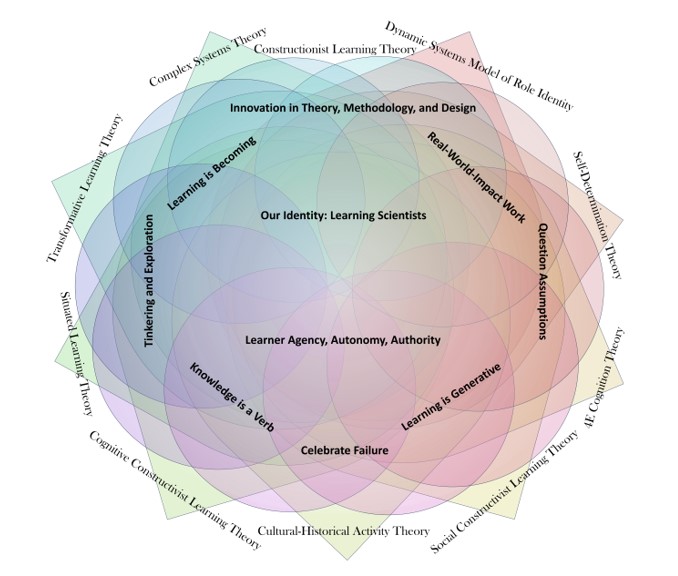
The Collaborative Multidimensional Perspectives for Learning Experience Investigation and Design Innovation (COMPLEXIDI) lab investigates the complexity inherent in human learning processes. Founded on the premise that learning is not the acquisition of knowledge but a complex transformative process of becoming, we examine the multidimensional nature of learning through collaborative and innovative methodologies.
At COMPLEXIDI, we view knowledge as an active verb rather than a static noun. Our research focuses on how learners generate understanding through tinkering, exploration, and productive failure. We are grounded in constructionist, constructivist, and situated learning theories, and we draw on frameworks including 4E cognition, cultural-historical activity theory, and complex systems theory to examine learning as it unfolds across multiple dimensions.
We distinguish ourselves as members of the learning sciences field, committed to investigating the ecological complexity of learning. Our design innovations aim to create spaces where learners exercise agency, autonomy, and authority while engaging with real-world challenges through personally meaningful, transformative experiences.