The Trauma Care Delivery & Outcomes Research program of the UAB Center for Injury Science studies how injury care is organized, delivered, accessed, and experienced—and how those systems can be improved.
Led by Dr. Russell Griffin, an epidemiologist, and Dr. Zain Hashmi, a trauma surgeon and health services researcher, the program brings together epidemiology, health services research, implementation science, quality improvement, informatics, and clinical expertise to address problems across the continuum of injury care.
While other areas of the Center focus on interventional clinical trials or laboratory and translational science, this program asks a different set of questions: Who is injured? Why were they injured? Who receives appropriate care? Where and when is that care delivered? What barriers prevent patients from receiving optimal care? And how can we redesign systems to improve outcomes across entire populations?
Trauma Epidemiology and Outcomes
A core strength of the program is the use of observational data to understand patterns of injury, treatment, and outcomes.
Led by Dr. Russell Griffin, this work applies rigorous epidemiologic methods to questions in trauma and acute care. Data sources include UAB clinical and trauma registries, electronic health records, geographic information systems, and large state and national datasets.
These resources allow investigators to examine questions that cannot readily be answered through clinical trials, including the epidemiology of injury, patterns of care, risk factors for adverse outcomes, differences among hospitals and trauma systems, and associations between clinical practice and patient outcomes.
Methods include observational epidemiological study designs such as cross-sectional, cohort, and case-control studies; large database analyses; geospatial analyses; comparative effectiveness research; and other approaches designed to generate evidence from real-world trauma populations.
Trauma Systems and Access to Care
Where an injured patient receives care—and how quickly they reach that care—can be as important as the treatment they ultimately receive.
Dr. Zain Hashmi's research focuses on trauma systems development, access to care, trauma benchmarking, quality improvement, and reducing disparities in
injury outcomes. This work examines how geography, transport decisions, hospital capabilities, resource availability, and system design influence outcomes following injury.
Current research includes evaluating direct versus indirect transport to definitive trauma care, understanding geographic and system-level barriers to appropriate treatment, and developing evidence-based approaches to trauma-system planning.
The Mitigating Injury Disparities program builds on this work by examining how trauma systems can be designed to reduce differences in access to high-quality injury care. Rather than simply describing disparities, the goal is to identify modifiable features of the trauma system that can be changed to improve care.
Rural Trauma Care, Teletrauma, and Prehospital Blood
Access to timely trauma care is particularly challenging in rural communities, where distance from a trauma center can delay definitive treatment.
CIS research is examining new approaches to bridge that gap.
Dr. Hashmi leads UAB's growing work in teletrauma, connecting trauma specialists at UAB with clinicians caring for injured patients in rural and community hospitals. The goal is to support local clinicians, identify patients who require rapid transfer to a trauma center, and allow patients who can safely receive care locally to remain in their communities. The teletrauma research program centers around an evaluation of current telehealth use for trauma care across the United States, as well as using a community-engaged approach to redesigning teletrauma as an integral component of trauma systems for injured rural patients. These innovations have already informed the development and launch of the UAB Teletrauma Program in 2025 at Russell Medical Center, Whitfield Regional Hospital and six UAB St. Vincent's locations.
A complementary area of research addresses access to prehospital blood products. CIS investigators have used national EMS data to quantify the potential need for prehospital transfusion and have worked with state and national partners to understand how blood products can be made available to injured patients before arrival at a trauma center.
The DOT Prehospital Blood & Telehealth in Alabama initiative brings these concepts together, exploring how prehospital blood and telehealth can strengthen trauma care across the state—particularly in communities distant from major trauma centers.
Injury Disparities and Health Equity
Injury does not affect all communities equally, and access to high-quality trauma care is not uniform.
Our research examines disparities arising from geography, socioeconomic factors, access to trauma centers, patterns of referral and transfer, and differences in the delivery of evidence-based care.
Projects such as Mitigating Injury Disparities with Evidence-Based Trauma Systems Planning seek to move beyond identifying these differences toward designing systems that can reduce them.
This work uses large datasets, geospatial methods, mixed-methods research, and engagement with patients, clinicians, EMS agencies, rural hospitals, and other stakeholders to understand not only where disparities exist, but why they occur and what can be done about them.
Health Literacy and Patient-Centered Care
High-quality trauma care depends not only on what happens in the operating room or intensive care unit, but also on how patients understand and navigate their care.
The Health Literacy Screening project examines health literacy among injured patients and how differences in understanding and communication may affect the patient experience, treatment, recovery, and engagement with healthcare services.
This work contributes to a broader goal of ensuring that trauma systems are designed around the needs of the populations they serve—not simply around the institutions providing care.
Implementation, Simulation, and Systems Innovation
Discovering that a better approach exists does not guarantee that it will be adopted successfully.
CIS therefore studies how new approaches to trauma care can be implemented in real-world clinical systems. This includes identifying barriers and facilitators, understanding clinical workflows, evaluating implementation across different healthcare environments, and determining whether innovations can be sustained beyond an initial research project.
Projects such as Sim-X use simulation and other methods to study clinical processes, team performance, and the implementation of new approaches to care.
Together, these projects bridge the gap between evidence that something can work and understanding how to make it work reliably in the real world.
Data as a Tool for Improving Trauma Systems
A major strength of the program is access to diverse sources of real-world data.
These include institutional trauma registries and electronic health records; geographic information systems; EMS data; state and regional datasets; and large national resources such as the National Emergency Department Sample, National Inpatient Sample, and national trauma datasets.
No single dataset can answer every question. Investigators therefore combine clinical and observational epidemiology with geospatial analysis, health services research, mixed methods, qualitative research, implementation science, and increasingly sophisticated quantitative approaches.
The objective is not simply to describe trauma care, but to use data to identify opportunities for improvement and then translate those findings into changes in practice and systems.
From Individual Patients to Populations
Clinical trials ask whether a particular treatment works. Basic science investigates the biological mechanisms underlying injury and recovery.
Trauma Care Delivery & Outcomes Research asks how we ensure that the right patient receives the right care, in the right place, at the right time.
That requires looking beyond individual treatments to understand the systems surrounding them: EMS, transport, geography, hospital resources, referral networks, communication, implementation, patient characteristics, and healthcare policy.
By combining the complementary expertise of clinicians, epidemiologists, health services researchers, implementation scientists, data scientists, EMS professionals, and community partners, CIS aims to develop trauma systems that are more effective, equitable, accessible, and responsive to the needs of the populations they serve.
In addition to using epidemiological approaches – such as case-control, cohort and ecologic study designs – to evaluate research topics, the TCDU aims to establish professional collaborations in a variety of injury-related disciplines including health behavior, health psychology, biomedical engineering, health care organization and policy and health informatics. These collaborations are instrumental to our goal of building a robust team of researchers who can take a multi-pronged approach to evaluating how best to deliver trauma care to a population.
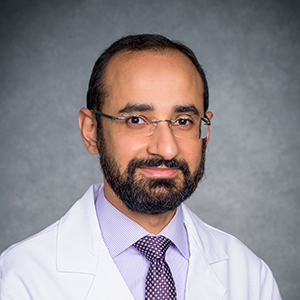
Hashmi, Zain, M.D.
Assistant Professor, Division of Trauma and Acute Care Surgery