Christopher Colvin, a first-year student in the UAB PhD in Nutrition Sciences program, has been selected as a 2026-2027 Fellow of the Albert Schweitzer program (ASF).
Colvin joins the largest cohort in the program’s history with 25 fellows. Over the next several months, they will engage deeply in community-based public health initiatives designed to address the needs of populations across the state. Through these projects, they will work to enhance health outcomes and social well-being while developing and refining their leadership abilities.
“These Fellows have already demonstrated remarkable initiative, thoughtfully refining their project ideas and identifying meaningful ways to serve our communities,” said Kimberly Eaton, Executive Director of ASF of Alabama.
“It's a privilege to be selected into the Albert Schweitzer program,” said Colvin. “I feel really honored to be selected because I've met my cohort, and I know they have a lot of really cool project ideas related to giving back to Alabama communities and I'm just excited to use what I’m learning and give back as well.”
Inspiration
Originally from Brookfield, Illinois, Colvin’s interest in a career in nutrition began from his background in wrestling. As a freshman at Triton Junior College in River Grove, Illinois, Colvin competed as a heavyweight and wanted to properly gain weight to improve his performance.
“I was an underweight heavyweight, so I was just eating breakfast sausages, eggs and bacon for every meal and it made me feel terrible,” said Colvin. “After taking my first nutrition class, I realized if I changed the way I ate and incorporated much more fruit and vegetables, I would feel and perform much better. After that, I fell in love with it.”
As a sophomore at Benedictine University, Colvin was made aware of the food insecurity that he and many other families face every day. For him, food insecurity is not only having unreliable access to enough food, but also to affordable, nutritious food, because of economic, social, or geographical circumstances.
"For my family, food insecurity was rooted in economics,” said Colvin. “Both of my parents lost their jobs around the same time, and I remember one grocery trip when my dad realized he couldn't afford a couple of frozen pizzas for my siblings who were coming into town. He broke down in the checkout line, something I'd never seen before. A woman standing behind us quietly paid for the pizzas. That moment showed me how deeply food insecurity can affect a family's dignity and sense of stability, and how much even a small act of kindness can mean. It's a big part of why I chose to become an Albert Schweitzer Fellow."
“I also realized it's not easy to get fruits and vegetables, and that's something I started learning as I took more classes,” said Colvin. “Especially if you're food insecure like my family was, so it was eye opening to learn more about why this happens and just how common it is.”
UAB
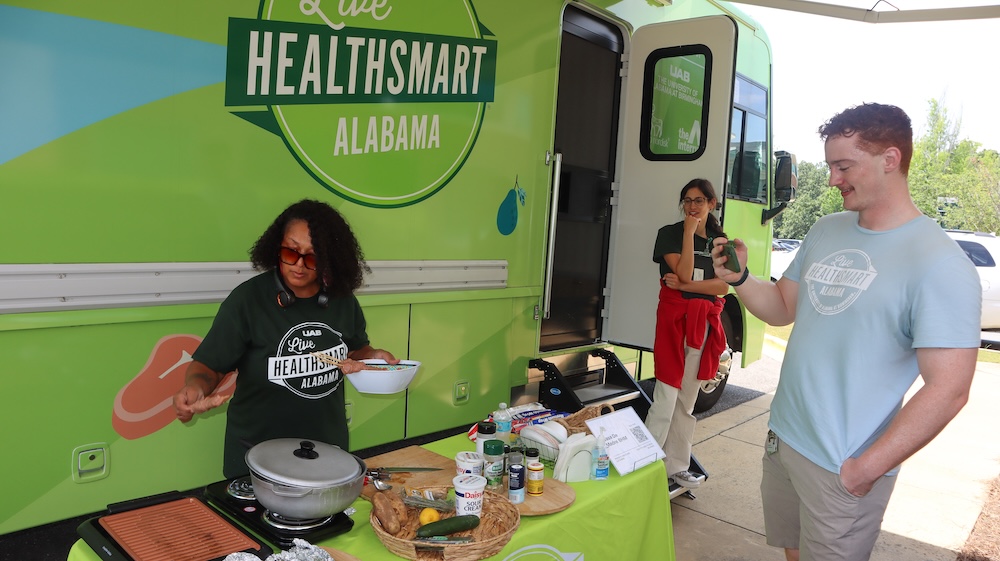
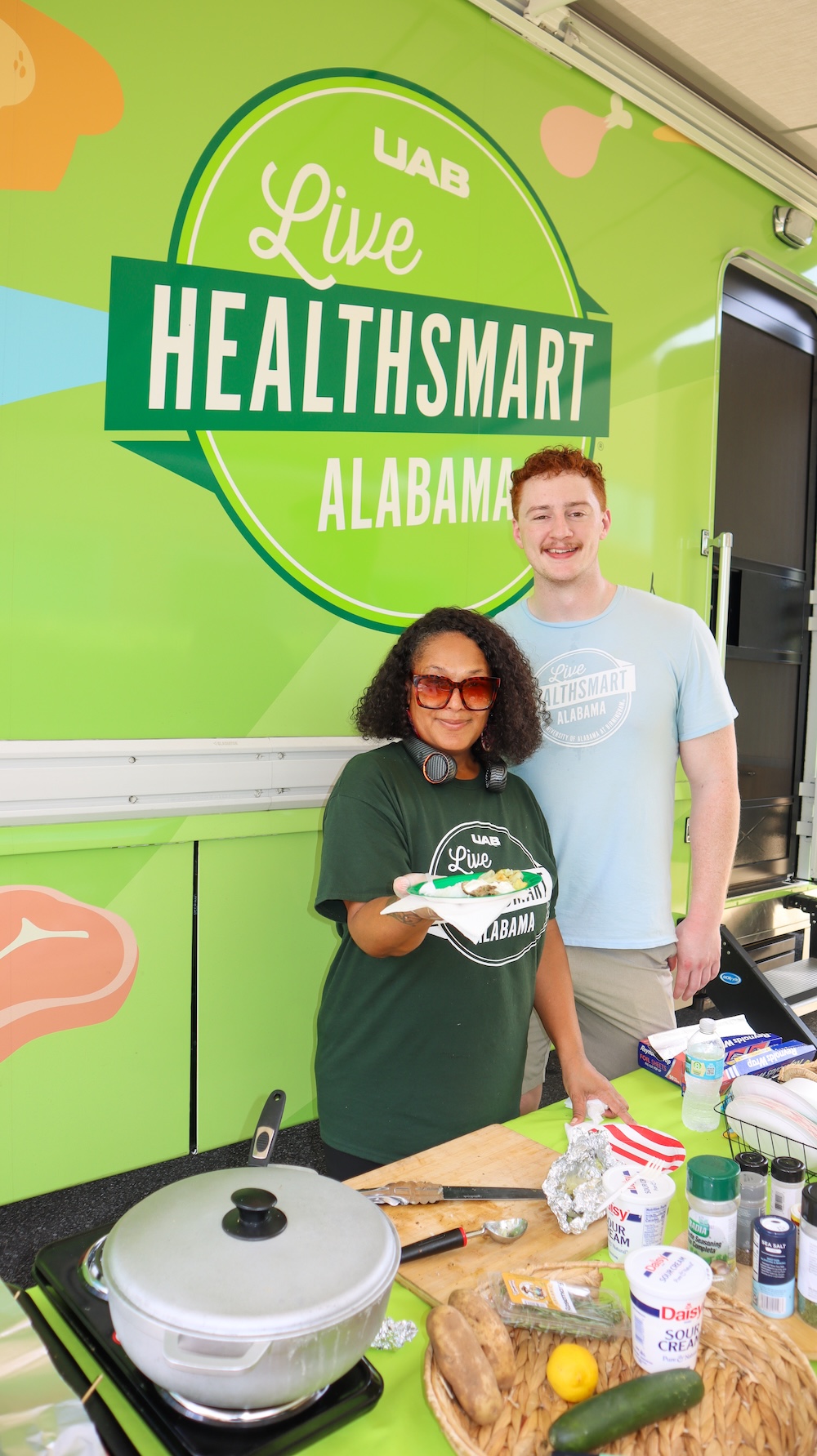 Chef Timmorah and Christopher working the Mobile Market
Once Colvin realized he wanted to pursue a career in nutrition, he began looking for universities to pursue his graduate degree. His hopes were to find an institution where he could have a helpful mentor and be able to continue working with metabolic chambers.
“The chambers really attracted me to UAB,” said Colvin. “We’re able to measure the gas concentrations in the air coming in on the side of the Webb building, and we’re able to clean it, dry it, pump it into a sealed, occupied room. We can tell the difference in the air that we're measuring going in, the air coming out, and we’re able to determine someone's calories burned throughout the day.”
Located in the Susan Mott Webb Nutrition Sciences Building, the UAB Whole-Room Indirect Calorimetry Suite is a state-of-the-art research facility designed to measure 24-hour energy expenditure and rates of fat and carbohydrate oxidation in human clinical studies.
While at the National Institutes of Health in Bethesda, Maryland, for his two-year postbaccalaureate fellowship, one of Colvin’s mentors, Kong Chen, Ph.D., MSCI, recommended him to UAB and to Katie Whyte, Ph.D., Assistant Professor in the UAB department of Nutrition Sciences, who is now his current mentor.
“Dr. Chen told me she was brilliant and that she was doing great work with these chambers, so it just felt like a great opportunity, and I’ve really enjoyed the mentorship experience,” said Colvin.
ASF
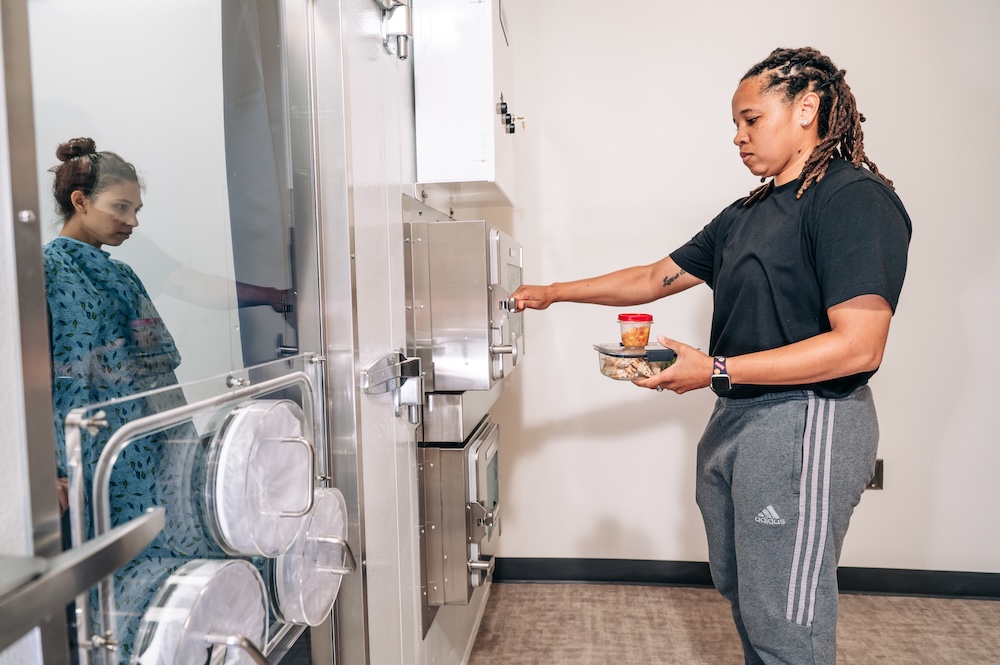 Bre McDonald, on right, working in calorimetry suite
Colvin was first made aware of the ASF fellowship through classmate and 2025-2026 Fellow, Bre McDonald, with whom he did his first rotation in the Ph.D. program.
“She’s so passionate about ASF and the work she does with them,” said Colvin. “Hearing her speak about really giving back and knowing that was something I wanted to pursue was very intriguing.”
“I think the main reason I applied for the Albert Schweitzer Fellowship is that I wanted to be hands on,” said Colvin. “I'm learning so much about nutrition and I want to see it translate to something. ASF gave me the perfect opportunity to be able to learn and apply what I’ve been taught to help others.”
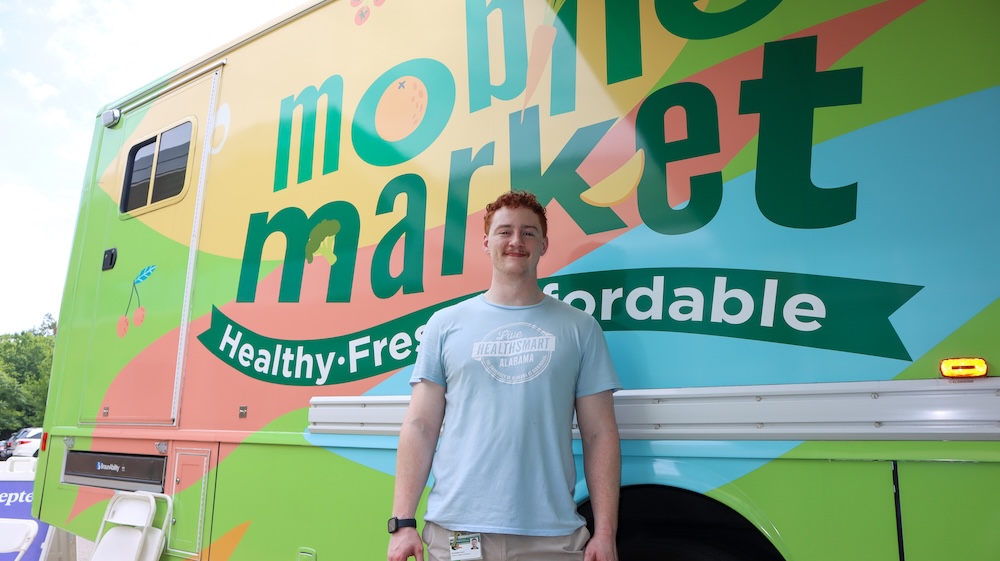
For his project, Colvin is building systematic feedback infrastructure into Live HealthSmart Alabama's Mobile Market program in Birmingham to capture real-time data on what participants purchase after cooking demonstrations. In collaboration with the program's cooking demonstration chef, Chef Timmorah, he gathers participant input to refine recipe cards created in part by a previous ASF Fellow, helping those existing tools better reach and fit the community. Additionally, he creates brief instructional videos for each recipe that can be accessed through QR codes, allowing participants to revisit cooking techniques after each event.
Future Plans
 Once Colvin completes his Ph.D., he plans to become an independent researcher.
“I want to go from thinking about the project idea to being able to write the grant to fund the project, followed by collecting the data, writing the manuscript, and publishing it,” said Colvin. “I want to be able to do every step of that process on my own, and I’m really looking forward to it.”
“When it’s all said and done, I just want to be able to say, I contributed to the field of nutrition in a way that actually helped someone eat better.”