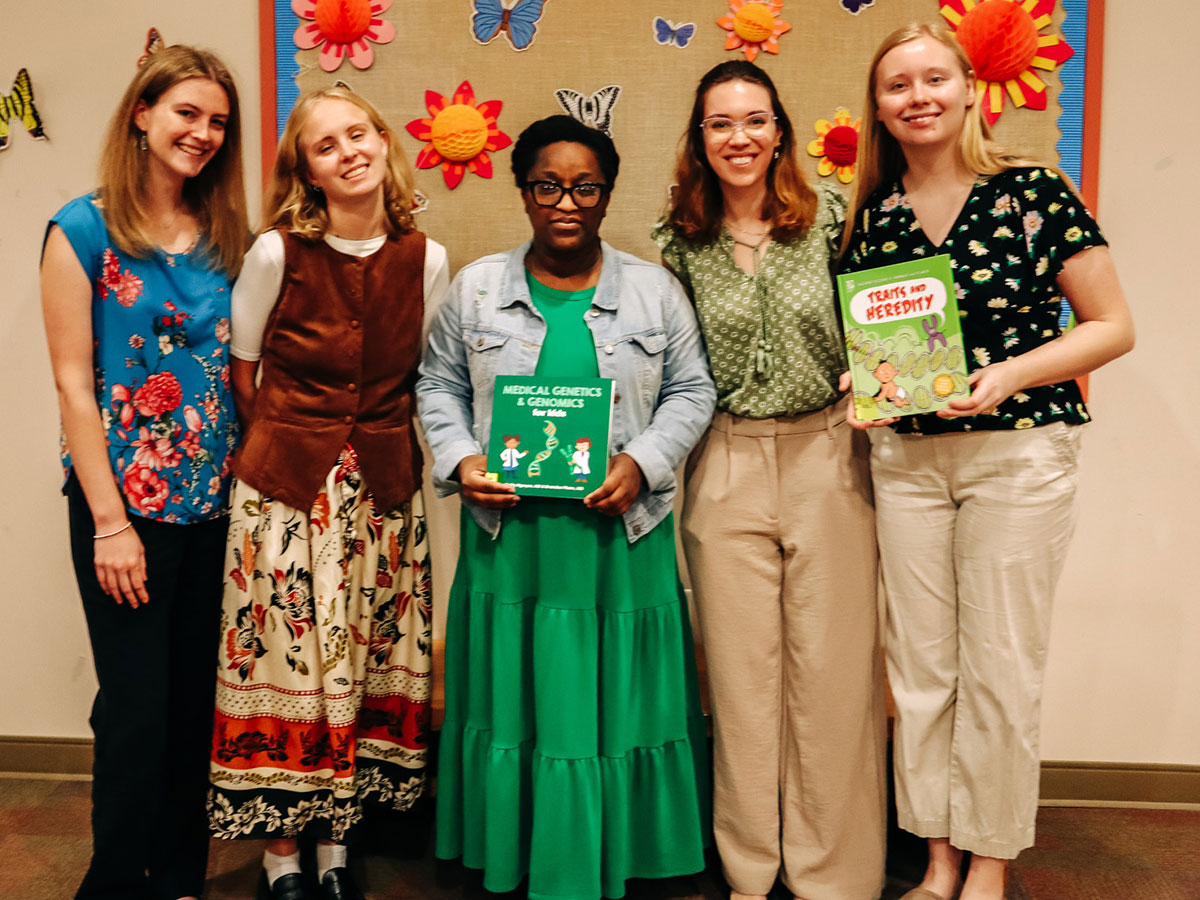
In partnership with Lister Hill Library opens a new website, students from UAB’s Genetic Counseling program opens a new website traveled to Albert L. Scott Library in Alabaster, Alabama, to present their iteration of H.E.A.L.T.H. Lab.
H.E.A.L.T.H. Lab stands for Hands-on Exploration, Analysis, Learning, Technology, and Health. Each program features a different STEM subject and allows children between the ages of 6-11 to explore science and health through engaging activities. This program is curated by Megan Bell with UAB’s Lister Hill Library. She works with departments across the university to create memorable programming that not only engages each child but sparks their curiosity.
“A lot of our job as a genetic counselor is to break down complex information and make it more accessible,” said Emily Sandlin, a second-year Genetic Counseling program student. She spoke about how the group got together to brainstorm their program by talking about what led each of them to this career path. In her two years in the program, she’s discovered a lot of their work involves public outreach, not just to teach others about genetic counseling or genetic testing, but also to other health care providers.
“All of us got our start in genetic counseling somewhere,” said Caroline Nelson, a first-year student who is already planning to bring the program back in the fall semester. “For us to have the opportunity to make genetic counseling more accessible to the next generation is very important.”
For Sandra DeMaria, taking part in this program was like revisiting moments from her own childhood. DeMaria grew up in a military family and spent a part of her childhood living in Clanton, Alabama, where her family would visit the Albert L. Scott Library.
“I have a big passion for accessibility and education for rural communities, because of some of the health and education inequities they can have,” said DeMaria, “I was born with a birth difference, and so were both of my parents. I grew up having to learn about my own birth difference and how to advocate for myself.”
She asked herself questions like, “How did this birth difference occur? How did it occur in my parents?” It wasn’t until her family moved to a larger city that DeMaria was able to access more information about genetics and how she could use her own career to educate others. Her own story inspired her goals to become a genetic counselor, a goal she’ll complete in Bartow Arena on Friday, May 1, 2026
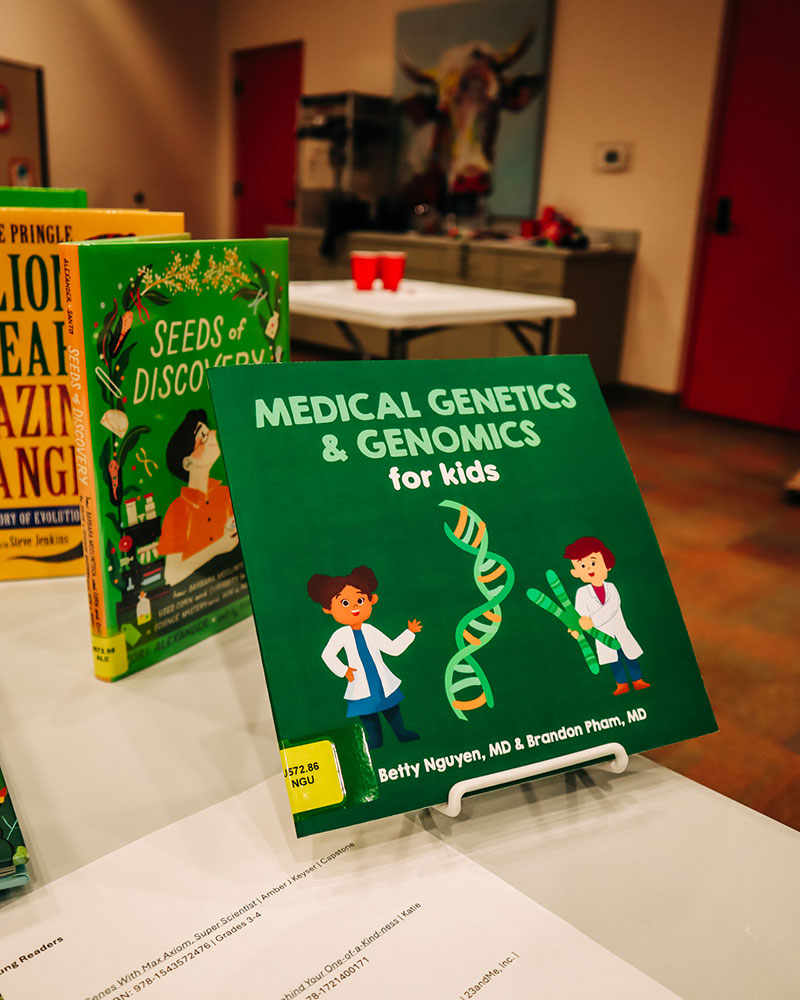
In a room featuring reading posters and cut-out butterflies, the genetic counseling students prepared their four stations and flipped through books the librarians had gathered on genetics, a take-home token if any attendees' interests were piqued.
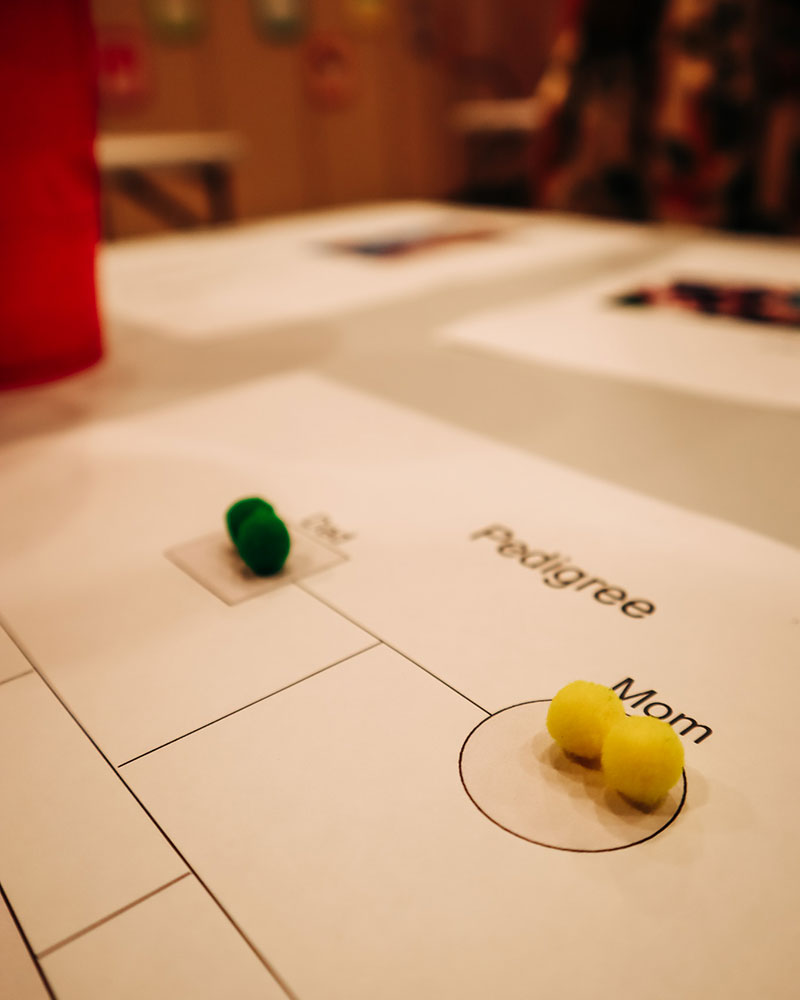
Programming began with an introduction to what genetic traits are and the definition of DNA to give children and their parents an idea of what programming would entail. Each station used tactile aids, little yellow and green pompoms, to have a visual representation of traits like hair color, hair texture, eye color, and even superpowers, to show children how characteristics get passed down from parent to child.
The Genetic Counseling program prides itself on offering community engagement activities such as this to its students, urging their curiosities and passions forward as they complete their academic goals. Their students create lifelong friendships through coursework and find ways to engage with learning outside of the classroom in public outreach programs like H.E.A.L.T.H Lab. Learn more about their program opens a new website and how you can begin your journey as a genetic counselor.