The Division of Gastroenterology and Hepatology at UAB offers a one-year intensive clinical Advanced Hepatology fellowship training program, providing outstanding clinical training preparing physicians for a career in academic medicine and/or further career opportunities.
Fellowship Experience
Our program is home to Alabama's only liver transplant program, which has performed over 3,000 procedures since its inception in 1983, distinguishing itself as one of the nation's most experienced programs with outcomes consistently ranking among the best in the United States.
Our program provides superior hepatology training in a collaborative environment. We have specialty clinics across our medical campus, which is anchored by our 1,200 bed inpatient center UAB Hospital—the eighth largest public hospital in the nation. The hospital is in close proximity to the Birmingham VA Medical Center, UAB Hospital Highlands campus, The Kirklin Clinic, and Children's Hospital of Alabama.
People come from all over the state to take advantage of our life-changing care, offering a complex patient population and breadth of clinical learning opportunities. We approach medicine in a multi-disciplinary modality across a broad variety of diverse hepatology-related conditions from MASLD to autoimmune liver disease to cirrhosis and liver transplant through mandatory and elective rotations. We accept applications via email.
Clinical Rotations
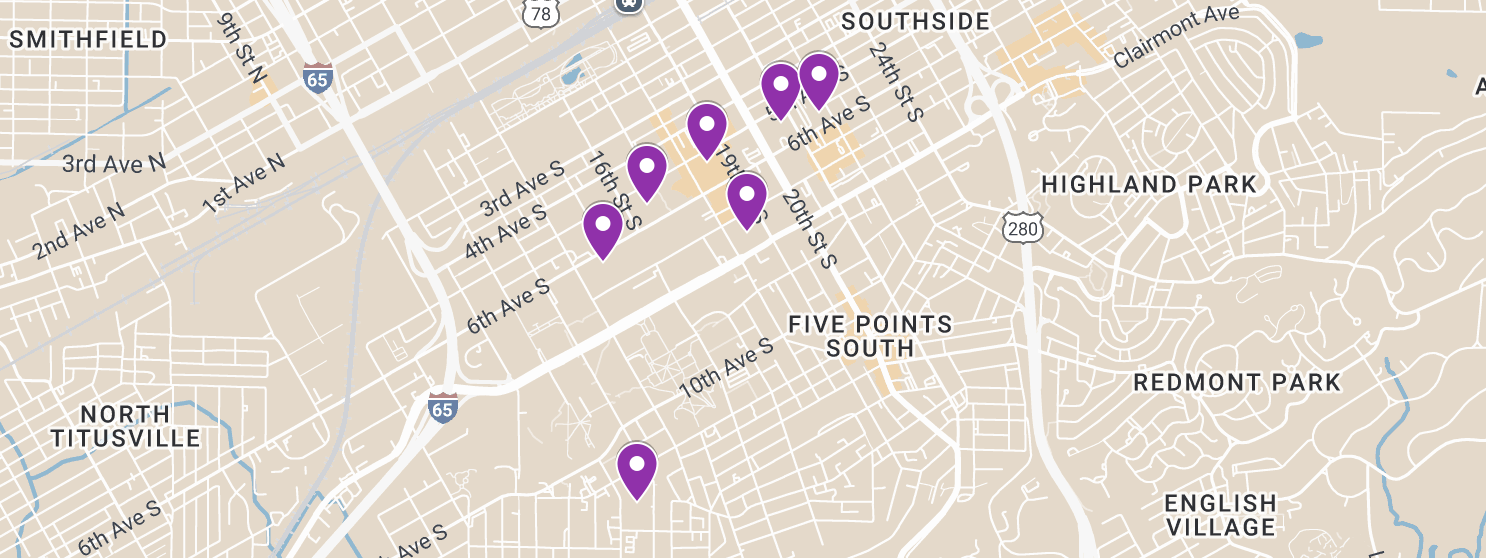 UAB is a highly walkable campus, making it easy to navigate your clinical rotations. Many of our clinical training sites are connected by skybridges, offering protection from rain, heat, and traffic. Browse these buildings to learn more about the types of training conducted there.
Explore our training sitesOpens an external link.
The fellowship is offered electives in various subspecialty clinics to enhance their clinical exposure, including dedicated time with pathology, interventional radiology, transplant surgery, medical and radiation oncology, and transplant infectious disease faculty. The curriculum integrates multiple subspecialty clinics that can be tailored to the fellow's interests and career aspirations. This structured approach, working closely with faculty from different subspecialties, builds a solid foundation and confidence in managing patients across the inpatient Hepatology ward, consult service, and Transplant Surgery service.
On the outpatient side, the fellow will have an independent clinic in addition to seeing patients in the viral hepatitis (ABC) clinic, MASLD clinic, autoimmune clinic, liver tumor clinic, cirrhosis clinic, post-operative transplant hepatology clinic, and transplant surgery clinic.
Teaching Conferences
Our training program is designed to provide our fellows with significant opportunities for teaching. Fellows are expected to teach our medical students and residents. Multidisciplinary conferences include the Tumor Conference, Liver Pathology Conference, Liver Transplant Selection Conference, Portal Hypertension Conference, and Radiology Conference, in addition to weekly didactic sessions focused on transplant topics. The fellow will also attend the annual Liver Meeting.
Research Training
Research is also an essential part of our training program. The fellows meet with research mentors in the first month of training to identify a research mentor and participate in a research project based on interest. Research may be a clinical or transitional project depending on interest. Fellows are expected to participate in Quality Improvement or Research projects during their one-year training. Quality Improvement is an opportunity for the fellow to help improve patient care in various transplant hepatology-related areas. Presentation of their research findings at regional or national scientific meetings is strongly encouraged.
Apply to Advanced Hepatology Fellowship
The Advanced Hepatology Fellowship is a non-ACGME-accredited fellowship training program. Although the curriculum of this fellowship matches the ACGME Transplant Hepatology fellowship training, we cannot guarantee eligibility for Board Certification in Transplant Hepatology at this time.
This program is designed to prepare physicians in the evaluation and treatment of general hepatology conditions and pre- and post-liver transplant patients. This one-year intensive clinical program is available to those who have completed an ACGME-accredited Internal Medicine Residency and are Internal Medicine Board Eligible (PGY-4). Please note that, due to funding limitations, we are unable to support visas for the PGY-4 fellowship at this time.
Requirements
- Completion of an ACGME-accredited residency: Internal Medicine residency
- Board Eligible or Board Certified in Internal Medicine
- U.S. citizenship or permanent residency/green card
- Alabama State medical license, which must be obtained in advance of the start date of the Advanced Hepatology Fellowship
Fellowship Application
We will accept applications following the GI Fellowship Match until December 31, 2026, with interviews to follow in early January 2027. Applications must be submitted via email to monicanix@uabmc.edu with the items noted below in the FAQ.
Frequently Asked Questions
-
What will I need to apply?
-
Current CV (updated within three months)
-
Post-Undergraduate Education
-
USMLE/COMLEX Scores
-
ECFMG (if necessary)
-
Completion of Residency Training
-
Personal Statement
-
Three Letters of Recommendation
-
Applicants to the Advanced Hepatology fellowship must have a letter of recommendation from their Internal Medicine Residency program director
-
-
What are the current vaccination requirements?
Vaccinations are required based on CDC recommendations for Health Care Workers including routine childhood vaccines, Hepatitis-B, and Influenza, except in the case of an approved exemption.
-
What are the salaries & benefits for fellows?
Our program provides benefits and insurance plans available to all fellows at UAB. You can find the list of salaries and benefits for fellows based on PGY level here.
-
What is the cost of living in Birmingham?
Birmingham offers a vibrant urban lifestyle at a cost that’s approximately 9% below the national average. Trainees enjoy access to thriving neighborhoods, a nationally recognized food scene, and a dynamic creative community.
-
Is there a minimum USMLE score required?
There is no minimum USMLE score requirement. We take the score into account as part of the overall review of an application.
-
What are the key program dates for Applications?
Applications Open and Close — December 2-21, 2026
Applications Reviewed — Rolling
Interview Invitations Released — Rolling, no later than December 31, 2026
Interviews Begin — Second week of January 2027
Letter of Offer to top applicant — Third week of January 2027
Fellowship begins — July 1, 2027
-
Do you sponsor H1B or J1 Visas?
Unfortunately due to funding limitations, we cannot sponsor H1B or J1 Visas for this fellowship at this time.