The Department of Medicine Wellness Council brings together faculty and staff to effect positive change in our shared work environment. Through consistent and collaborative action, we aim to drive meaningful improvements in our systems, processes, and employee wellbeing.

Why does wellness matter?
In an academic health center, clinical responsibilities, research obligations, educational missions, and administrative requirements intersect in ways that can generate significant operational friction. When processes are cumbersome, communication breaks down, or systemic inefficiencies go unaddressed, the cumulative effect erodes morale, increases burnout, and ultimately compromises the quality of care, scholarship, and training our department delivers.
Investing in wellness at the organizational level is not a luxury; it is essential to sustaining the people who make our mission possible.
What does the Wellness Council do?
It is important to understand what the Wellness Council is — and what it is not. The council does not solely focus on encouraging individual health behaviors such as meditation, exercise, or nutrition. Instead, our work targets the institutional and operational factors that diminish wellness: broken workflows, unclear expectations, communication gaps, and processes that create unnecessary burden. By listening to the experiences of faculty and staff across the department and acting on that feedback, the council serves as a mechanism for meaningful, systems-level change.
Our ongoing objective is to remove the obstacles that stand between our people and a work environment where they can thrive.
Wellness Focus Areas
The Wellness Council works on three main priorities in the priorities identified by the department in response to the 2022 UAB Medicine Pulse Survey.
Leadership Evaluation
Develop systematic evaluation of department leaders to provide input from the personnel they supervise and improve bidirectional communication
Onboarding & Retention
Clarify onboarding activities, roles, and responsibilities to streamline orientation processes, speed time-to-competence for new hires, and reduce turnover
Access Center
Improve operational understanding and cooperation related to the digital patient scheduling process to increase provider satisfaction and protect patient access
Wellness Outcomes
In its first two years, the Wellness Council has already translated feedback into action. Our committees have each advanced concrete initiatives demonstrating that when faculty and staff concerns are heard and acted upon, real improvement follows.
- Leadership Evaluation. The first leadership evaluation survey was conducted in the Division of Nephrology, with feedback leading to review of clinical administrative staff compensation, establishment of a central repository for resources, and a new monthly meeting focused on staff concerns.
- Onboarding and Recruitment. Initial efforts brought many division-specific onboarding checklists to light, identified key central resources that were little-known, and helped promote awareness of these tools.
- Access Center. Simplified provider diagnoses lists in Provider Match; added new internal referral slots to advanced practice provider (APP) templates; evaluating a patient pooled clinic for APPs with one physician.
Our annual Wellness Council progress report is presented at Medical Grand Rounds. The recorded meeting and slides are available for review.
View the Update Slides View the Update Recording
Wellness Timeline
In 2022, the UAB Medicine Pulse Survey identified high distress and burnout across UAB for faculty and staff. In response, the Department of Medicine created a Task Force to explore and address concerns specific to our departmental environment. Through a survey and multidisciplinary focus groups of all faculty and staff, the topics of salary transparency, recognition and advancement, workload demands, leadership development, culture and engagement, research systems and oversight, patient appointment templates and scheduling, and parking surfaced as high-priority wellness issues. The Task Force recommended the creation of a permanent Wellness Council to prioritize and operationalize improvements on an ongoing basis.
July 2022
UAB Pulse Survey
UAB Medicine Office of Wellness notes high levels of employee distress
Jan. 2023
DOM Task Force
Department of Medicine responds to survey results
Feb. 2023
DOM Wellness Survey
Department-specific issues reported and categorized by theme
Sept. 2023
DOM Wellness Council
Organized for ongoing prioritization of wellbeing
Ongoing
Progress Reports
Annual updates on identified areas of improvement
Wellness Council Team Structure
The council is comprised of approximately 30 faculty and staff volunteer representatives across all mission areas and from all 10 divisions in the department. They are led by a faculty co-chair and staff co-chair who are elected annually.
These members meet monthly to advance the work of wellness in each of our three committee focus areas.
Council Co-Chairs
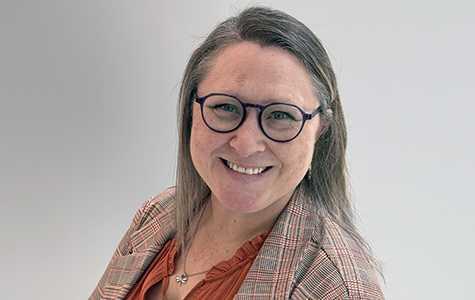
Audrey Landry, MSN-NE, RN
Staff Co-Chair
Palliative Care Clinical Coordinator
Division of Gerontology, Geriatrics, and Palliative Care

Sylvia Huang, PhD, FAAHPM
Faculty Co-Chair
Associate Professor
Division of Gerontology, Geriatrics, and Palliative Care
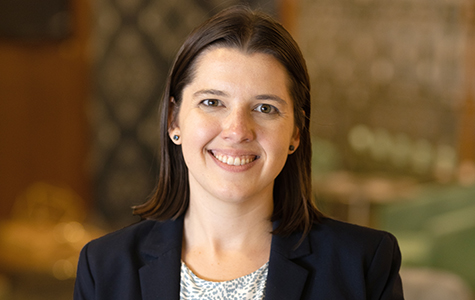
Kaitlyn Waugaman, MPH, RDN, LDN
Past Staff Co-Chair
Program Director II
Division of General Internal Medicine and Population Science
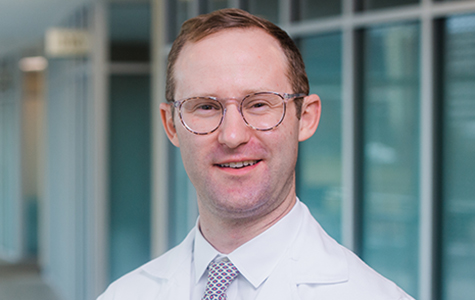
Joshua Stripling, MD
Past Faculty Co-Chair
Associate Professor
Division of Infectious Diseases
Helpful Wellness Resources
- UAB Blazer Kitchen: An on-campus food pantry designed to address food insecurity amongst UAB employees, students and referred patients.
- UAB Employee Acute Care Nurse Line: Connect with a nurse at 205-975-SICK for direction to urgent care resources.
- Childcare at UAB: Resources for UAB employees with childcare needs.
- UAB Employee Wellness: Resources and opportunities to help employees live well.
- UAB Employee Assistance and Counseling: Confidential support services from a team of certified counselors.
Wellness Council Mailbox
We invite you to share your thoughts, concerns, and experiences about wellbeing in the department. Your feedback is crucial in shaping a positive and supportive working environment for everyone. Together, we can create a healthier and more engaged community.
To send feedback anonymously, please complete the form below.