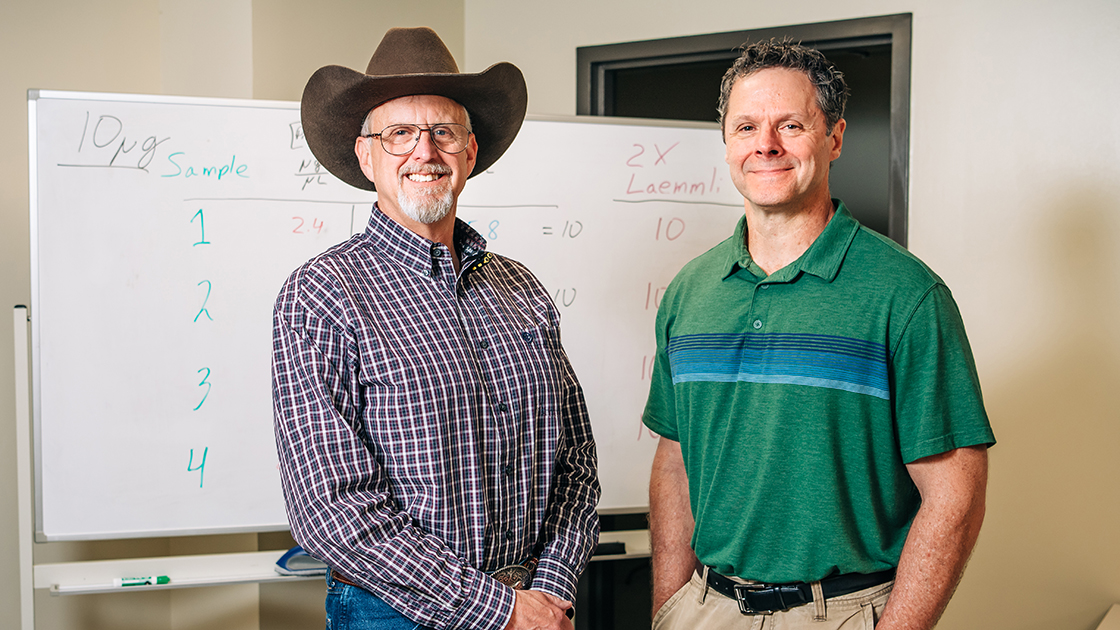
 Cameron Sheeler, Ph.D., dressed in character for an episode on Western blots, and Kevin Storr in Sheeler's lab.
Learning the proper technique to isolate plasmid DNA, along with other standard cell molecular lab skills, can be a ticket to a well-paying job. And frankly, says Cameron Sheeler, Ph.D., it is fun.
“I really like science,” said Sheeler, a professor in UAB’s Master of Science in Biotechnology program. Students do, too, if they feel they are mastering the material, he says. But, as in any subject, translating theory to hands-on application can be tricky. “Students may remember the concepts from chemistry in their freshman year in college; but the application, how you actually do it, can be missing,” Sheeler said. Proper pipetting technique is one example. “It sounds simple; but if you do it wrong, you can mess up an entire experiment,” he said.
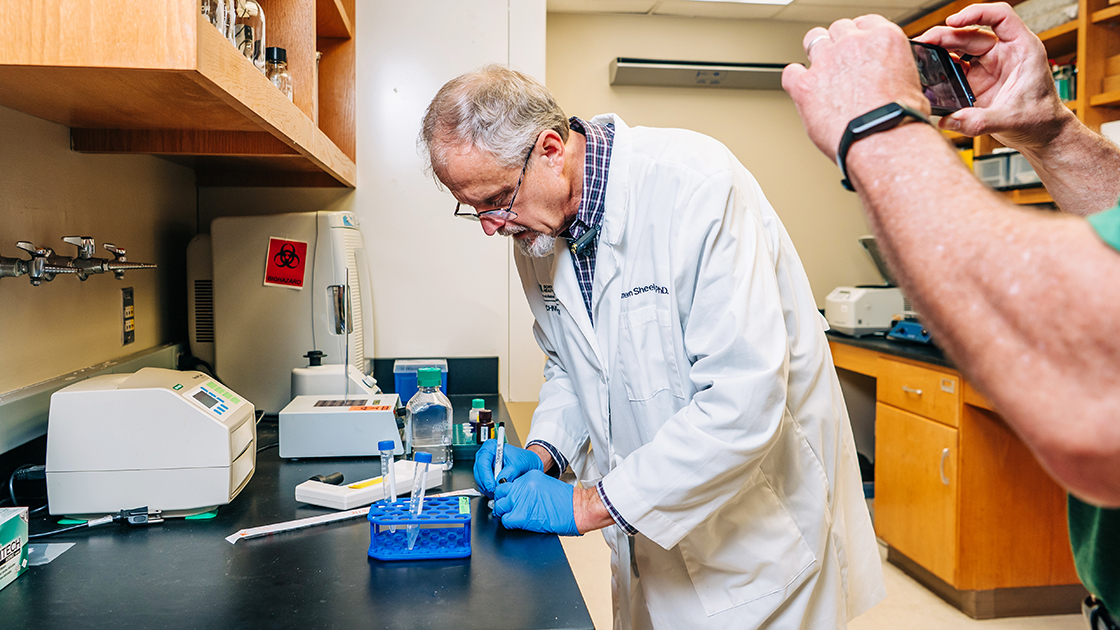 The set for "Dr. Sheeler's Lab Shorts" is Sheeler's actual lab in the CBSE building.After a few decades in the classroom, Sheeler knows the areas where students tend to get it wrong. Last year, he teamed up with Kevin Storr, director of Communications in the School of Health Professions and a former TV news journalist, to make a series of short videos showing them how to get it right.
He shares these videos, collectively known as “Dr. Sheeler’s Lab Shorts,” with students in his lab course’s Canvas page, so they can watch them before lectures. “That way, when I talk about it in class, they’ve seen it,” Sheeler said. Sheeler and Storr also posted them on a YouTube playlist, thinking they might help others. “These are techniques used in every cell molecular lab,” Sheeler said. Clearly they have found an audience beyond UAB. The most-watched video, “Isolating Plasmid DNA,” has more than 11,000 views. Another, “Plating & Picking a Colony from Glycerol Stock” has nearly 3,000 views. (Storr recommends “The Dark Side of Gels” as a good introduction to the series’ sensibility.)
Watch "The Dark Side of Gels," a four-minute episode that offers a good introduction to the "Dr. Sheeler's Lab Shorts" sensibility, above. Or watch this episode on YouTube.
“We did this as a service for our students, but to see others get something out of it really makes me happy,” Sheeler said. “Dr. Sheeler’s Lab Shorts” has since grown to 30 videos, shot on location in Sheeler’s lab in UAB’s CBSE building or a nearby conference room. Sheeler and Storr first meet to plan out each episode. Filming takes a few hours on a Friday, plus prep time for Sheeler and editing time for Storr. “Kevin’s editing is what really makes this work,” Sheeler said. Another element is their sense of humor, with a generous helping of 1980s movie references, a Sheeler trademark. “I’ve worked in the private sector. They expect results,” Sheeler said. “That’s a line from ‘Ghostbusters,’ but it’s also true.”
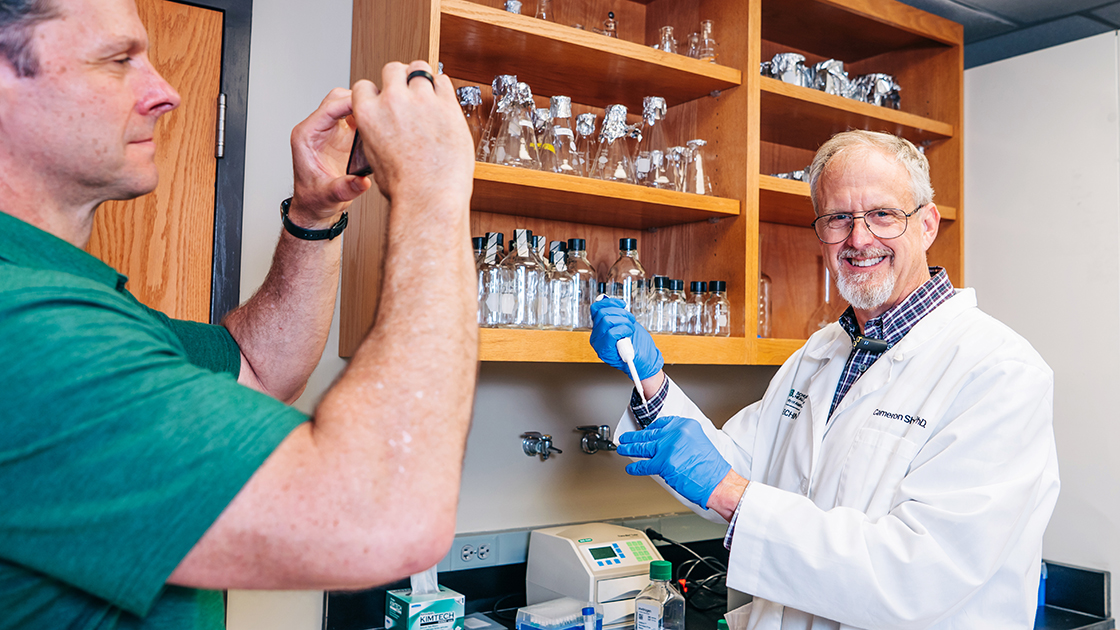
UAB’s biotech program prides itself on producing graduates who can deliver results. “All of the faculty make sure students are actually doing the work,” Sheeler said. “When we write letters of recommendation, we can say, ‘This student has really done these techniques and has the skills.’ Biotech companies need people who are more than they can get right out of undergrad, but are not Ph.D.s — people who understand the techniques and are able to use them. Our students are wonderful, and they go all over the country into the workforce or into further training.”
Sheeler says he does not need to worry about running out of ideas. “There are so many techniques out there,” he said. “Making these videos lets me practice and keep my own skills sharp.”
Advice on engaging students
Do Sheeler and Storr have any recommendations for faculty looking to engage students in new ways? They offer five suggestions based on their experience:
1. Determine what your students do not know. “Or what students may know, but don’t know how to apply,” Sheeler said. “Start with those basic topics and build from there.”
2. Do not try to do it all at once. “Make one here and one there; see how it goes,” Sheeler said. “That’s how we got started, and now we’ve done 30 videos without getting overwhelmed.”
3. You have to enjoy it. “It’s a lot of fun for us,” Sheeler said. “Kevin and I share a fondness for 1980s songs and movies, and Mel Brooks.” Just as much fun for Sheeler is the interactions he has with viewers in the YouTube comments. “I don’t know where they are, but I’ll get these questions: ‘Why did you do it this way? I was isolating cells and got a different result.’ And I’ll explain exactly why I did that, and how. That’s why we make sure to say the exact chemicals we are using, where to order them, all that detail. Science is fun when it works. I want people to see that.”
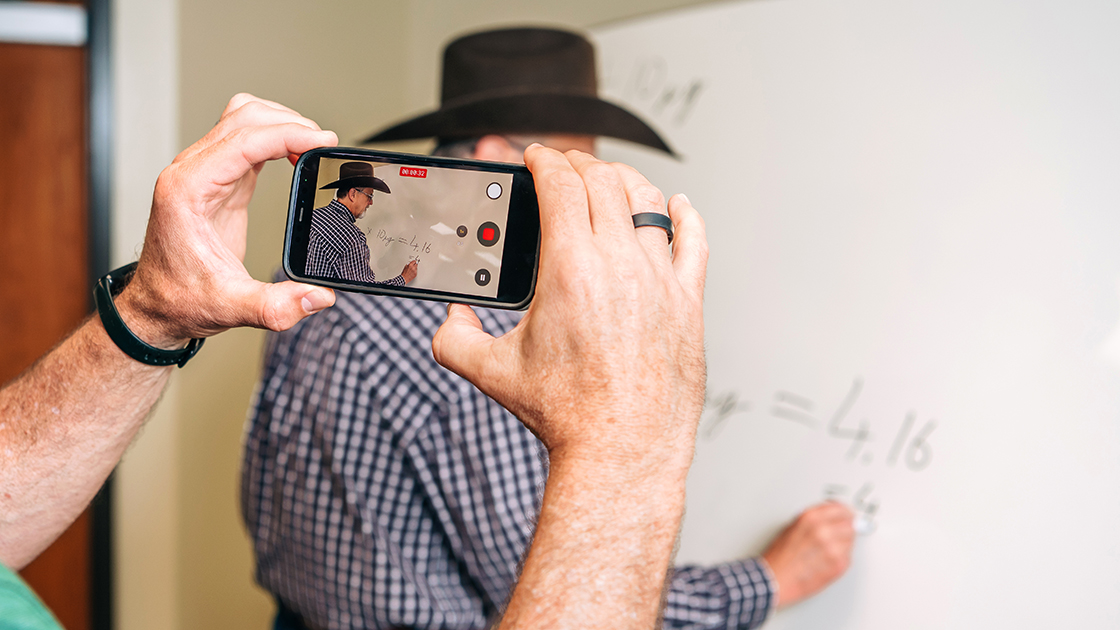
Storr echoes Sheeler’s sentiment. “The Dr. Sheeler on camera is the Dr. Sheeler in person,” Storr said. “Faculty interested in doing something like this need to be true to themselves.”
4. Your audience has to find it useful. “Kevin would like to stay at three to four minutes,” Sheeler said. “Sometimes we go longer, and if we go too long, we break it up into a 101 video with the basics, then a 201 video with more detail, and so on. I don’t want to listen to a full lecture if I have a question about a technique. I want to see it done. That’s what we keep in mind.”
5. Proper planning is essential. “Planning it properly means mapping an outline of everything you want to say and do and shoot — then check the boxes off as you go so you know you did it,” Storr said. “We definitely learned the hard way that, when you are in the moment, you can forget steps or rearrange steps. That only takes more time to reshoot or to figure out ways to fix it in editing.”
Job-ready training
Learn more about UAB’s Master of Science in Biotechnology program and see all UAB undergraduate and graduate degrees and certificates at uab.edu/degrees.