By Sarah Creel Mitchell
Some careers leave a mark through a single role or achievement. Others shape an institution, a profession, and the lives of people who may never know the full story behind their care. James L. Raper, Ph.D.’s career belongs firmly in the latter category.
Early in his service with the U.S. Army Nurse Corps, Raper, a 1994 University of Alabama at Birmingham School of Nursing graduate became aware of a then-emerging immunodeficiency disease that was devasting communities and generating fear, misinformation and stigma.
As the AIDS epidemic unfolded, it became a deeply personal issue to Raper. After losing his partner to the disease, he committed his professional life to work that demanded both clinical excellence and moral resolve.
This commitment guided more than four decades of leadership in nursing, research and education at the UAB School of Nursing. It also is the foundation for the James L. Raper Endowed Professorship in Nursing, a lasting investment designed to extend his influence far into the future.
Leadership that built systems of care
The 1917 Clinic has long stood as a cornerstone of HIV treatment in Alabama, providing comprehensive, compassionate care to individuals and families navigating a complex and evolving diagnosis.
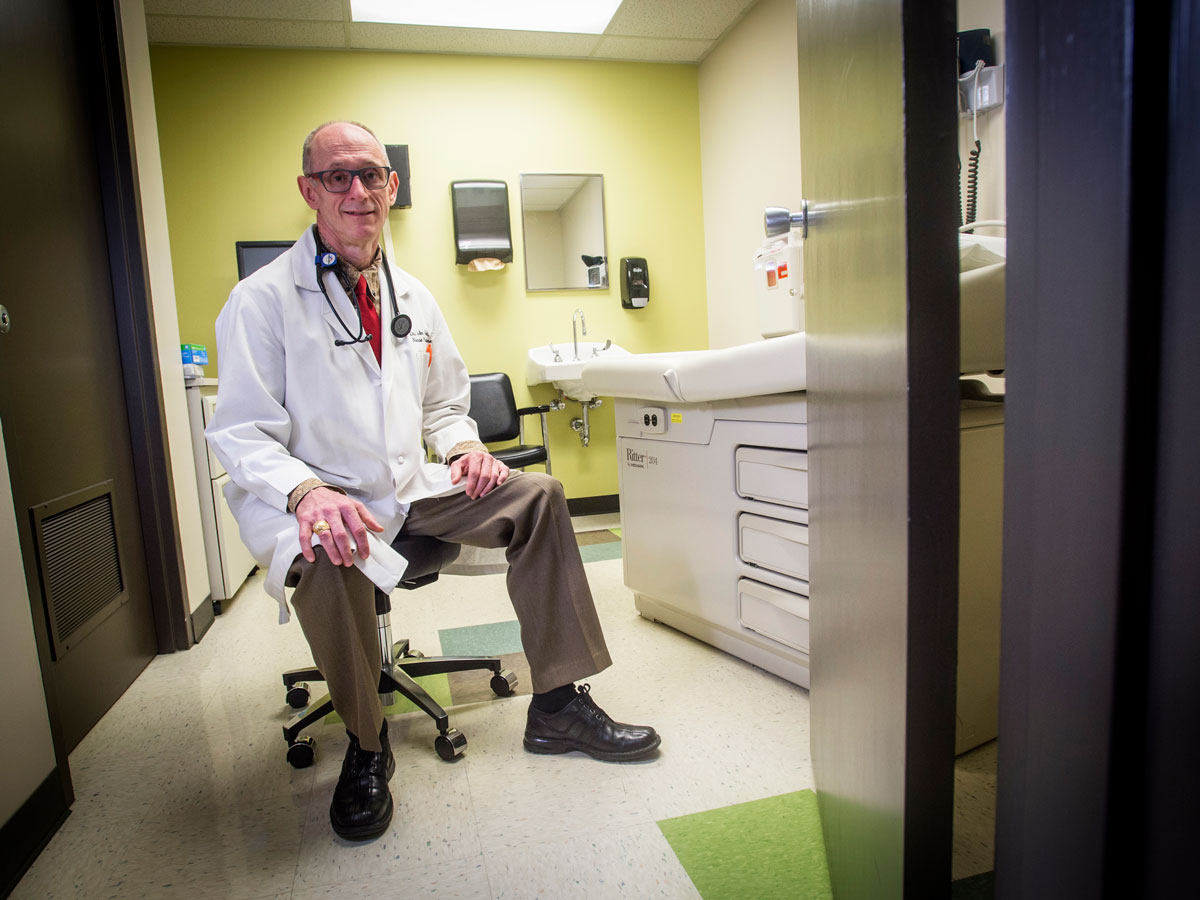
Raper joined the clinic in a leadership capacity in the mid-1990s and later became the first nurse practitioner to direct a medical clinic at UAB, an appointment that reflected both his expertise and his ability to lead across disciplines.
“Although Dr. Raper’s primary appointment at UAB was as an advanced practice provider and Director of the 1917 Clinic, his commitment to the School of Nursing and its programs, faculty and students never waned,” explained University Professor and Senior Associate Dean, Academic Affairs Linda Moneyham, PhD, RN, FAAN.
During his tenure, the clinic expanded its reach and capacity, serving thousands of patients. This work required more than medical knowledge; it required strategic leadership, operational insight and a steady focus on patient dignity, particularly for patients who had historically faced barriers to care.
When shifts in Birmingham’s health care landscape left hundreds of HIV/AIDS patients at risk of losing access to care—including more than 800 following the closure of Cooper Green Mercy Hospital—the 1917 Clinic ensured continuity of care.
Raper’s leadership was defined not only by growth, but also by access and stability, keeping patients connected to multidisciplinary services when alternatives disappeared.
Scholarship and policy with real-world impact
Raper’s influence has never been confined to a single clinic or campus. Over the course of his career, he contributed to a substantial body of scholarly work and helped secure significant funding to advance HIV-related research and services.
“Dr. Raper was a proponent of advanced practice nursing,” Moneyham said. “He was a pioneer in the shaping and advancement of the nurse practitioner role.”
Equally importantly, he brought nursing expertise into national policy work, serving for eight years as a scientific panelist on U.S. Department of Health and Human Services updates to antiretroviral treatment guidelines and contributing to standards of practice and performance measures that inform HIV care well beyond Alabama.
Mentorship as a defining principle
For all his leadership and scholarly accomplishments, those who worked alongside Raper often point first to his impact as a mentor. He invested deeply in students and early-career professionals, guiding them through challenging clinical environments while encouraging them to think critically, act ethically and lead with purpose.
Moneyham emphasized Raper’s dedication to students. “He was always willing to serve as a clinical preceptor for nurse practitioner students despite his many responsibilities in managing the clinic and in providing direct patient care,” she said, citing the passion that drove his mentorship efforts for undergrads and doctoral-level students alike. “While providing guidance and support to students, he demanded excellence, challenging students to be the best that they could be.”
For many of these students, the example Raper set was as influential as his instruction. As Moneyham put it, “He was always a powerful role model for students, particularly as a steadfast advocate for patients, and many of [his] students desired to emulate him in their careers.”
The James Raper Endowed Professorship in Nursing
The James L. Raper Endowed Professorship in Nursing is intended to support faculty whose work reflects the integrated approach that defined Raper’s career: advancing education, contributing to scholarship and improving care in ways that reach from the classroom to the lab to the hospital bedside. To maximize the impact of the fund and put it to work faster, it is being established initially as the James L. Raper Endowed Faculty Scholar in Nursing as an intermediate step towards the endowed professorship, subject to the approval of The Board of Trustees of The University of Alabama.
Endowed support provides stability and flexibility for recipients, enabling high-impact teaching, innovative research and meaningful community engagement over time. It also strengthens the School of Nursing’s ability to attract and retain leaders who can navigate complexity, mentor students and translate knowledge into practice.
“His legacy in nursing is broad,” Moneyham said, “having impacted nursing practice at the local, state and international levels, and it is most deeply felt by those who worked closely with him.”
A legacy that continues
James L. Raper Endowed Professorship
Professorship extends Dr. Raper's influence in nursing education and care.
Give NowOpens an external link.The true measure of faculty leadership is how far its influence travels. A single mentor can shape countless careers by teaching, mentoring and modeling excellence for students who go on to care for patients, lead teams, influence policy and educate the next generation of nurses. This is the legacy of Raper’s career.
Through thoughtful leadership, evidence-based practice and mentorship his work has reached well beyond any one role or achievement. The James Raper Endowed Professorship in Nursing will ensure that his influence continues, carried forward by faculty leaders who embody the same values.
Supporting this endowment is an investment in what endures: a living commitment to education, care and community impact that will shape nursing and health care for years to come.