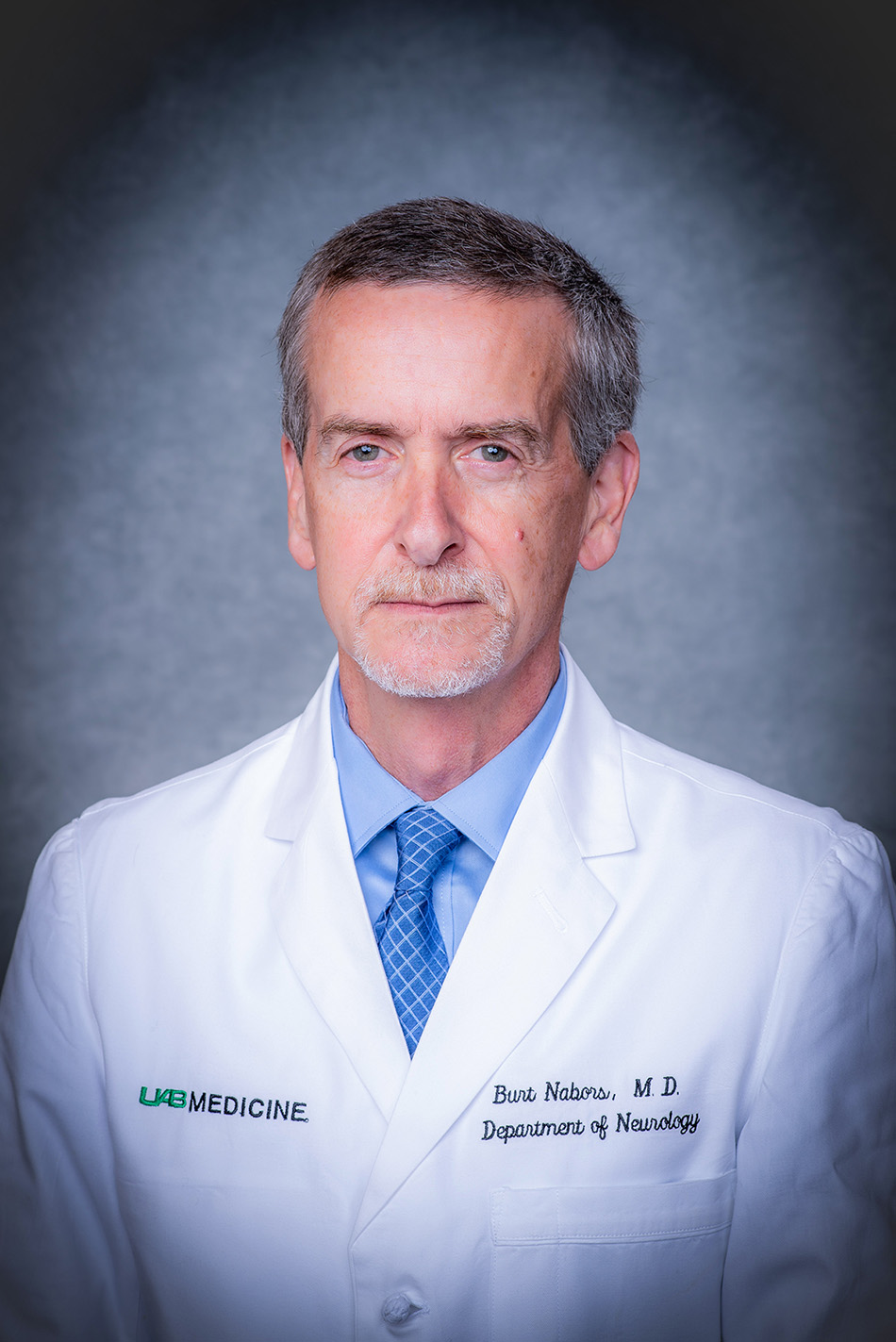
 Phase 1 trial results of a glioblastoma study ledy by Burt, Nabors, MD, offer new optimism for improved survival and quality of life for patients.Glioblastoma, the most aggressive malignant brain tumor in adults, remains one of the most challenging cancers to treat because of limited treatment options and a poor prognosis. Patient outcomes have remained largely unchanged in the past two decades, which underscores the need for innovative research and new treatments that can improve both survival and quality of life for patients and their families.
A new study from the University of Alabama at Birmingham provides potential new optimism for patients who are affected by this difficult disease. According to the trial results, patients experienced more than twice the length of time without cancer progression.
The study, published in The Journal of Clinical Oncology, announced the results of its Phase 1 trial in newly diagnosed glioblastoma patients. The trial, INB-200, utilized DeltEx DRI, an engineered chemotherapy-resistant immunotherapy, and was the first genetically modified gamma-delta T cell therapy globally to enter clinical trials.
“This is an important step in moving novel cell-based immunotherapy forward for patients with newly diagnosed glioblastoma,” said Burt Nabors, M.D., professor of neurology and director of Neuro-Oncology at the UAB O’Neal Cancer Center.
DeltEx DRI is an immunotherapy made from a patient’s own immune cells. The therapy consists of gamma-delta T cells that are genetically modified to survive exposure to chemotherapy. When co-administered with temozolomide, the standard-of-care chemotherapy used in glioblastoma treatment, DeltEx DRI can effectively recognize and attack the remaining brain tumor cells. The treatment is delivered directly to the brain, with the goal of strengthening the immune response, targeting cancer cells that remain after initial treatment and keeping the disease under control for a longer period.
During the trial, 13 patients were enrolled and treated across three cohorts. They received one, three or up to six doses of DeltEx DRI in 28-day cycles while also receiving maintenance chemotherapy. In this dose escalation design, physicians examined whether patients could receive an increasing number of doses while continuing regular maintenance chemotherapy.
In this Phase 1 study, the treatment was shown to be well-tolerated when given in combination with standard-of-care chemotherapy. No treatment-related serious adverse events were observed, including cytokine release syndrome or immune effector cell-associated neurotoxicity syndrome, serious complications that have occurred during other cellular therapy trials. These findings suggest the treatment can be given during maintenance chemotherapy in newly diagnosed patients.
Across all 13 treated patients, median progression‑free survival was 9.9 months, exceeding the 6.9 months typically reported with standard therapy alone. Patients who received repeated doses experienced the greatest benefit, with median progression‑free survival reaching 16.1 months. Median overall survival in this group was 19.5 months, compared with historical outcomes of approximately 14.6 months for patients receiving standard treatment.
“We are working with IN8Bio to rapidly develop this platform by increasing the production of cells, safely delivering more cells into the nervous system and enhancing the cell’s ability to kill glioblastoma,” Nabors said.
The publication, titled “Intracranial injection of ex-vivo expanded and activated gamma-delta T cells engineered with a MGMT-expressing lentivector in patients with primary glioblastoma,” is encouraging for Nabors to continue further clinical evaluation.
Larry Lamb, Ph.D., former professor in the UAB Department of Medicine and co-founder and chief scientific officer at IN8bio Inc., helped develop the technology, preclinical understanding and clinical design for this trial. IN8bio is a clinical-stage biopharmaceutical company developing gamma-delta T cells product candidates for oncology, especially for diseases like glioblastoma with high unmet medical needs.
The clinical trial is led by Nabors in collaboration with IN8bio. The UAB Department of Neurology and the O’Neal Comprehensive Cancer Center are part of the Marnix E. Heersink School of Medicine. UAB intellectual property is licensed through the Bill L. Harbert Institute for Innovation and Entrepreneurship.