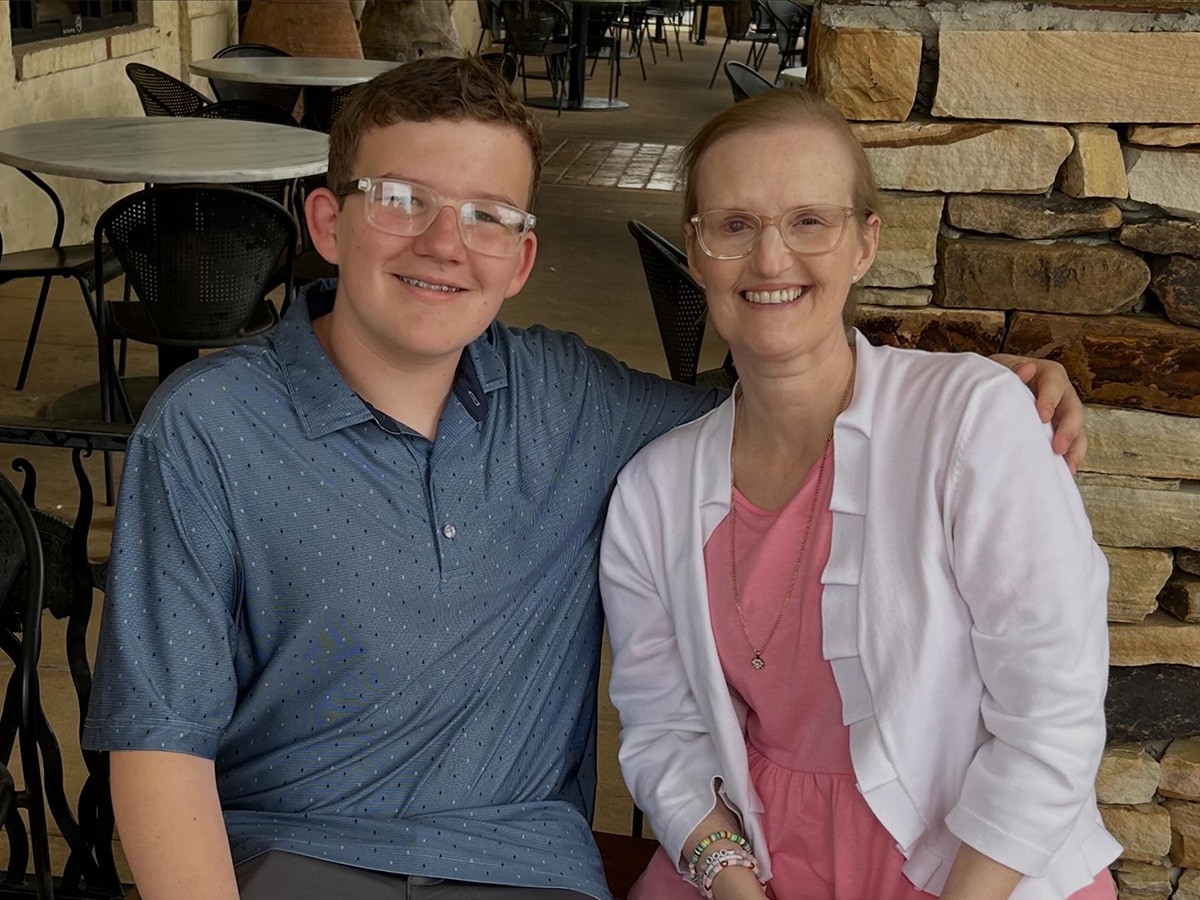
 Rebecca Hall was diagnosed with leptomeningeal metastasis and was weeks from passing, until she enrolled as the first patient in a clinical trial.In 2019, Rebecca Hall, a Dothan, Ala., native who has lived in Birmingham since 2006, was told she had only weeks to live after she learned that her breast cancer from a few years earlier had quickly spread to her brain. She received a phone call that forever changed her life. Her doctor at the University of Alabama at Birmingham shared news about a new clinical trial offering her a chance at survival. Hall became the first patient to enroll in this trial, a decision that turned weeks to live into many years.
On Dec. 13th, 2013, Hall was diagnosed with HER2-positive breast cancer, in which breast cancer cells contain high levels of the HER2 protein, promoting aggressive cancer cell growth.
A couple of weeks later, Hall had a double mastectomy, the surgical removal of both breasts, and underwent chemotherapy and radiation therapy. Since early 2015, Hall had been in remission until her diagnosis in 2018.
In 2018, Hall was experiencing severe headaches that felt like “something was rolling inside her head,” she said.
For that, she had brain surgery at a local hospital where doctors observed that her cancer had spread to the right cerebellum, which controls coordination, precise movements and supports cognitive processes such as language and verbal memory.
Hall’s complex condition led her to the UAB O’Neal Cancer Center, where she became the patient of Erica Stringer-Reasor, M.D., associate professor of medicine and director of the O’Neal Breast Cancer Program. There, she learned she did not have many options for treatment and had weeks left to live. Her first thoughts went to her son Charlie and the uncertainty of what was next.
“I have never thought of myself as a hero, but as a pioneer,” Hall said.
Stinger-Reasor recognized Hall’s determination to improve her outcomes as she faced an aggressive disease at a pivotal stage of life while raising her son. She recommended Hall become the first participant in UAB’s HER2-postive breast cancer clinical trial that she was leading.
“I knew I had to try it,” Hall said. “Because I wanted to be around for Charlie a little bit longer.”
Hall enrolled in the trial on March 6, 2019. Despite the physical and emotional challenges of her diagnosis, Hall demonstrated remarkable resilience, courage and commitment to her care.
During treatment, as she motivated herself by setting short and long-term goals, Charlie constantly remained on her mind.
“My strength in God and my inner strength to survive got me through,” Hall said. “Cancer does not define who I am.”
Seven years later, Hall, now 43, continues to inspire others and offer hope by sharing her story. She is currently living with metastatic disease and eventually progressed on the study and now is on another treatment.
“I have never thought of myself as a hero, but as a pioneer,” Hall said. “When I meet people who have cancer, or they have just been diagnosed, I tell them my story. I run into so many people at different places and I am like, God put me in that place to talk to those people.”
Stringer-Reasor says this clinical trial offered hope and the opportunity for Hall and others to receive promising investigational therapy before the FDA’s approval. Each new drug approval represents hope for patients and families facing metastatic breast cancer, offering the possibility of longer survival, better quality of life and more personalized treatment approaches.
HER2-positive breast cancer clinical trial
The results from the clinical trial were published in Nature Cancer, highlighting a promising advance in the treatment of leptomeningeal metastasis, one of the most challenging complications of breast cancer.
Leptomeningeal metastasis develops when HER2-positive metastatic breast cancer cells spread to the cerebrospinal fluid and to the leptomeninges, the membranes surrounding the brain and spinal cord. Historically, patients with this condition have faced a poor prognosis, with limited treatment options and survival often measured in just a few months.
Stringer-Reasor and her colleagues at UAB played a key role in designing the multi-institutional phase 2 clinical trial, enrolling patients, and analyzing data.
The clinical trial evaluated a three-drug combination—tucatinib, trastuzumab and capecitabine—in patients with HER2-positive metastatic breast cancer that had spread to the leptomeninges. Patients receiving the regimen experienced a median overall survival of approximately 10 months, more than double the historical benchmark of 4.4 months.
The therapy showed encouraging effects in delaying disease progression in the central nervous system and improving neurological symptoms in many participants. It confirmed tucatinib can penetrate the cerebrospinal fluid at therapeutic levels––a critical factor in treating cancers that spread to the central nervous system.
“Both Fam-trastuzumab deruxtecan-nxki and Tucatinib were approved for the treatment of previously treated advanced HER2-positive breast cancer,” Stringer-Reasor said. “Their approval during the study highlights the rapid progress being made in breast cancer research and underscores the importance of clinical trials.”
For Stringer-Reasor, the most rewarding part of working on this trial has been witnessing the profound impact that access to innovative therapies can have on a patient’s life.
“Clinical trials are essential for evaluating new therapies, expanding treatment options and improving outcomes for patients,” Stringer-Reasor said. “This trial demonstrates how research can directly translate into meaningful advances in patient care.”
To patients considering participating in a clinical trial, Stringer-Reasor advises them to understand the purpose of the study, the treatment being offered and potential benefits and risks. Patients should ask questions about how the trial differs from standard treatment, what side effects may be expected, and how often visits and testing will occur.
According to Stringer-Reasor, the future of HER2-positive breast cancer lies in developing more effective treatments, ensuring all patients can participate in research that may improve and extend their lives, including access to innovative therapies for patients with CNS involvement, including LMD.
Researchers encourage additional studies to refine treatment strategies, explore combinations with other therapies and identify biomarkers that may predict which patients will benefit most.