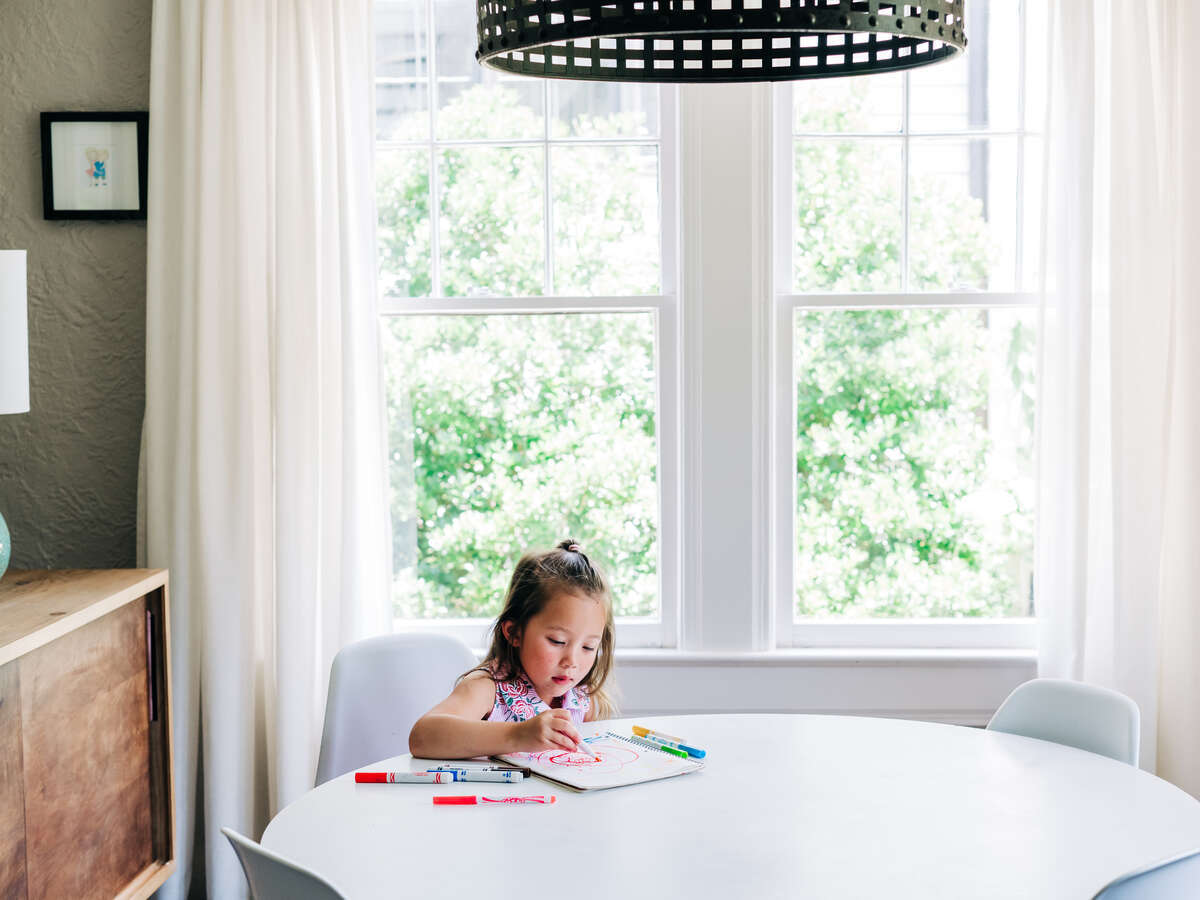
 A great summer staycation is about spending quality time with loved ones and creating lasting memories.For families who are staying in town this summer, it can seem like there are not many ways to keep children occupied without a device. Experts from the University of Alabama at Birmingham share educational and active ways to keep children engaged.
Activities to get the whole family moving
The United States Department of Health and Human Services recommends physical activity that is at least moderately intensive for an hour minimum per day for 6- through 17-year-olds. Claire Mowling, Ph.D., associate professor in the UAB School of Education and Human Sciences, encourages families to break up this activity time for children if this recommendation seems overwhelming.
“Children prefer to play over working out or exercising,” Mowling said. “As parents, we should encourage playtime that elicits the idea of fun through movement. In addition, if parents will participate in the activities, it often increases motivation and provides an opportunity for creating memories.”
Mowling suggests the following ideas for active play.
Take a hike
Spend time exploring the neighborhood and create a personalized hiking trail. Children can create a map that includes prominent features throughout the trail. Create invitations that include the trail map, deliver them to neighbors, and encourage them to post a family selfie with a hashtag created by the child, such as #HenrysHike.
Family Olympics
Gather the family and put together a series of outdoor activities. Some ideas could include races, hula-hooping, corn hole, jump rope and hopscotch. If desired, keep score and create a medal as a prize for whoever wins the most activities. Larger families can form teams.
The floor is (not) lava
There are lots of other games to play indoors if it is raining. One classic game is “The Floor Is Lava.” Create an obstacle course around the house, set a timer, and go. Challenge the child to see if they can complete the course faster each time. This activity gets children moving while building sequencing, memory and problem-solving.
Get groovy
Turn on some family-friendly tunes and get moving. Children can put their personal touch on the family dance party by creating the playlist and dance moves. Games such as freeze dance are a great way to play. Encourage children to create their own choreography and perform it if they wish for the family.
Easy activities for home
Benjamin Turner, an instructor in the UAB College of Arts and Sciences, says there are ways to incorporate science into fun activities for kids this summer.
“With these activities, students are able to hone their skills in science, math, technology and reading,” Turner said. “Implementation and exposure to the wonderful world of STEM should be done at a young age to get a desired successful impact later in their academic path. Identifying engaging activities can make science enjoyable and fun for all ages.”
He suggests parents and caregivers try one of the following activities with their children to open their minds to the world of science.
Activities for learning new skills
Exploring new hobbies and activities is another great way to spend a summer staycation while having fun. Learning new hobbies and skills piques children’s curiosity, stimulating active learning, brain development and memory retention.
“One thing I’ve learned as both a parent and a biologist is that children are naturally curious,” Turner said. “The challenge usually isn’t finding something to teach them — it’s creating opportunities for them to ask questions and explore.”
Turner suggests the following activities for learning new skills and family quality time.
Braille
Braille is a tactile reading system for those who are blind or visually impaired. It involves the use of raised dots that are read by using fingers to glide and feel their patterns. Learning
Braille enhances fine motor skills by boosting memory cognition and pattern recognition.
Gardening
Grab the gardening gloves and tools and engage children in planting fruits, vegetables and flowers. Allowing children to take part in gardening will provide them with hands-on learning, building a sense of responsibility and feeling a sense of accomplishment. Gardening will allow children the opportunity to connect with nature.
“Gardening has become less about growing vegetables and more about growing connections,” Turner said.
Other UAB experts suggest two fun science experiments that can be done with household items found at the grocery store.
Can glue bounce? Fun with glue and Borax
The objective of this experiment is to demonstrate the difference between a chemical change and physical change.
Physical changes occur when the speed of energy in a substance causes it to change between a solid, liquid or gas, such as an ice cube’s melting. Chemical changes are smaller and happen at a more intense level, such as color changes.
In conducting this experiment, children will see how physical changes are made when combining the two mixtures to create “flubber.” Chemical changes are shown by using the heat of a microwave. Adult supervision is recommended for this experiment.
Materials:
- Water
- Borax soap
- Microwave
- Glue
- Two beakers or containers, one of which should be microwave-safe
- Stirring rod
- Food coloring in the child’s favorite color
- Gloves (because this experiment can be messy)
Procedure:
Put 1.5 inches of water in container A. Add 1 teaspoon of Borax soap to container A. Heat the mixture in the microwave for one minute and set aside. Be careful, as the mixture will be hot.
Put 1.5 inches of glue in container B and add 6 teaspoons of water and 12 drops of food coloring. Add the contents of container A to the mixture in container B. Stir well. The combination makes “flubber.”
Can colors run? Fun with soap and colors
Materials:
- Six paper plates
- 1 percent milk
- 2 percent milk
- Half and half
- Buttermilk
- Whole milk
- Glue (to make a cool souvenir)
- Food coloring: green, blue, red and yellow
- Liquid dishwashing detergent
- Cotton swabs
Procedure:
Lay paper plates out in a straight line, one plate for each type of milk and glue. Pour the various milks into the plates, enough to cover the bottom of each. Drop three or four drops of different food colorings into the center of the milk. Be careful not to mix the colors. Dip a cotton swab into the liquid dishwashing detergent and place it in the center of the food coloring drops. Watch and discuss what happens as each plate transitions to a beautiful piece of art.
Making the most of a staycation
Trying to make the most of a staycation may seem challenging; but with a positive outlook, it is simple and very rewarding. Things that are considered “normal” errands such as going to the grocery store, exploring a new part of town, visiting a library, trying a new restaurant or dropping off a package can be turned into an adventure and a memorable experience.
“A successful staycation is often more about mindset than destination,” Turner said. “The goal of a staycation is the same as any vacation: Spend time together, be curious, and create experiences that you’ll talk about long after the week is over.”