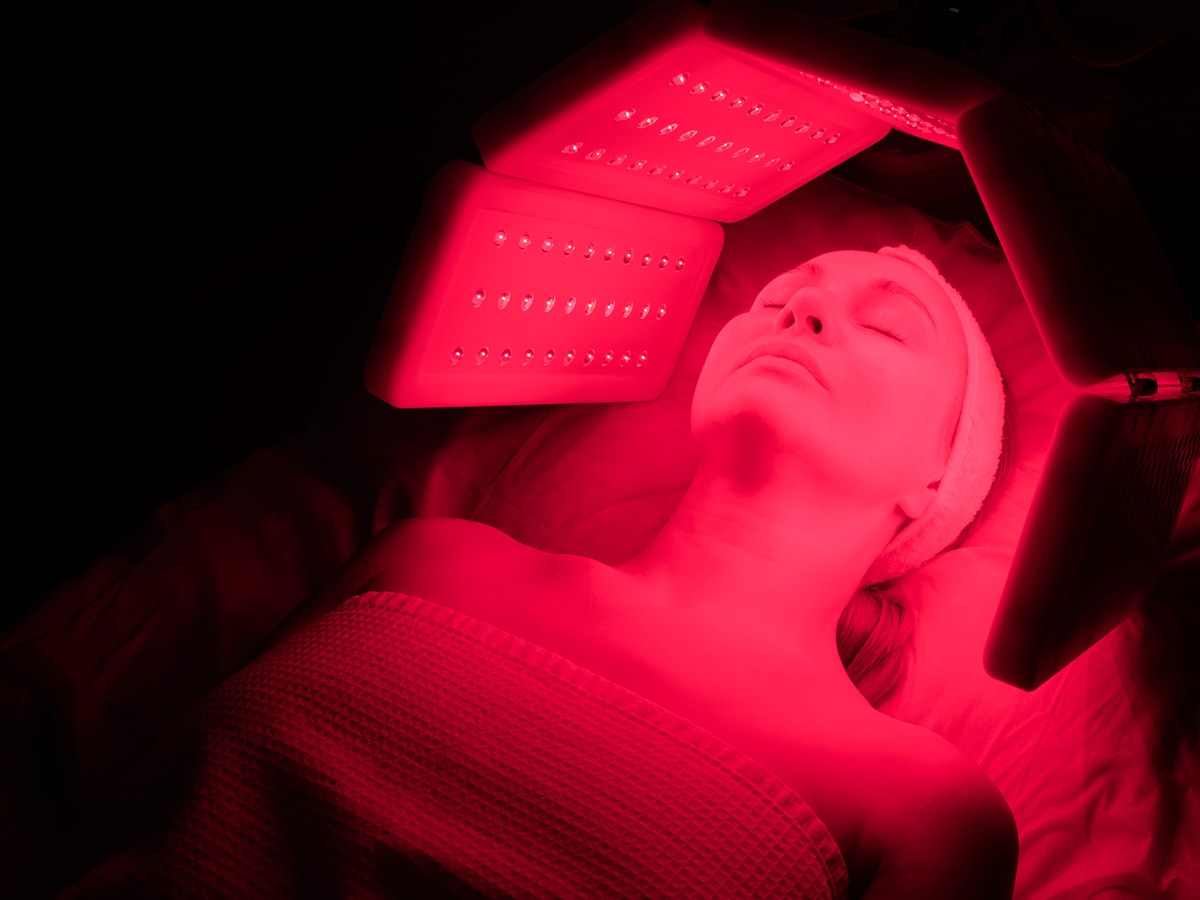
 Red light's long wavelengths and low color temperature make it less likely to reduce melatonin levels.Red light therapy is promoted online as a way to better wellness, skin care and sleep. While skin benefits have been reported, the effectiveness of red light for sleep is not confirmed. An expert at the University of Alabama at Birmingham Marnix E. Heersink School of Medicine provides insight into how red light therapy may affect sleep.
S. Justin Thomas, Ph.D., associate professor in the Department of Psychiatry and Behavioral Neurobiology, specializes in behavioral sleep medicine and says the relationship between red light and melatonin is different from other lights.
How it works
Red light may be beneficial for sleep due to its long wavelengths and low color temperature. Longer wavelengths have a weaker effect on the eye’s circadian receptors. Certain types of light suppress the release of melatonin, which affects the circadian rhythm.
“Light is detected by specialized cells in the retina,” Thomas said. “These cells are most responsive to blue light, or wavelengths close to blue light, and less responsive to red light.”
Red light is less noticeable to the body’s sleep system, so it is less likely than other types of light to reduce melatonin levels. However, red light does not encourage melatonin production.
“All light suppresses melatonin production and release by the brain,” Thomas said. “The brighter the light source, the more melatonin is suppressed, and this applies to red light as well.”
Best practices
Although red light affects melatonin less than blue light, an excessive amount can still negatively impact sleep.
“Small amounts of red light, if light is needed, are generally considered safe,” Thomas said. “High levels of red light may actually suppress melatonin production and release.”
Red light therapy before sleep typically involves using an LED panel or light device that emits red wavelengths onto the skin. Thomas says proper timing is crucial for maximizing its sleep benefits.
“The brain is most likely to produce and release melatonin in total darkness,” Thomas said. “The absence of light a couple of hours before desired sleep time is ideal because it takes time for the brain to respond to light.”
Using red light approximately two hours before sleep is a better option than using blue light, but there is little evidence that it has other beneficial impacts on sleep. If considering using red light therapy for sleep, Thomas recommends speaking to an optometrist about the safety of red light exposure for the eyes.