Case History:
A hospitalized patient with a venous catheter developed fever 15 days after admission to the ICU.
Blood culture sets were collected and the organism shown (Gram stain) was isolated from both anaerobic and aerobic bottles in 2 sets.
Results: Cat=NEG, LAP=POS, and PYR=POS
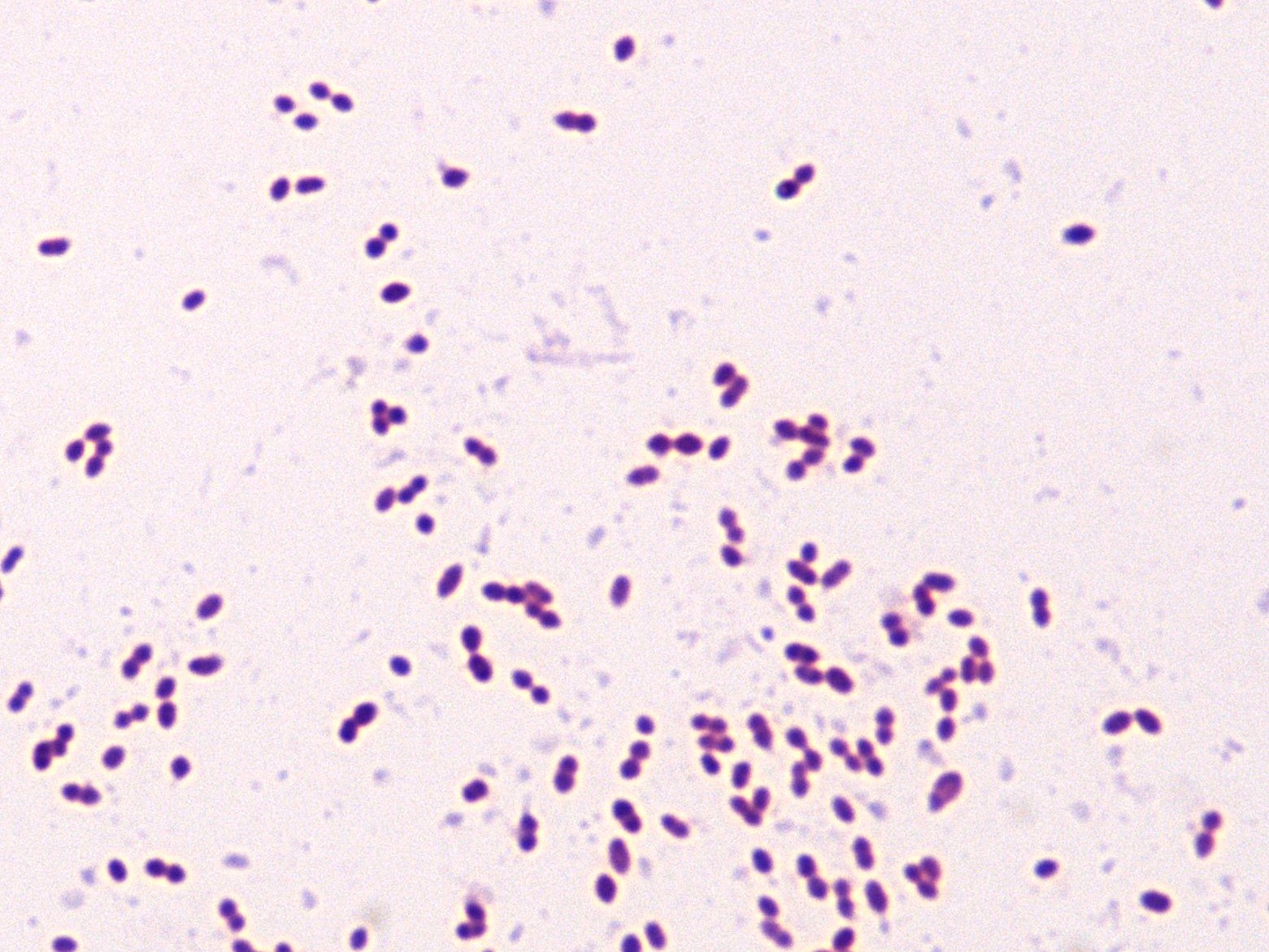
Which of the organisms best matches the observations of this isolate?
A. S. mitis/oralis
B. Staphylococcus sp.
C. Enterococcus sp.
D. Leuconostoc sp.
Correct Answer: C. Enterococcus sp.
Discussion:
The Gram stain (GPC in pairs/chains) and biochemical results (CAT- LAP+ PYR+) are consistent with Enterococcus sp. Enterococci are considered a normal part of the human microbiome, creating biofilms on mucosal and skin surfaces. Despite their existence as normal flora, enterococci are often isolated in association with nosocomial infections, especially in patients with indwelling devices like venous catheters. Enterococcus faecalis and Enterococcus faecium are responsible for most infections by enterococci (80-90%) and are among the top 3 bacteria associated with hospital-acquired blood stream infections.
Staphylococcus sp. and Streptococcus sp. are also commonly associated with nosocomial infections. However, Staphylococcus sp. appear as clustered, Gram-positive cocci on Gram stain and are catalase positive. B) is incorrect. Streptococcus sp. within the mitis/oralis group do appear the same as Enterococcus on gram stain, Gram-positive cocci in pairs and chains, and have the same LAP and catalase results, but these Streptococcus sp. are PYR negative. A) is incorrect.
Like Enterococcus sp., Leuconostoc sp. appear as Gram-positive cocci in pairs and chains on Gram stain and do not produce catalase. However, unlike Enterococcus sp., Leuconostoc sp. are negative for both LAP and PYR. D) is incorrect
An important feature of Enterococcus sp. that makes it a considerable threat in the hospital setting is the possible expression of the plasmid-encoded resistance genes- VanA and VanB, both of which are most prevalent in E. faecalis and E. Faecium. VanA and VanB provide inducible resistance to vancomycin, a first-line treatment choice for bloodstream infections by gram positive organisms. Plasmids are transmissible between isolates, increasing the possibility of resistance spread throughout a clinical setting. Because of this, vancomycin resistant enterococci (VRE) has been deemed a SERIOUS threat by the CDC. Any bloodstream infections with VRE must be reported to the National Healthcare Safety Network (NHSN) for outbreak prevention and monitoring.
Case contributed by: Ashleigh Riegler, Ph.D., UAB Inaugural Clinical and Public Health Microbiology Fellow