The UAB Department of Pathology recently funded travel awards to three trainees, who will present their research at national meetings this year.
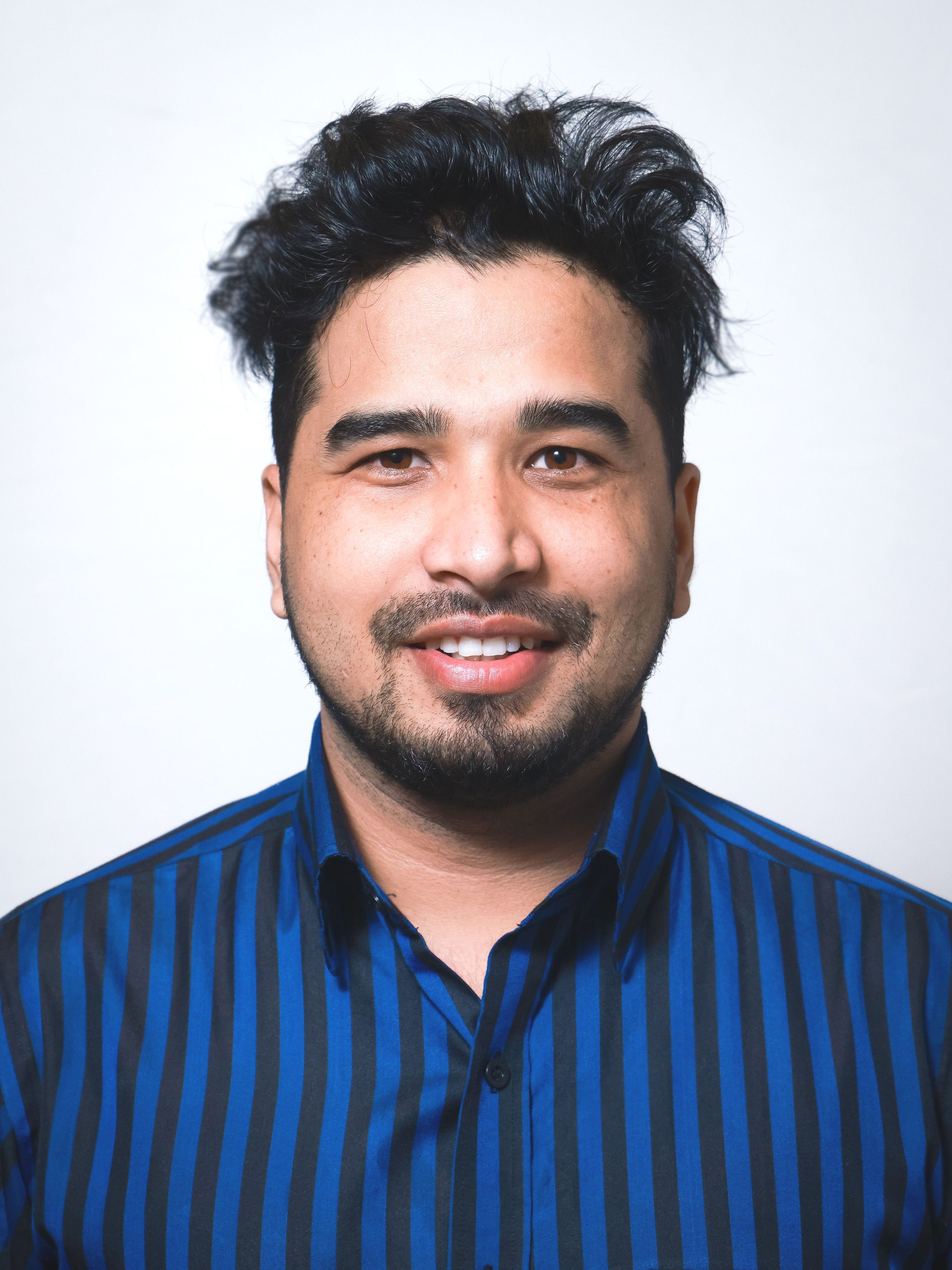 Sachin Budhathoki, Ph.D.Sachin Budhathoki, Ph.D., a postdoctoral fellow in the laboratory of Girish Melkani, Ph.D., a professor in the Division of Molecular and Cellular Pathology, will present at the American Aging Association conference in Provo, Utah in June. His poster, titled “Drosophila Model of Lipid Storage Myopathy Recapitulates Critical Muscular and Cardiac Hallmarks and Reveals Therapeutic Potential of Moderate Exercise,” describes lipid accumulation in muscle fibers, known as lipid storage myopathy, in fruit fly models. The research summarizes key muscular and cardiac features of the disease, suggesting that moderate daily exercise significantly improves cardiac and metabolic function. “I’m grateful to the Department of Pathology for supporting me with this travel award. This opportunity allows me to share how genetically tractable models can be used to uncover mechanisms of age‑related metabolic and cardiac disease and to explore accessible interventions, such as exercise, that may improve patient outcomes,” said Budhathoki.
Ian Miranda, M.S., a physician-scientist graduate trainee in the laboratory of Lalita Shevde-Samant, Ph.D., Endowed Professor in Experimental Cancer Therapeutics, Division of Ian Miranda, M.S. Molecular and Cellular Pathology, presented at the American Association for Cancer Research in San Diego, California in April. His poster, titled “Treg-specific inhibition of hedgehog signaling alters their function and impedes the growth of murine triple-negative breast cancer” describes the role of Hedgehog signaling in T cells in triple negative breast cancer. Triple-negative breast cancer, an aggressive form of breast cancer with limited treatment options, does not trigger a strong immune response due to an abundance of regulatory T cells (Tregs) that contribute to immunosuppression. Using mouse models, the lab discovered that the genetic removal of Gli2, a transcription factor in the Hedgehog pathway, decreases Treg abundance and slows tumor growth. “I am truly honored to receive this travel award from the Department of Pathology to attend AACR 2026! It provided the opportunity to present my research, receive expert feedback, and engage with leaders in cancer research while exposing me to diverse perspectives and cutting-edge discoveries across disciplines,” said Miranda. “As an MD/PhD trainee, I am particularly interested in the translation of laboratory findings into clinical therapies, and AACR helped deepen my understanding of emerging treatments. Overall, this opportunity enhanced my scientific development, expanded my network, and supported my goal of becoming a physician-scientist!”
 Jouan Taheri Talesh, M.D.Jouan Taheri Talesh, M.D., a postdoctoral research fellow in the Department of Neurology, working alongside Rati Chkheidze, M.D., an assistant professor and section head in the Division of Neuropathology, will present at the American Association of Neuropathologists in Cambridge, Maryland in June. His poster, titled “Variability of Microglial Activation in Cerebral and Cerebellar White Matter in Alzheimer’s Disease” investigates regional patterns of microglial activation in Alzheimer’s disease. Microglial activation occurs when the microglia cells, the resident immune cells of the central nervous system, become active to promote tissue repair and maintain cellular health. The study, conducted at the UAB Alzheimer’s Disease Center, uses digital pathology and immunochemistry to measure microglial density and activation in human samples. The research suggests that neuroinflammation in Alzheimer’s disease is region-specific. “What stood out most to me was how differently microglia behave across brain regions, even within the same disease,” said Talesh.
Learn more
Required application materials:
- A copy of the submitted abstracted, oral or poster presentation, and copy of email confirmation of submission and acceptance.
- A short paragraph outlining what scientific meeting will be attended and how attending this meeting contributes to training.
- Brief biosketch/CV of applicant, including years in program, research lab and qualifying exam status (student) or years in lab (postdoc).
- A letter of support from PI/mentor.
Application submission:
Email all required materials as a single pdf file identified by the applicant’s name (i.e., LASTNAME_FIRSTNAME) using:
For more information on eligibility, requirements, review criteria, and subsequent deadlines contact Fatima Igdoura at