Cortez Bowlin, Ph.D., a postdoctoral researcher in the Department of Microbiology, has been selected for a Marie Skłodowska‑Curie Actions (MSCA) Global Fellowship, one of the European Union’s most competitive and respected research awards.
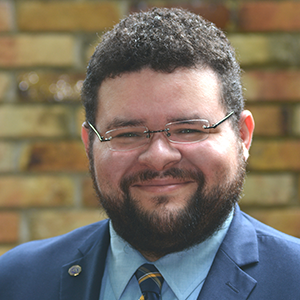 During this fellowship, Bowlin will pursue advanced international research training supported by the European Research Executive Agency. The fellowship provides opportunities for scientists to expand their expertise through global collaborations, interdisciplinary projects, and long‑term research mobility designed to strengthen their scientific impact and leadership.
Bowlin noted that this recognition carries deep personal meaning. He reflected on how Marie Skłodowska‑Curie’s legacy, both her scientific achievements and her perseverance in the face of adversity, inspires his own approach to science.
“It is an immense honor for me to bear her name as a fellow, and I hope to represent her legacy well during my time as a Marie Skłodowska‑Curie Postdoctoral Fellow,” Bowlin said.
The UAB Department of Microbiology communications team connected with Bowlin to learn more about the fellowship and its significance.
What does this fellowship mean to you at this stage of your career?
Bowlin: This fellowship is the backbone of my upcoming position at the University Medical Center Hamburg-Eppendorf (UKE) and allows me to focus entirely on research and developing the tools and techniques necessary for being a successful senior researcher in the international research community.
In terms of funding, this fellowship has secured full funding for two years. Additionally, the MSCA has a substantial network of past fellows and mentors that I can access now and in the future for questions on training, best practices, and scientific connections.
The MSCA fellowship also places heavy focus on training outside of the laboratory on elements of a researcher’s job that are not always highly emphasized – project management, laboratory organization and governance, student training and guidance, interpersonal skills, and professional development, to name a few.
What key question or need in your field will your project address, and why does it matter?
Bowlin: Most people know about DNA and RNA – the genetic molecules. But very few people know about polyphosphate (polyP), which is as old as DNA and RNA and arguably more ubiquitous, as all living organisms utilize it.
In humans, it has been implicated in blood pressure regulation, blood clotting, cancer development, immune responses, neurological development, liver function, and a wide variety of other essential functions.
My project aims to specifically understand the role of polyP in acute liver injury responses and whether polyP levels can be manipulated to reduce liver damage and improve outcomes.
Perhaps, further down the road, my project might even investigate the role of polyP levels in organ transplant success.
What primary approach or method will you use to pursue this work?
Bowlin: The primary focus of my project will be studying the role that polyP plays in acute liver injury. Some data indicate that varying levels of polyP in liver tissue prior to or during chemically induced injury can affect the severity and outcome of the injury.
The foundational work will be done in a mouse model I plan to develop, which can be treated to express different levels of polyP in the liver. The goal is to characterize how altered polyP levels in murine hepatic tissue affect the severity of, and recovery from, chemically-induced acute liver injuries. I am fortunate to be working with a lab in Hamburg that has a defined acute liver injury mouse model that I can build on.
The UKE also maintains a collection of patient tissue samples, including liver tissue samples from healthy and diseased patients. I plan to analyze the polyP levels in healthy and diseased tissue from liver samples in this collection to determine what roles polyP plays in human liver health and the ability of liver tissue to survive and recover following acute damage from things like acetaminophen/paracetamol (Tylenol).
Further down the road, I would like to develop a study of patients with acute liver injury vs. chronic liver disease and their polyP levels, though that would be towards the end of the fellowship at the earliest.
What near‑term milestone should we watch for next?
Bowlin: I intend to move to Germany and start my project by June 1, 2026. The first few months will be devoted to developing protocols for handling polyP testing of human tissue samples, as well as organizing the process to construct the mouse model I aim to work with.
The first public milestone I anticipate is sometime in 2027, when I will be publishing a report on the levels of polyP in patient tissue samples and how those levels correlate with patient outcomes for acute liver injury and chronic liver disease. This is an unknown in the field, and it holds the potential for groundbreaking work.
For example, if patients with higher polyP levels in their liver recover quicker and have minimal tissue damage from acute liver injuries, then providing patients with acute liver injuries with drugs that increase polyP levels could lead to reduced liver damage and a reduction in the number of patients who require liver transplants.
I anticipate the first international meeting where I will discuss my research will be the polyP conference in Barcelona, scheduled for 2027.