Our Get to Know series highlights our dynamic researchers from across the UAB Comprehensive Diabetes Center (UCDC), from faculty members to trainees and laboratory staff. This month, we’re spotlighting Mahima Reddy, a Ph.D. candidate in the Wende Lab in the Division of Molecular and Cellular Pathology in the UAB Department of Pathology. Reddy’s research focuses on O-GlcNAc-driven cardiac remodeling, which is similar to the cardiac pathology seen in diabetes-related heart failure. Find out more about her interests inside and outside the lab in the following Q&A.
What’s your hometown?
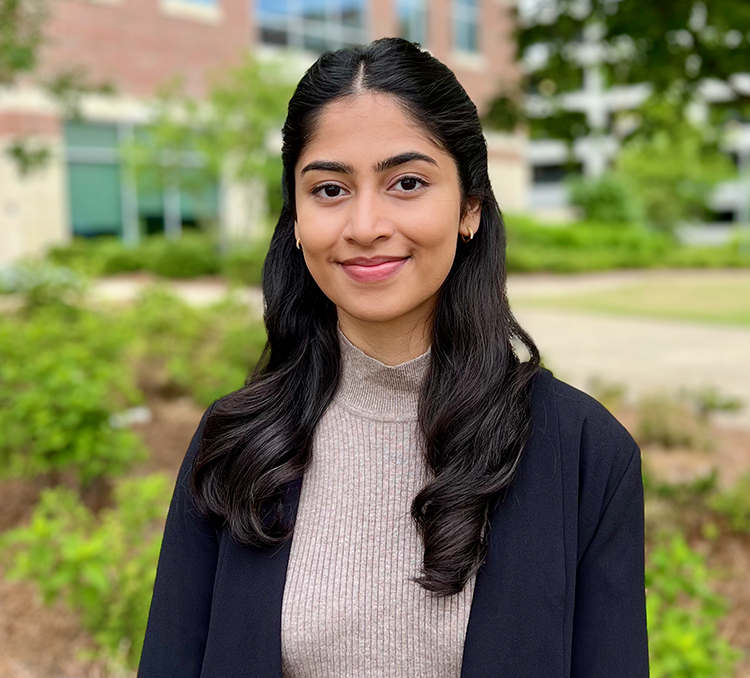 Mahima Reddy I was born in Johnson City, Tennessee, but grew up in Pittsburgh, Pennsylvania, which I consider my hometown.
Tell us a little bit about your background and role at UAB.
I graduated with an undergraduate degree in biology from the University of Virginia (UVA) in 2021, where I also completed an honors thesis titled, “The Role of Lgals3 in Cholesterol-Mediated Vascular Smooth Muscle Cell (VSMC) Phenotypic Transitions to a Myofibroblast-Like State in Advanced Atherosclerotic Lesions.” My experience as an undergraduate researcher was instrumental to my pursuit of M.D.-Ph.D. training in cardiovascular and metabolism-focused fields. After graduating UVA, I stayed an additional year in my undergraduate laboratory to develop a bioinformatics strategy to predict co-regulated gene sets underlying VSMC phenotypic transitions, honing my bioinformatics skills.
I joined UAB’s Medical Scientist Training Program (MSTP) in 2022 and began graduate thesis research with Dr. Adam R. Wende in 2024. Joining Dr. Wende’s laboratory was an easy decision given my interests: I had really enjoyed the cardiovascular and pulmonary modules during my preclinical years, and I also wanted to expand my knowledge of cardiovascular biology by shifting my focus from the vasculature to the heart. Plus, the supportive environment of the Wende laboratory would allow me to truly integrate my dual interests in wet bench experiments and dry lab bioinformatics for my dissertation research. Now as a Ph.D. candidate, I am excited to be studying how metabolic perturbations, a research area that first intrigued me as an undergraduate, contribute to novel protein post-translational modifications and epigenetic changes in the heart.
What are your current areas of research in the Wende Lab?
My thesis project is focused on understanding how O-GlcNAcylation (O-GlcNAc), a reversible, glucose-derived post-translational modification that occurs on intracellular proteins, contributes to cardiac remodeling as seen in diabetes-related heart failure. I am specifically focused on how a lactate transporter, MCT4, is regulated by O-GlcNAc to contribute to cardiomyocyte-macrophage cellular crosstalk and inflammation in the heart.
My background in and passion for bioinformatics has also allowed me to contribute to other projects in the Wende lab related to metabolism and epigenetics, including the study of how pyruvate dehydrogenase kinase (PDK) isoforms differentially affect pressure overload-induced cardiac hypertrophy. I am also learning more about macrophage biology in the heart and how it may be epigenetically regulated by working on a project that investigates how the inhibition of epigenetic repressive enzyme EZH2 affects the response to myocardial infarction.
How is your research related to diabetes?
My research in the Wende lab focuses on O-GlcNAc-driven cardiac remodeling, which is very similar to the cardiac pathology seen in diabetes-related heart failure. O-GlcNAc levels in the heart have been shown to increase in humans and animals with diabetes, correlating with HbA1c and blood glucose levels and worsening cardiac function. Despite this link between glycemic stress and cardiac dysfunction, the mechanisms by which O-GlcNAc leads to cardiac tissue-level dysfunction remain unclear. My research aims to delineate this by studying the role of lactate transporter, MCT4, which is commonly induced in hearts undergoing O-GlcNAc-driven cardiac remodeling and in humans with diabetes-related heart failure. The overall goal of this research in the Wende lab is to identify new therapeutic targets and mechanisms that may prevent or treat cardiac dysfunction during diabetes.
What do you enjoy doing outside the lab?
I really enjoy hiking and exploring the beautiful trails of the South. Since starting graduate school, my friends and I started a tradition of completing one hike a month. As a result, I have hiked nearly all waterfalls in Alabama and have since branched out to Tennessee and North Carolina. I have also been harness-training my cat, Scout, so that she can eventually accompany me. Besides hiking, I also like to make jewelry and run.
What’s your favorite thing to do in Birmingham?
My favorite thing to do in Birmingham is to enjoy good food with friends—whether it’s picking delicious berries at a pick-your-own farm, trying a new restaurant, or helping to cook for a multicourse dinner party.