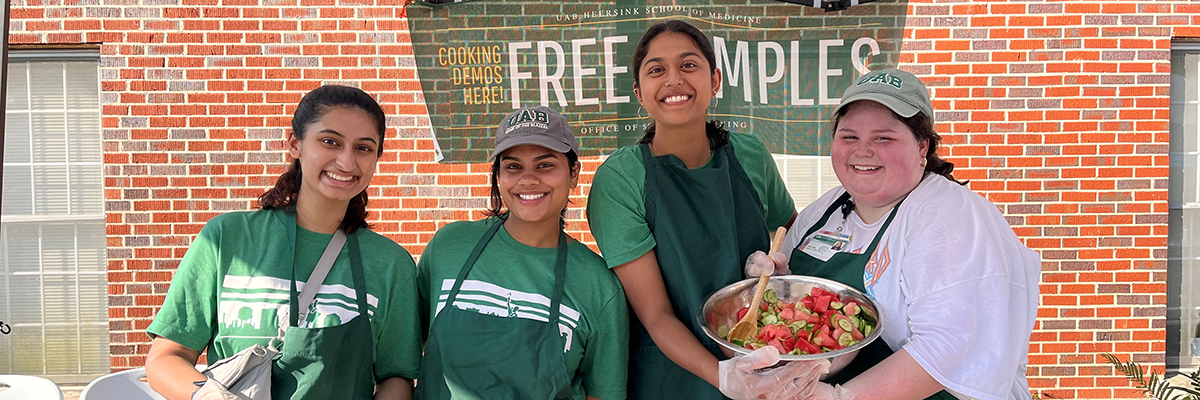
The UAB Heersink School of Medicine emphasizes the vital role nutrition plays in an individual's overall health.
From the beginning, nutrition is integrated throughout our curriculum to prepare students to have an effective impact on the lives of patients and broader communities. Our longitudinal curriculum will enable students to apply foundational nutritional knowledge and skills to prevent disease, maintain health, and treat chronic illnesses. This curriculum progresses through three stages: acquisition of knowledge, application of that knowledge in clinical care, and reinforcement/consolidation of key nutritional principles to optimize individual health.
 Building an Evidence-Based Foundation in Nutrition for Future Physicians
UAB has received a $1.175 million HRSA award to expand student scholarships and strengthen our nutrition and lifestyle medicine curriculum. This funding will enable the creation of web‑based modular tools designed for use by Heersink School of Medicine students and adaptable for dissemination to other medical schools, supporting training in evidence‑based dietary interventions, chronic disease prevention, and health system reform. By advancing this work, we better support our students and elevate the role of nutrition and lifestyle medicine in patient care.
Download Nutrition Education Information
Turn Nutrition Knowledge into Clinical Impact
From day one, you’ll discover how nutrition shapes health. In your MS1 and MS2 years, you’ll uncover how the body uses nutrients, what happens when deficiencies occur, and how metabolic diseases develop. You’ll learn to spot the early signs of malnutrition, understand factors that affect a patient’s nutritional status, and practice the basics of nutrition counseling, nutrient metabolism, and energy regulation.
In your third year, everything becomes real. You’ll walk into clinics and apply what you’ve learned with patients managing hypertension, diabetes, obesity, chronic illness, and food insecurity. 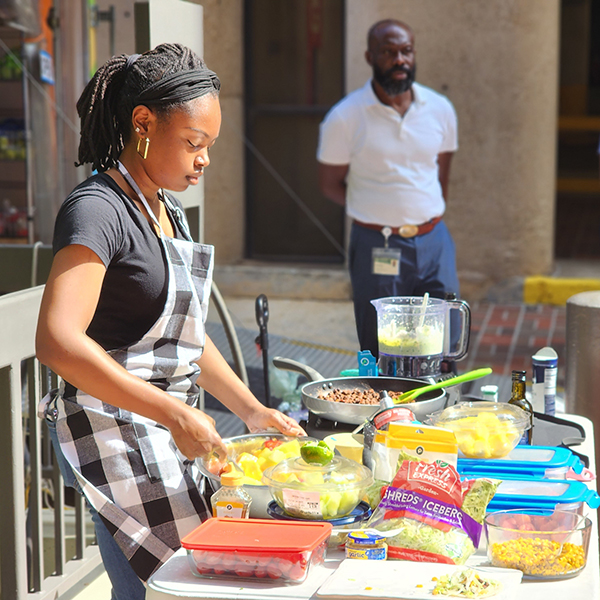 You’ll assess nutritional status, build evidence-based nutrition plans, and practice the communication skills needed to guide meaningful change.
Your final year prepares you for leadership. You’ll refine your counseling techniques, explore advanced strategies for chronic disease nutrition management, and learn to integrate community resources, medications, and specialist referrals. You’ll graduate with the confidence to make nutrition part of your everyday clinical practice.
In addition to our core curriculum in nutrition, we have a wide range of elective curricular and extra-curricular offerings, like the ones listed below.
Cooking Healthy on a Penny (CHOP)
In the first semester of medical school, all students have the opportunity to receive training in how to give a cooking demonstration as a way to teach healthy eating in the community. Students then go to local farmers markets and health fairs where they demonstrate how to cook healthy recipes that are budget-friendly and culturally accessible.
Nutrition Counseling Training (Birmingham)
During the endocrinology module, students have the opportunity to receive training in nutrition counseling for patients with pre-diabetes. Part of the training experience includes one-on-one coaching sessions with students in the dietetic educator program at UAB School of Health Professions. After this training, students provide individualized dietary counseling for patients by phone.
Culinary Medicine Co-Enrolled Course (Tuscaloosa)
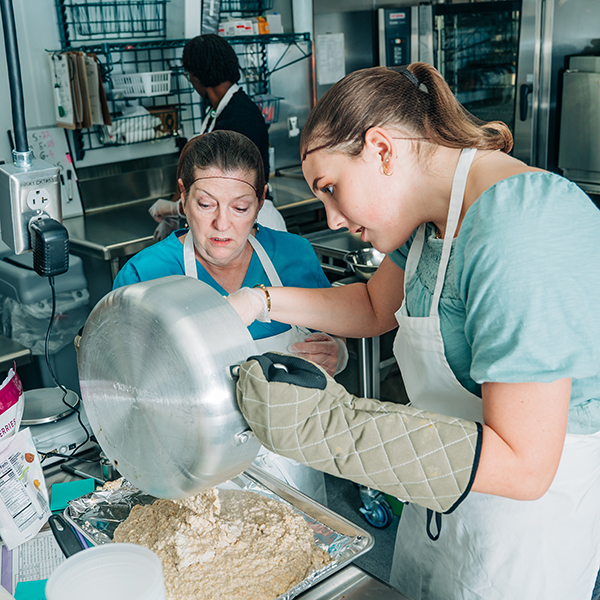
Students complete 25 hours of curriculum on the relationship between nutrition and disease. Students learn about nutrition for disease prevention and management, as well as nutrition for weight management. This course includes online modules and active hands-on cooking (and tasting!) in a teaching kitchen.
Lifestyle Medicine Teaching Kitchen (Montgomery)
Faculty in Montgomery recently received a grant from the UAB Health Services Foundation to build a teaching kitchen on the UAB Montgomery campus. As a part of a larger program for teaching students, residents, and community members the six pillars of lifestyle medicine, learners will have the opportunity to master the skills required to create healthy and delicious meals from nutritious ingredients.
Dynamic Health
In the Dynamic Health interest group, students address the multiple integrated aspects of chronic health within the community. Students enhance their motivational interviewing techniques by advising participants on disease education, exercise, and nutrition. Additionally, there are opportunities for group exercise with the community.
Equal Access Birmingham
A student-run, free clinic serving the Birmingham community, EAB operates acute and primary care clinics on both Wednesday evenings and Sunday afternoons, along with monthly mental health clinics and other special clinic events. Students can also participate in health education and screening events, which take place around the city.