In our comprehensive three-year fellowship program, you will gain extensive hands-on clinical experience, personalized instruction, and research opportunities from renowned physicians and investigators in a supportive, collegial environment.
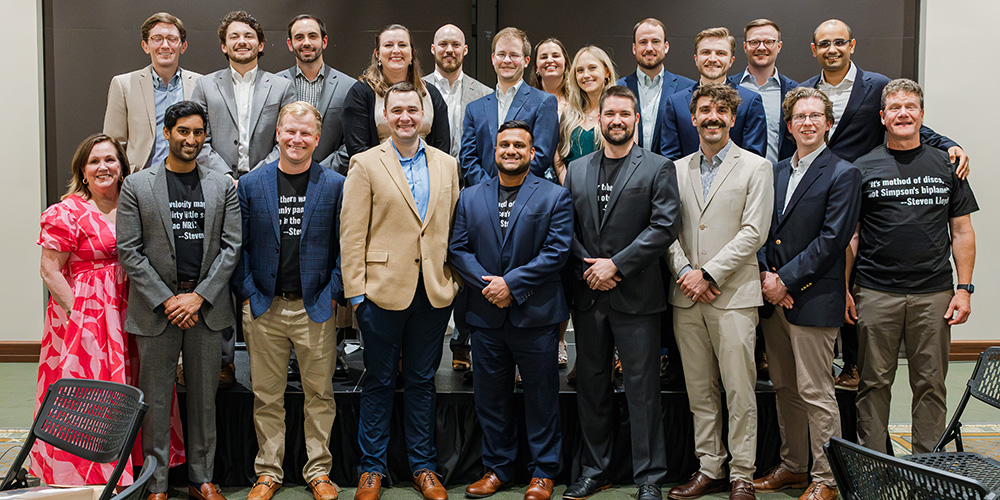
Fellowship Experience
The UAB General Cardiology Fellowship Program provides comprehensive clinical training designed to prepare fellows for careers in academic cardiology, advanced subspecialty training, or clinical practice. Fellows gain extensive experience in cardiovascular imaging, interventional and electrophysiology consults, critical care cardiology, and outpatient cardiology while working alongside nationally recognized faculty.
The program emphasizes strong clinical training, procedural competency, mentorship, and scholarly development. Fellows graduate prepared for competitive subspecialty fellowships or successful careers in cardiovascular medicine.
Clinical Rotations
 UAB is a highly walkable campus, making it easy to navigate your clinical rotations. Many of our clinical training sites are connected by skybridges, offering protection from rain, heat, and traffic. Browse these buildings to learn more about the types of training conducted there.
Explore our training sitesOpens an external link.
Our fellowship supports a three-year training model that includes:
Year 1: Core Clinical Rotations
Core rotations in cardiac catheterization, echocardiography, nuclear cardiology, consult services, and the CCU.
Year 2: Advanced Procedural and Imaging Training
Building on procedural skills and teaching procedures with increased cardiac catheterization and echocardiography volume, performing transesophageal echocardiography (TEE), electrophysiology consults, cardiac CT, cardiac MRI, advanced heart failure, and CCU rotations.
Year 3: Career Development and Electives
The third year allows fellows to largely tailor training toward their future career path with increased elective time.
Elective rotation opportunities include:
- Research
- ECMO
- Cardiovascular surgery
- Adult congenital heart disease (one month required during third year)
- Electrophysiology lab
- Structural cardiac imaging
Training
Fellows gain extensive procedural and imaging experience including:
- Cardiographics (ECGs, Holters, Treadmill Stress, etc.)
- Cardiac catheterization
- Transthoracic echocardiography
- Transesophageal echocardiography
- Nuclear cardiology
- Cardiac CT
- Cardiac MRI
Additional clinic exposure includes:
- Electrophysiology
- Advanced heart failure and pulmonary hypertension
- Adult congenital heart disease
- Cardiogenomics
- Cardio-oncology
- Valve clinic
- Pulmonary embolism clinic
Teaching Conferences
Additionally, fellows participate in a structured educational conference schedule. The fellows’ noon conference follows a structured annual curriculum covering key topics across cardiovascular medicine. Early in fellowship, fellows participate in a bootcamp lecture series designed to build foundational cardiology knowledge and procedural understanding. Morning conferences include interventional and EP conference, EKG conference, and the cardiology grand rounds series.
Fellows participate in longitudinal outpatient clinical training throughout fellowship.
Research Opportunities
All fellows are encouraged to participate in scholarly activity throughout their training and will receive support and mentorship from the training program and cardiovascular disease division. Some of the highlights include:
- Every fellow is supported to attend either ACC or AHA during the first year of training.
- Further support is provided for fellow presentations at local and national meetings as well as for research publications.
- Access to mentorship in each of the subspecialties and disciplines within the broader field of cardiology.
Let's get acquainted
It's not just what you learn. It's also about the people you learn with. Our cardiovascular fellowship program leaders are dedicated to developing the potential of every talented trainee.
Meet our people
Frequently Asked Questions
-
What will I need to apply?
All applications are reviewed via Electronic Residency Application Service® (ERAS), #1007141F0. The following documents are required:
-
Current CV (updated within 3 months)
-
Medical School Transcripts (and diploma if requested)
-
Medical School Dean’s Letter
-
Three (3) total Letters of Recommendation (including former program directors)
-
Certificate/verification from previous residency training
-
Must be eligible for Alabama Medical License and Alabama Controlled Substance Certificate (all step scores completed at the time of application)
-
Must be eligible for Federal DEA registration
-
Valid ECFMG Certificate (IMG only)
We do not accept any addtional documents outside of ERAS submissions.
-
-
Are there work requirements to train at the VA?
UAB fellowship programs are fortunate to partner with the Birmingham Veterans Affairs Health Care System as a part of our training experience.
Am I Eligible Checklist: Please ensure that you meet the eligibility requirements for training at the VA by accessing the “Am I Eligible Checklist.” Failure to be able to rotate at a major teaching location will, in most cases, result in a revocation of an offer to train, termination, or non-renewal of your GME Agreement.
Selective Service Registration: VA policy states that any male U.S. citizen who did not register for selective service before age 26 is not eligible to work at a VA, no exceptions. You can register for selective service or verify that you have already registered for selective service online with the U.S. Selective Service System.
-
What are the current vaccination requirements?
Vaccinations are required based on CDC recommendations for Health Care Workers including routine childhood vaccines, Hepatitis-B, COVID-19 and Influenza, except in the case of an approved exemption.
-
What are the salaries & benefits for fellows?
Our program provides benefits and insurance plans available to all fellows at UAB. You can find the list of salaries and benefits for fellows based on PGY level here.
-
What is the cost of living in Birmingham?
Birmingham offers a vibrant urban lifestyle at a cost that’s approximately 9% below the national average. Trainees enjoy access to thriving neighborhoods, a nationally recognized food scene, and a dynamic creative community.
-
Is there a minimum USMLE score required?
There is no minimum USMLE score requirement. We take the score into account as part of the overall review of an application.
-
What are the key program dates for Applications
Applications Open and Close — July through September: Apply through ERAS
Applications Reviewed — August
Interview Invitations Released — September
Interviews Begin — October
Fellowship begins — July 1
-
Do you sponsor H1B or J1 Visas?
The division can sponsor JI Visas. We do not sponsor HIB visas.
-
How many training sites are there for the general cardiology fellowship program and do you have to drive from one site to another?
Inpatient clinical rotations are performed at the main UAB hospital and the Birmingham VA Hospital. Fellows can easily walk between the two facilities within a matter of minutes. While the vast majority of outpatient clinical experience is at the Kirklin Clinic and the VA, fellows will have opportunities to rotate at UAB clinic sites separate from the main campus, all within short driving distance with ample time allowed for commuting.
-
Is there enough volume and time built-in to the schedule for fellows to graduate with COCATS level 2 in multiple imaging modalities?
Yes. Many of our fellows achieve COCATS level 2 in cath, echo, cardiac CT, nuclear, and cardiographics. Numerous fellows have additionally achieved COCATS level 2 in cardiac MRI and vascular ultrasound during their three years of training.
-
Where do graduating fellows historically go for further training and/or practice?
Over the past several years our fellows have matched into advanced fellowships for advanced cardiovascular imaging, advanced heart failure and transplant cardiology, critical care, electrophysiology, and interventional/structural cardiology. Many of our graduating fellows enter into practice across the southeast region upon the completion of general cardiology fellowship.
Got more questions? Reach out and let's talk.
 I'd be delighted to talk with you about the many exciting possibilities that await you at UAB and Birmingham. Contact me for more details about cardiology fellowship.
Steven Lloyd, M.D., Ph.D., Program Director
Send an Email
 I'm always ready to answer questions about our exciting program. Please feel free to contact me for more details about the general cardiology fellowship.
Martha Veazey, Education Administrator
Send an Email