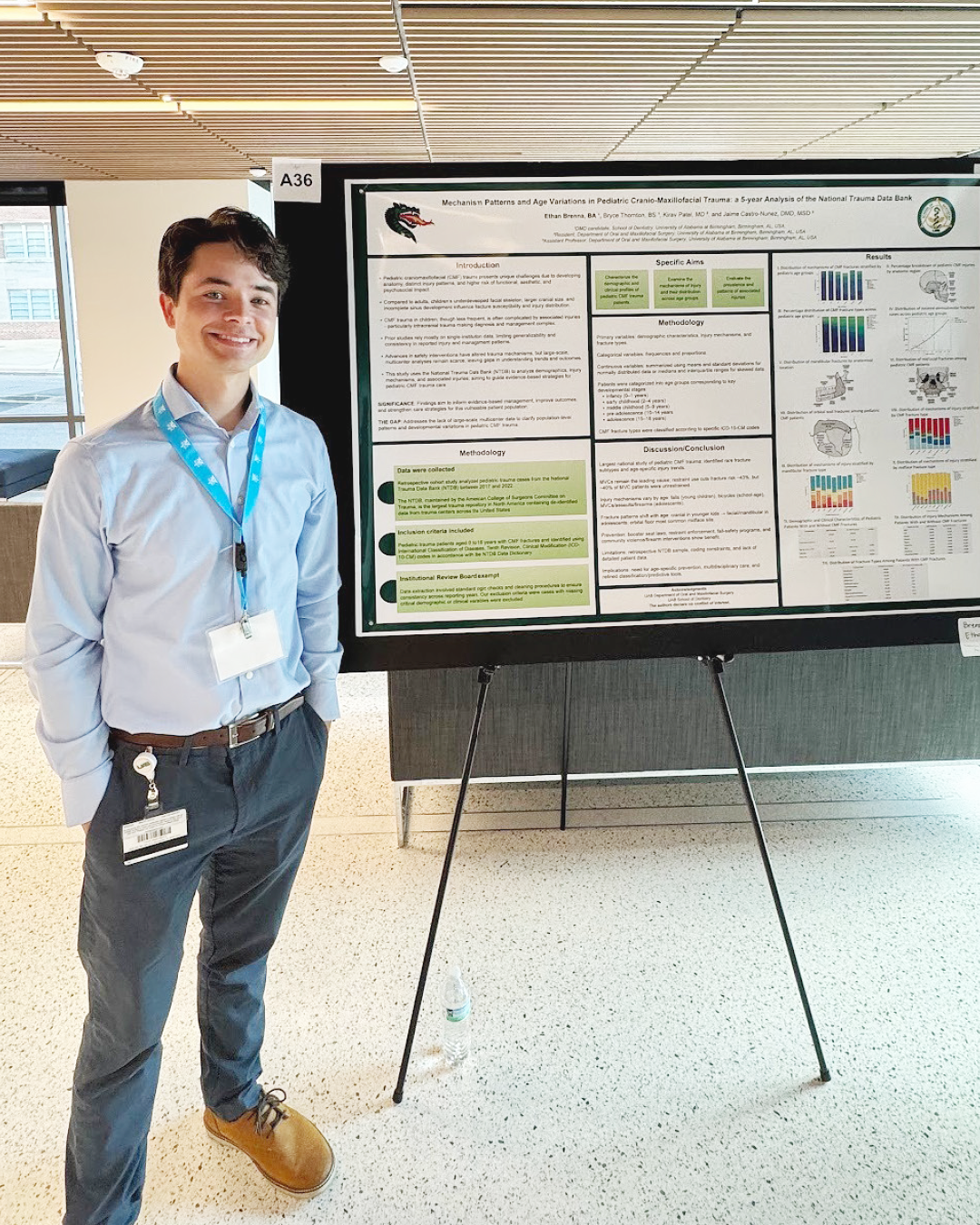
 Ethan Brenna presenting their research on pediatric craniofacial trauma at SEMSS 2025.The Southeastern Medical Scientist Symposium, or SEMSS, is a long-running regional meeting that brings together students, trainees, and mentors pursuing dual interests in medicine and research. Founded in 2010, it was hosted this year in 2025 by the University of Alabama at Birmingham. The symposium serves as a space where early-career investigators from across the Southeast can present original work, attend breakout discussions, and learn from leaders in academic and clinical science. The event is organized each year by students and faculty from medical-scientist training programs and related fields. Its format combines keynote addresses, small-group career sessions, and research that showcases how scientific inquiry supports patient care. The focus is not on competition but on collaboration, on showing how medical students, graduate researchers, and residents are learning to think as both clinicians and scientists.
The 2025 meeting was held in UAB’s Marnix E. Heersink Biomedical Innovation Conference Center, where students filled the new lecture halls and study areas with conversations about data, mentorship, and career paths. Sessions explored topics such as artificial intelligence in biomedical research, residency programs with protected research time, and strategies for building a personal identity in medicine. UAB’s hosting of the fifteenth anniversary gathering reflected the university’s continuing role in training physician-scientists and its growing network of interdisciplinary programs across medicine, dentistry, and public health.
Among the many student projects presented that weekend was a study by UAB DMD candidates Ethan Brenna, Bryce Thornton, and Kirav Patel, conducted under the mentorship of Dr. Jaime Castro-Nunez of the Department of Oral and Maxillofacial Surgery. Their work examined patterns of pediatric cranio-maxillofacial trauma using data from the National Trauma Data Bank between 2017 and 2022. By tracing hundreds of thousands of injury records, they identified how the causes and locations of facial fractures change as children grow. Falls were most common in toddlers, bicycle injuries in mid-childhood, and motor-vehicle collisions and assaults in adolescents. They found that restraint use in vehicles significantly lowered the risk of facial fractures, while non-restraint and distraction during driving remained major factors.
The study also revealed that the site of injury shifts with age. Young children sustained more cranial vault fractures, whereas older groups experienced higher rates of midface, mandibular, and orbital-floor fractures. These patterns reflected both the maturing structure of the skull and the changing environments of childhood. The authors concluded that prevention must adapt to development safety in early years, vehicle-safety enforcement for older children, and community-based violence prevention for teenagers.
Together, SEMSS 2025 and the research showcased here captured the balance between education and investigation that defines the physician-scientist path. The event gave participants a sense of how modern medicine depends on curiosity and collaboration as much as on clinical skill. In the context of that broader meeting, the work of Brenna, Thornton, and Patel stood as one example of how students at UAB are learning to translate data into insight, connecting the details of anatomy and public health to the larger goal of understanding and preventing human injury.
Story originally published in Vol IV, Fall 2025 Bridging the Gap, a newsletter of the UAB Local Student Research Group.