J. Bart Rose, M.D., MAS, associate professor in the UAB Division of Surgical Oncology and chief in the Section of Hepatopancreatobiliary Disease, brought his expertise directly to patients and caregivers across the country during a live virtual Q&A hosted by the Neuroendocrine Cancer Awareness Network (NCAN).
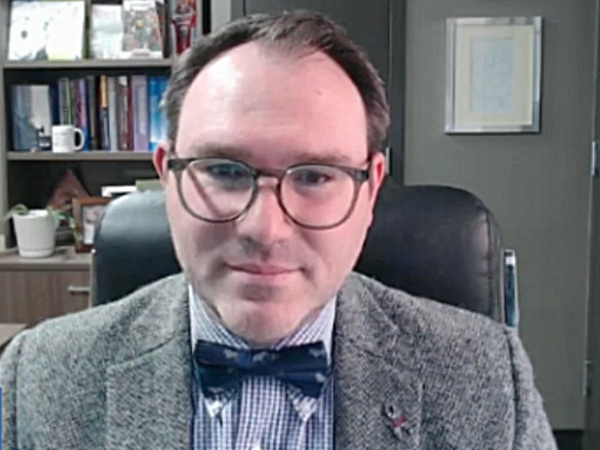 Streaming live on NCAN’s platform, the session offered participants the opportunity to engage in real time with one of the nation’s leading specialists in neuroendocrine tumors (NETs), all from the comfort of their homes. Rose fielded a wide range of patient-driven questions during the hour-long discussion. Topics included treatment decision-making, surgical options, emerging therapies, and the challenges of managing complex metastatic disease. Throughout the session, Rose emphasized that neuroendocrine tumors require highly individualized care. He also explained that while NETs are often considered rare, their prevalence is increasing as more patients live longer.
“While neuroendocrine tumors are relatively rare in terms of annual incidence, their overall prevalence continues to rise, largely due to improved detection and longer survival among patients,” Rose noted.
Rose also clarified key distinctions within the disease, including the difference between well-differentiated neuroendocrine tumors (NETs) and more aggressive neuroendocrine carcinomas (NECs), which grow faster and require different treatment approaches. A major focus of the discussion centered on how physicians determine the best treatment strategy, particularly when disease has spread. Rose highlighted that surgery remains a cornerstone of treatment when feasible, even in some cases of metastatic disease. For patients with liver involvement, he explained that removing a significant portion of tumor can likely improve outcomes and treatment prognosis.
“It’s not always about the number of tumors – it’s about where the tumors are located,” he said.
He also discussed how treatment decisions often involve combining multiple approaches, including surgery, liver-directed therapies (such as embolization or ablation), and systemic therapies, which treat cancer throughout the body and radiation-based options like stereotactic body radiation therapy (SBRT). Rose noted that while these therapies are promising, questions remain about optimal timing and sequencing.
“We’re still trying to understand how best to combine these treatments, whether to use them before or after surgery, or in place of it,” he explained.
Since many NETs grow slowly, long-term management is a critical component of care. Rose discussed the role of medications like somatostatin analogs, which can help stabilize tumor growth and control symptoms. He also answered questions about surveillance, noting that patients are often monitored for up to 10 years due to the potential for a late recurrence.
A key theme throughout the session was the importance of seeking care from specialists experienced in neuroendocrine tumors.
“These tumors are treated very differently than many other cancers,” Rose said. “Getting input from someone who understands the nuances can make a significant difference in care and treatment.”
He encouraged patients to ask questions, seek second opinions when needed, and take an active role in their care decisions. The livestream reflects a growing effort to expand access to expert knowledge through virtual platforms. By participating in national patient education events, UAB surgery continues to extend their reach beyond the clinic, helping patients navigate complex diagnoses with greater confidence and clarity.
To watch the interview, view the full livestream here. For additional information about UAB Medicine neuroendocrine care and treatment, review the full list of endocrine treatment services.