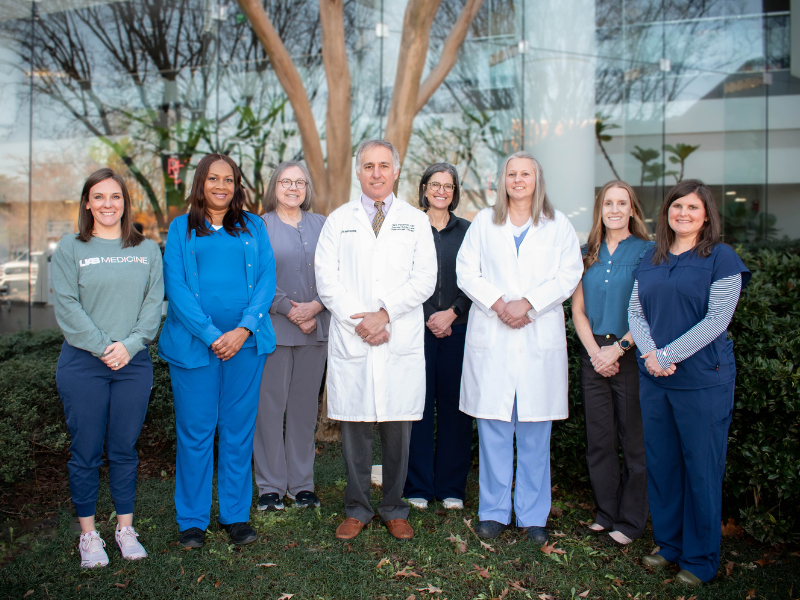
 UAB Vein Clinic team (left to right): Jennifer Pruitt, Karen Kendrick, Shyrl Pitts, Dr. Marc Passman, Rachel Leader, Amy Weldon, Stephanie Frederick, and Jennifer Dudley.
The UAB Vein Program, with its outpatient UAB Vein Clinic located at UAB Hospital – Highlands, provides comprehensive evaluation and treatment of the full spectrum of venous disease, from cosmetic concerns to complex conditions such as deep vein thrombosis, chronic venous insufficiency, venous ulcers, and pelvic venous disorders. The clinic’s vascular surgeons and specialists can meet the needs of the full spectrum of vein concerns. Learn about what common vein concerns may look or feel like, and how to get care.
Varicose veins and spider veins
Not all veins visible in the legs are the same, and you can identify them by their distinctive features. Varicose veins are swollen, dark purple or blue in color, and look like large ropes. Spider veins are smaller, thread-like veins. Besides being a noticeable aesthetic concern, varicose and spider veins can be signs of something more serious below the surface. They are often accompanied with swelling and leg cramps, and if left untreated, they can result in skin ulcers and blood clots, requiring intensive medical care. These veins are visible and uncomfortable because when blood is returning to the heart, it pools in the vein and causes congestion and enlargement.
 Dr. Marc Passman and Rachel Leader.
The UAB Vein Clinic offers minimally invasive treatments for these diagnoses that have few side effects and can be performed in an outpatient clinic setting. Treatment recommendations are individualized and may range from lifestyle modification and compression therapy to minimally invasive procedures or surgery, depending on the patient's symptoms and underlying vein condition.
Available therapies include:
- Sclerotherapy: A solution is injected into the veins, pushing the blood out and causing the vein to collapse, close down, and disappear over time.
- Endovenous laser ablation: A laser technology using heat closes off the abnormal veins that cause varicose veins.
- Transilluminated Powered Phlebectomy: A few small incisions are made to allow for light-assisted visualization and the precise removal of abnormal veins.
- Traditional vein stripping: If the above minimally invasive procedures are not determined to be a good fit, vein stripping may be recommended. The abnormal veins are tied off and removed from the leg in a surgical procedure.
Venous diseases
 Dr. Danielle Sutzko.The UAB Vein Clinic is also equipped to diagnose and treat more serious conditions including deep vein thrombosis (DVT), pulmonary embolism (PE), venous insufficiency, and venous ulcers.
Venous diseases affect more than 30 million people in the U.S. and yet are often under-diagnosed.
“These serious conditions can often go overlooked because symptoms are dismissed as a normal part of aging,” said Marc Passman, M.D., director of the UAB Vein Clinic. “We hope that with more education about symptoms, people that are affected can get evaluated, and if necessary, receive timely treatment.”
Deep vein thrombosis (DVT) occurs when a blood clot (thrombus) forms in the deep veins of the leg, most commonly in the calf or thigh. It is a serious condition because the clot can grow, impair circulation, or break free and travel to the lungs, heart or brain, causing a life-threatening embolism. DVT symptoms occur in about half of patients and include swelling, pain or tenderness, warmth, and redness or discoloration.
When a blood clot gets lodged in the lungs, it is called a pulmonary embolism (PE). Symptoms of PE include difficulty breathing, faster than normal or irregular heartbeat, chest pain or discomfort, coughing up blood, and low blood pressure, lightheadedness, or fainting. Karen Kendrick.
Chronic venous insufficiency is caused by the veins malfunctioning and not allowing enough blood back to the heart. When blood builds up in the legs, it can cause swelling and pain.
This lack of circulation can lead to venous ulcers, which are open wounds commonly around the ankles that are difficult to heal.
Passman notes that if symptoms occur such as sudden onset leg pain or swelling, patients should go to their local ER for urgent evaluation. If outpatient follow-up visit is needed, it can be scheduled through the UAB Vein Clinic.
Prevention is an important part of vein health, and patients can be assessed for DVT risk at the UAB Vein Clinic. If DVT is identified, treatment may include anticoagulation, minimally invasive clot-removal procedures in selected patients, or therapies designed to reduce the risk of pulmonary embolism.
Expert care at UAB
The UAB Vein Clinic has maintained continuous accreditation from the Intersociety Accreditation Commission for more than ten years, demonstrating the clinic’s commitment to providing the highest level of patient care and adhering to nationally-recognized standards for vein care.
The UAB Vein Program is the only comprehensive program of its kind in Alabama. This integrated program allows for specialized care for patients through a robust team of experts including vascular surgeons, advanced practice providers, and nurses.
How to get referred to the UAB Vein Clinic
 Stephanie Frederick.
If someone has pain and swelling in their legs, Passman recommends they talk to their primary care doctor first to address concerns, and, if warranted, ask for a recommendation to the UAB Vein Clinic.
Patients with cosmetic concerns such as spider veins or visible varicose veins may contact the clinic directly for an evaluation. Until they receive treatment, those with vein pain can manage their symptoms with compression, elevation, and exercise.
Learn more about the UAB Vein Clinic on the UAB Medicine website here.