Created and administered by UAB International Medical Education, the Recognition of Distinction in Global Health (RDGH) program provides medical students with opportunities to broaden their understanding of global health challenges, healthcare systems, research environments, and cultures through international clinical and research electives. Guided by the International Medical Education creed: “Think Globally. Act Locally. Lead With Purpose.”, students learn to translate the knowledge and perspectives gained abroad into meaningful action within their local communities.
In this Q&A, hear from medical students who have recently completed their summer electives and learn how these experiences have shaped their perspectives on medicine and patient care.
Applications for the 2027 RDGH cohort are open December 7, 2026, through January 4, 2027. To learn more about the program, visit the RDGH website or contact
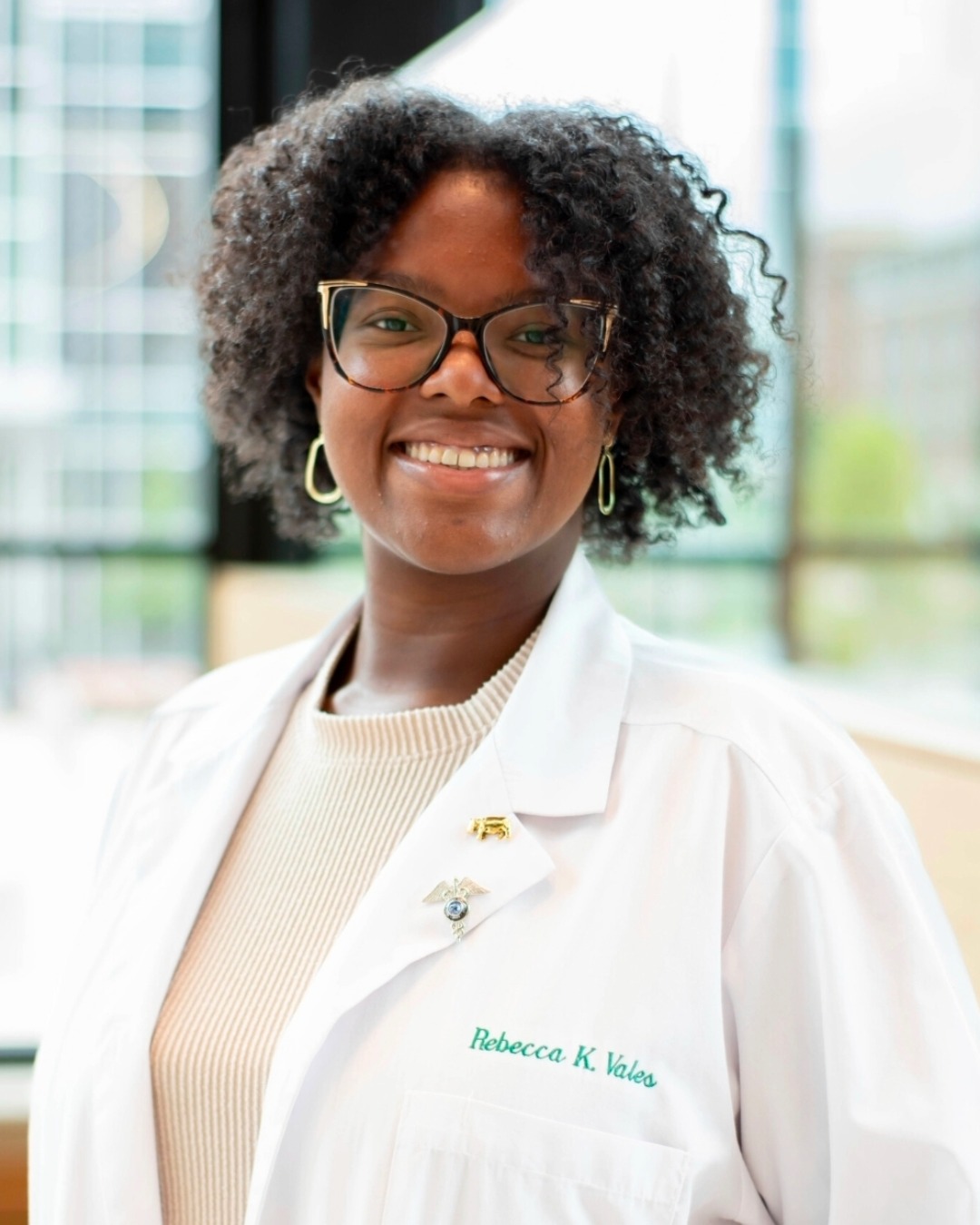 Rebecca Vales
Please introduce yourself, including your year in medical school and any specialty interests you are currently exploring.
My name is Rebecca Vales, and I am a second-year medical student pursuing the Primary Care Track with a special interest in family medicine. I am also a Scholar in the Recognition of Distinction in Global Health (RDGH) Program, where I have had the opportunity to explore healthcare in an international setting.
What attracted you to this international elective opportunity, and why did you choose your host institution/country?
I chose to apply for and join the RDGH cohort because it offered the opportunity to explore the benefits and challenges of healthcare systems that differ from the American model. I hoped to develop a broader, global perspective on the practice of medicine that would enable me to apply those insights locally and contribute to improving health outcomes within my own community. I chose to complete my clinical elective at Kyoto University in Japan because of the country's highly accessible healthcare system, which allows patients to receive care at a relatively low cost. As someone who is passionate about addressing barriers to healthcare access in the United States, it was enlightening to observe how an accessible healthcare system shaped the patient experience at Kyoto University Hospital.
 Can you share a memorable patient interaction, research experience, cultural encounter, or moment that made a lasting impression on you?
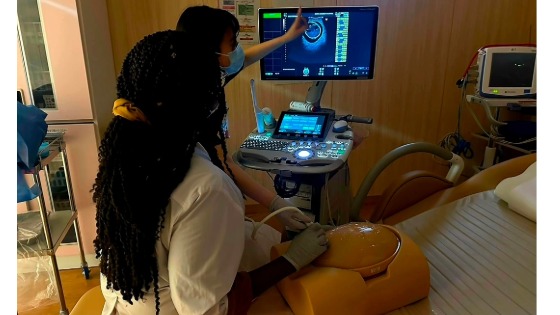
During my OB/GYN rotation, I had the opportunity to learn how to operate an ultrasound machine and perform fetal measurements. Because I have a strong interest in diagnostic ultrasound, this hands-on experience was particularly meaningful. It not only strengthened my appreciation for the role of sonography in obstetric care but also reinforced my enthusiasm for continuing to develop these skills throughout my medical training.
What surprised you most about the healthcare system, research environment, or culture you experienced abroad?
One of the most surprising observations during my rotation in the Primary Care and Emergency Medicine department was how quiet the emergency department remained despite Kyoto University Hospital being a large academic medical center located in the heart of a major city. I spoke with several physicians, who suggested that the accessibility of Japan's primary care system may contribute to fewer complex or preventable medical emergencies requiring emergency department care. This was a sharp difference compared to my experiences at UAB Hospital, where the emergency department frequently operates at or beyond capacity.
 How did this experience shape your perspective on medicine, patient care, research, or your future career goals?
This experience ignited a deeper interest in the relationship between primary care and other specialties, particularly emergency medicine. It highlighted the critical role that accessible, preventive primary care can play in shaping the volume and complexity of patients requiring emergency and critical care services. Moving forward, I hope to further investigate how barriers to primary care influence these patterns within my own community and to identify methods through which primary care physicians can address these challenges. Through community engagement, patient health education, and advocacy, I aspire to help improve access to care and ultimately reduce preventable health disparities.
What is one lesson or takeaway from this experience that you will carry with you throughout your medical career?
Although language differences created communication barriers between me and the patients, physicians, and medical students at Kyoto University, we consistently found creative ways to connect, allowing us to engage in the meaningful cultural exchange that this program encourages. Whether discussing complex topics such as the government's role in healthcare delivery or sharing lighthearted conversations about sports and everyday life, I came to appreciate that genuine human connection extends far beyond a shared language. This realization became the most meaningful takeaway from my experience. It reinforced the importance of approaching every interaction with curiosity, empathy, and a willingness to meet people where they are. As I continue my medical training, I hope to carry this lesson forward by prioritizing authentic relationships with my future patients, fostering trust and comfort as the foundation for compassionate, patient-centered care and improved health outcomes.
What advice would you give to students who are interested in global health or considering an international elective in the future?
For future students interested in global health or considering an international clinical elective, I would encourage taking the time to learn about the culture of the country you plan to visit before you arrive. Culture profoundly influences patients' beliefs, healthcare systems, and physician-patient relationships. While not every aspect of another country's healthcare model can be applied in the United States, understanding the cultural context enriches every clinical encounter and makes the experience far more meaningful.
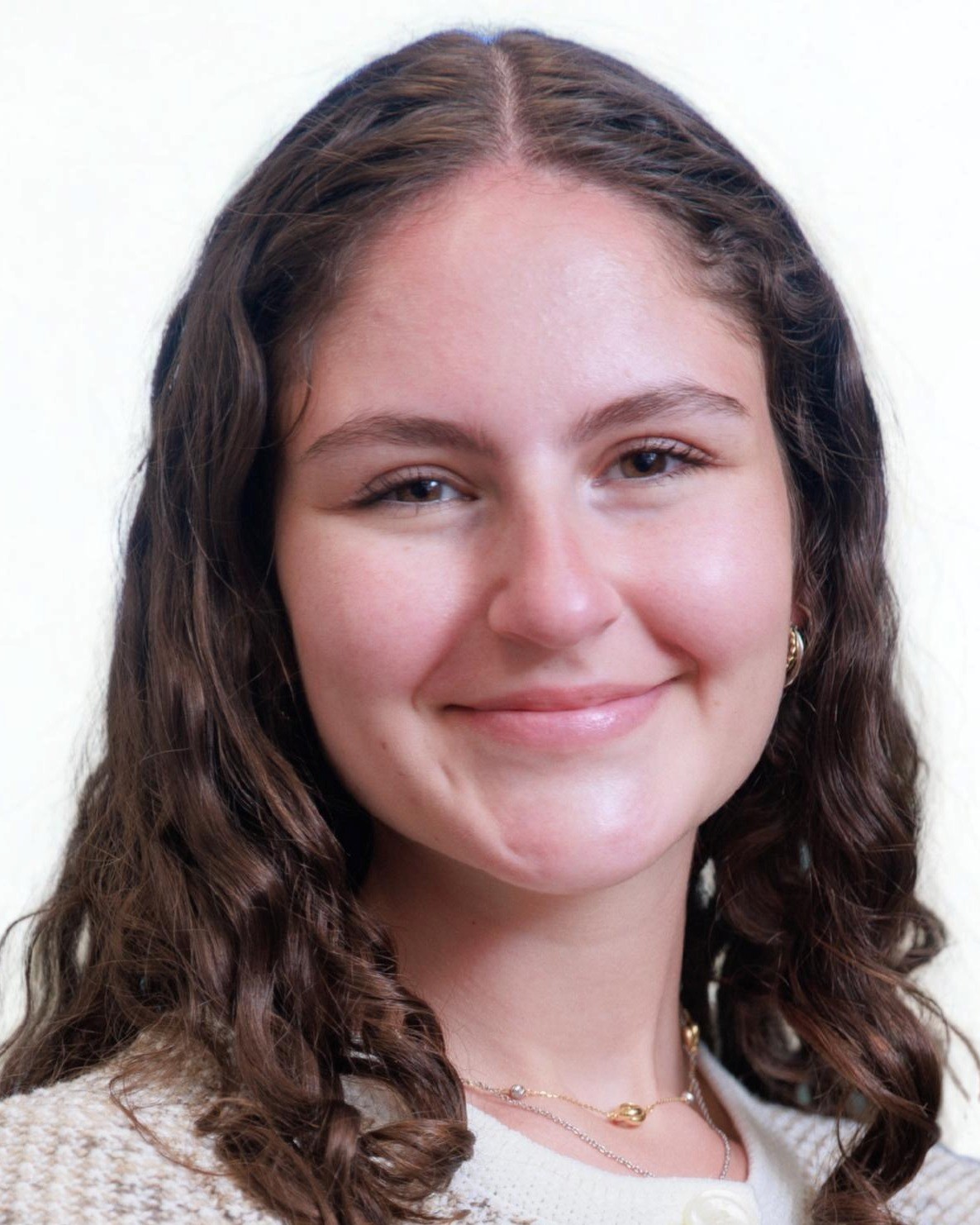 Kyra Berger
Please introduce yourself, including your year in medical school and any specialty interests you are currently exploring.
My name is Kyra Berger, and I’m a medical student at the UAB Heersink School of Medicine. I’m currently exploring several specialties and trying to keep an open mind as I continue through medical school, but I’ve become especially interested in surgery, particularly ENT and plastic surgery. I chose to participate in global health because I hope to incorporate a global health perspective into whatever specialty I ultimately pursue.
What attracted you to this international elective opportunity, and why did you choose your host institution/country?
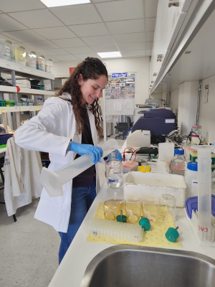
I was attracted to the elective because I wanted to challenge myself by doing something outside of my normal environment. I was the only UAB student traveling to Chile, it was the longest period I had ever lived abroad, and I knew I would be entering a new laboratory and working largely in Spanish. That combination made me nervous, but it was also exactly what appealed to me. I wanted the opportunity to learn how to adapt to a different culture and work with people whose experiences were different from my own. I also liked that the experience at Universidad San Sebastián allowed me to combine global health with research. I was able to work on chronic kidney disease research while learning from researchers in another country and seeing how scientific collaboration can extend globally.
 Can you share a memorable patient interaction, research experience, cultural encounter, or moment that made a lasting impression on you?
One of the most memorable parts of the experience was learning how to perform the mouse surgeries in the lab. I had never worked with research animals before, and I was also learning the procedures in an environment where most of the communication was in Spanish. Javier Reyes, a PhD student in the laboratory, taught me everything step by step. At first the surgeries were very intimidating, but over time I became much more confident. That experience showed me the importance of mentorship and patience when learning something completely new.
A cultural experience that also stood out was visiting the Atacama Desert and meeting a young Lickanantay woman who taught me about her culture and about rica-rica, a plant native to the region that she explained is traditionally used for altitude sickness. I really valued being able to learn about the area directly from someone who had a personal and cultural connection to it.
What surprised you most about the healthcare system, research environment, or culture you experienced abroad?
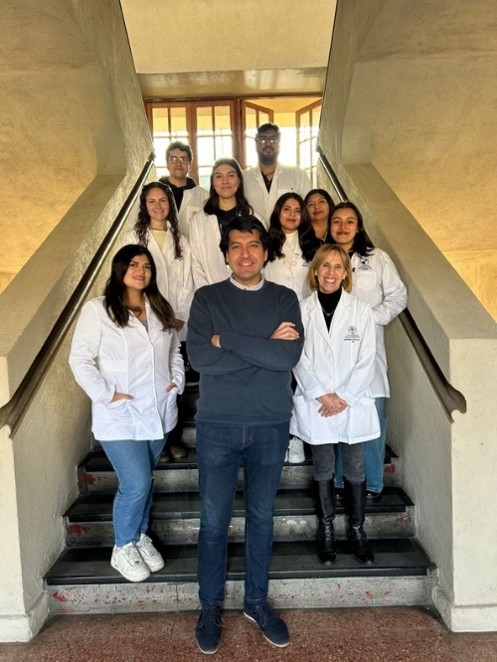
What surprised me most was how quickly I was made to feel like part of the laboratory community. I had traveled to Chile by myself and was initially worried about being in a completely new environment, but everyone was extremely welcoming. My professor even picked me up from the airport and drove me to my apartment when I first arrived. My labmates included me in their daily lives, introduced me to different foods, took me around Santiago, and helped me learn the language. Over time, my labmates and I developed a mixture of English and Spanish, and as they learned more English, I learned more Spanish.
 How did this experience shape your perspective on medicine, patient care, research, or your future career goals?
It changed my perspective in two major ways. From a research standpoint, being in the lab every day gave me a much greater appreciation for how much time and work goes into producing the information we eventually learn in medicine. I was able to see how a research question develops, how experiments are planned, and how different findings gradually contribute to a larger understanding of disease and potentially new therapies. It also changed how I think about communicating with future patients. There were many times in Chile when I understood most of what someone was saying but missed one important word, or I knew what I wanted to say but could not find the Spanish words to express it. Although that is different from being a patient, it gave me a better appreciation for how vulnerable it can feel to navigate an unfamiliar environment in a language that is not your own. I want to carry that perspective into patient care by being patient, communicating clearly, and making sure patients feel heard and understood.
What is one lesson or takeaway from this experience that you will carry with you throughout your medical career?
One of the biggest lessons I will carry with me is the willingness to be uncomfortable in order to learn. When I arrived, I was uncomfortable with the language, unfamiliar with the research techniques, and navigating a new country on my own. Instead of expecting everyone around me to adapt to me, I tried to adapt to their environment. Over time, things that initially seemed intimidating became routine. I think that applies directly to medicine because there will always be situations where I do not immediately know what to do or where I have to learn from someone with a different background or area of expertise. Being willing to ask questions, listen, and learn from other people is something I want to continue throughout my career.
What advice would you give to students who are interested in global health or considering an international elective in the future?
I would tell them not to be nervous and to apply for global health, because part of the value of an international experience is learning how to adapt. I was nervous about traveling alone; my Spanish was limited, and I had never worked with research animals before, but those ended up being some of the areas where I grew the most. I would also encourage students when they go on their trip to become involved in the culture outside of whatever clinical or research work they are doing. Some of my most meaningful memories came from my labmates taking me to local markets, showing me neighborhoods around Santiago, sharing Chilean foods with me, and traveling to places like Valparaíso and the Atacama Desert. Those experiences made me feel less like a visitor and more like part of the community. Most importantly, I would say to go into it willing to be uncomfortable, ask questions, and learn from the people around you. That is where a lot of the growth happens.
 Demi Shamsi-Basha
Please introduce yourself, including your year in medical school and any specialty interests you are currently exploring.
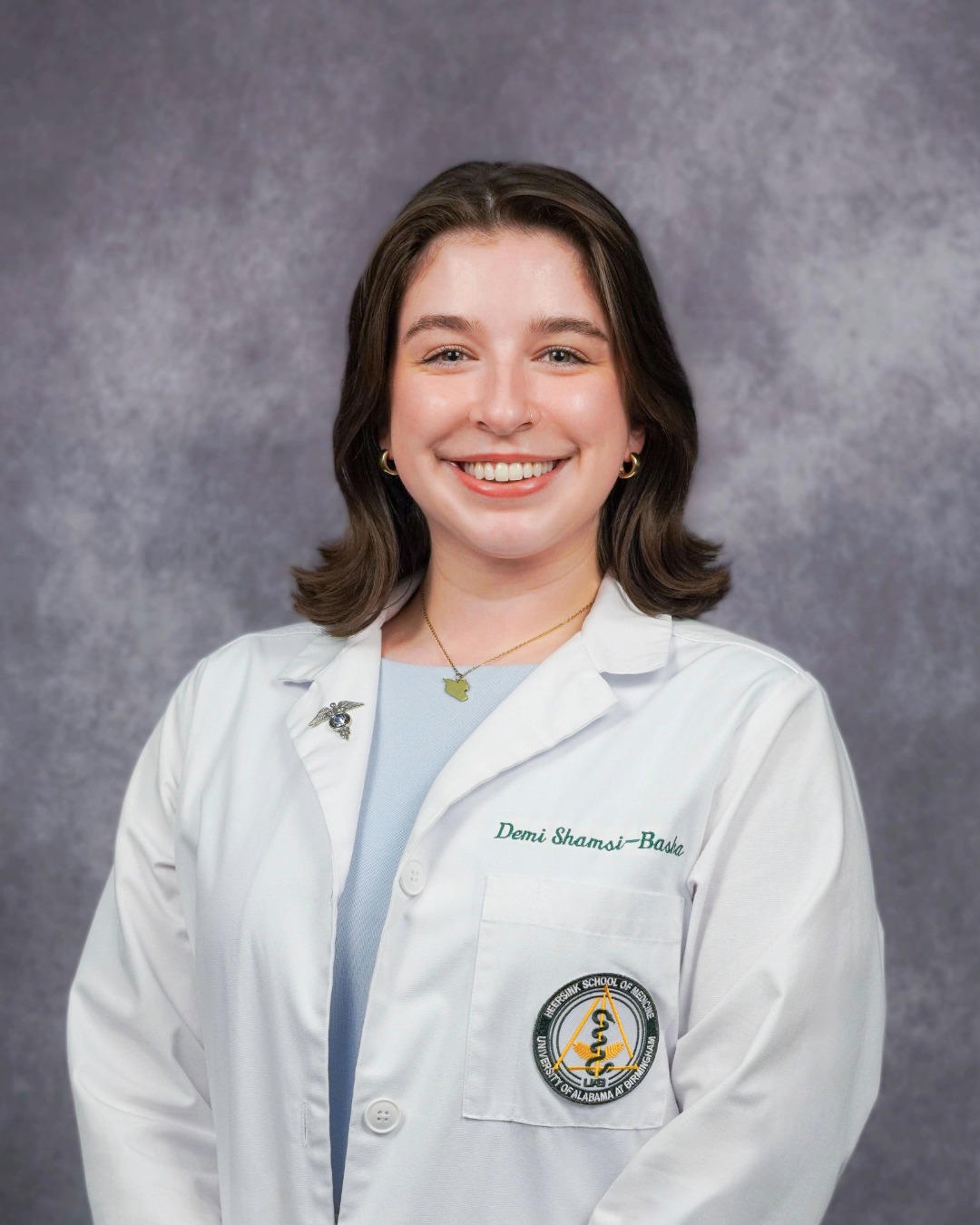
My name is Demi Shamsi-Basha, and I am an MS2 interested in pursuing OB/GYN.
What attracted you to this international elective opportunity, and why did you choose your host institution/country?
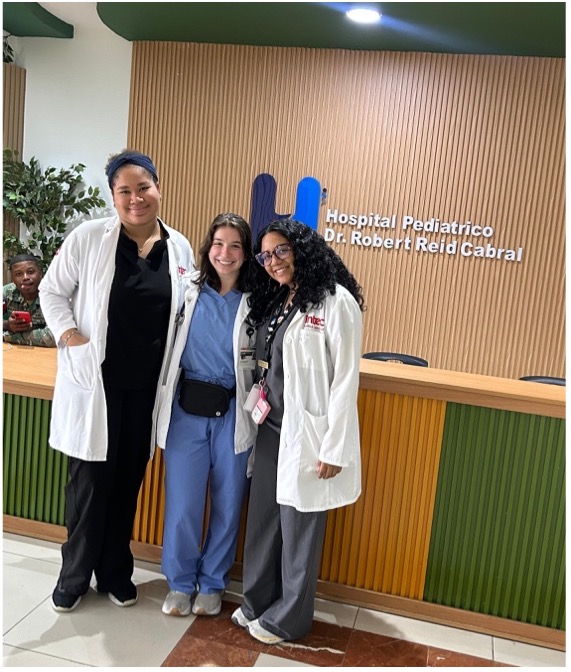
I was drawn to the clinical elective with INTEC in the Dominican Republic for the chance to refine my medical skills while gaining a fresh perspective on healthcare delivery. This particular elective would allow me to explore how the unique obstacles faced in rural Dominican regions like Baní compare to the hurdles encountered by patients in rural Alabama. As a future medical professional in Alabama, understanding these global and local barriers is essential, and this elective provided some valuable insights needed to better serve my own community in the future.
Since this rotation included time at a hospital in Santo Domingo in addition to the primary care clinics of Baní, it would allow me to compare rural medicine practices with urban healthcare systems. I am particularly interested in observing how urban clinical models can be adapted to increase accessibility for underserved populations facing significant barriers. Lastly, this experience offered a unique opportunity to build patient relationships across language and cultural divides. It has always been a goal of mine to improve my Spanish, and this immersive environment provided the perfect setting to develop a skill that is increasingly important for patient care in our state.
 Can you share a memorable patient interaction, research experience, cultural encounter, or moment that made a lasting impression on you?
I was surprised to find out on my OB/GYN rotation that patients were completely alone in the labor and delivery unit. They were not allowed to have any family members or friends, or even their phones, to support them as they labored in one big communal room. Even after they delivered, they remained in the same unit until an actual room opened up for them, and only then were they allowed to have family and friends visit. The medical students explained that this was partially due to patient safety reasons, but my heart still went out to each one of the women as they went through such a difficult experience alone. There was one woman whom I followed through labor, delivery, and postpartum care. I could not help but hold her hand as she screamed through her contractions. I was struck by how little attention she received until it was time for her to deliver. She labored by herself as the doctors and nurses remained behind the desk charting and catching up with one another. It was the medical students who would check up on the patients, coach them through difficult contractions, and take vitals. It was only after a cervical check showed she was completely effaced that they took her into the labor room, and less than 5 minutes later her child was born.
 What surprised you most about the healthcare system, research environment, or culture you experienced abroad?
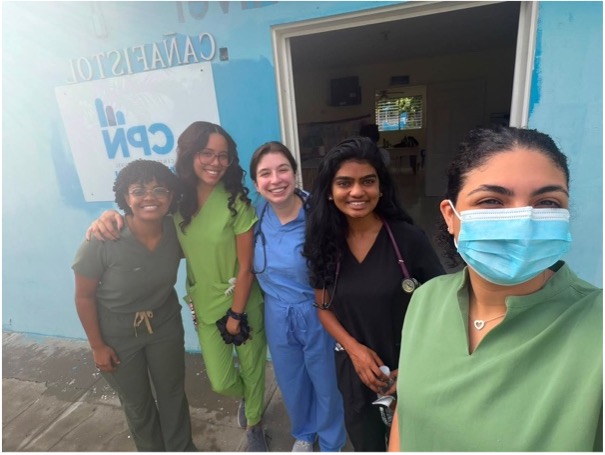
Something that stood out to me during our two weeks at the UNAP (Unidad de Atención Primaria – primary care clinic) in Cañafistol, a neighborhood in Baní, was the sense of community in the clinic. Every patient in the waiting room knew one another. There were conversations about family, holidays and celebrations, and general catch-ups as patients waited to be seen by the doctors. One day, an entire family came into the clinic because their father was on the verge of a hypertensive crisis – his blood pressure on the initial check was 220/110. We learned that his son had died a few days prior in a car accident, and they had buried him just that morning. The doctors gave him medications and kept him in the clinic for a few hours to make sure his blood pressure came down.
Over the course of the day, patients coming into the clinic would sit with the family as they waited to be seen, offer their condolences, and share stories and memories. In this community, everyone knew one another, and it was clear they cared for each other in ways that we do not see frequently in our communities at home, especially not in the sterile-feeling waiting rooms of our own hospitals and clinics.
How did this experience shape your perspective on medicine, patient care, research, or your future career goals?
This experience taught me that being a physician requires looking beyond a patient's symptoms and understanding everything that may be affecting their health. At the UNAP, I saw how factors like access to food, running water, electricity, family support, and living conditions were incorporated into a patient's care. I also saw how physicians and medical students adapted when resources were limited, focusing on what was truly necessary for each patient. These experiences broadened my understanding of what it means to provide quality care and reinforced the importance of approaching each patient with compassion and curiosity. As someone interested in OB/GYN, my time in the Dominican Republic also showed me how important it is to advocate for patients and make sure they feel supported during some of the most vulnerable moments of their lives.
What is one lesson or takeaway from this experience that you will carry with you throughout your medical career?
One of the biggest lessons I will carry with me is that delivering compassionate, quality care starts with a conversation. Whether I was sitting with a patient in their home at the UNAP or watching a woman labor in the hospital, I saw how important it is to understand the person behind the vital signs and diagnosis. I want to carry that perspective with me throughout my career and remember that sometimes the most important part of caring for a patient is simply taking the time to listen, understand their circumstances, and make them feel seen.
What advice would you give to students who are interested in global health or considering an international elective in the future?
I would encourage students to go into an international elective with an open mind and a willingness to be uncomfortable. I was nervous about the language barrier and being in an unfamiliar healthcare setting, but some of the most meaningful parts of my experience came from the moments when I had to step outside of my comfort zone. I would also encourage students to focus on learning from the people around them rather than comparing everything to what they are used to at home. My time with the INTEC students taught me just as much as my time in the hospitals and clinics, and the relationships I formed ended up being one of the most meaningful parts of the experience. Finally, I would encourage anyone considering an international elective to take advantage of every opportunity to participate, ask questions, and learn from a healthcare system that may approach patient care differently than what they have experienced before.