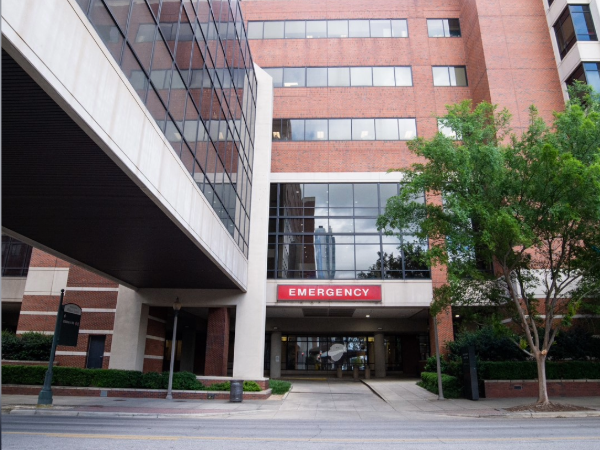
This is the second in a series of articles highlighting the divisions and sections within the UAB Department of Radiology.
Behind many of the critical decisions made in the emergency room is a highly specialized team working just out of sight: emergency radiologists. At UAB, these physicians play an essential, around-the-clock role, delivering rapid, precise diagnoses that help guide care when every second matters.
Emergency radiology is a specialized field focused on rapidly diagnosing acute illness and traumatic injury in patients needing immediate care. Working in emergency departments and trauma settings, emergency radiologists use imaging such as X-rays, CT scans, ultrasound, and MRI to quickly identify life-threatening conditions and guide urgent treatment decisions.
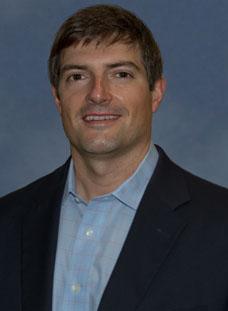
“Unlike most other subspecialties, it is an around-the-clock, 365-day-a-year operation, as acutely ill patients don’t take nights, holidays, or weekends off,” said Stephen Spann, M.D., clinical associate professor and interim chief of the emergency radiology section.
In high-pressure situations, emergency radiologists act as consultant physicians, interpreting imaging studies and providing diagnoses that guide immediate care decisions.
“Providing a quick, accurate diagnosis allows the emergency physicians, trauma physicians, and even neurologists […] to triage patients quicker and more accurately,” Spann said.
While patients may not see them face-to-face, their interpretations often determine what happens next, whether that’s surgery, medication, or further testing.
Emergency departments use a variety of imaging methods, but three are most frequently used: CT scans, X-rays, and ultrasound.
“CT and X-rays are the most ordered studies and have the fastest turnaround times,” Spann said. “CT scans in particular have become the workhorse of emergency imaging, especially for diagnosing conditions involving the brain, chest, abdomen, blood vessels, and trauma injuries.”
Advancements in CT scanners have also had some of the most dramatic impacts in the care of UAB patients.
“The scanners have only gotten faster and better through the years, and what once might have taken 15-30 minutes to do now can be completed in a matter of seconds,” Spann said.
For patients, emergency imaging often happens during some of the most stressful moments of their lives. But at UAB, the radiology team is prepared to meet that challenge with compassion and expertise.
“Patients come to us on their worst day, and they will find a dedicated team of technologists and radiologists there to serve their imaging needs with excellence and professionalism,” Spann said. “Our team is dedicated to providing imaging excellence 24/7 every day of the year.”
At a leading academic medical center like UAB, home to one of the nation’s busiest Level I trauma centers, emergency radiology is an essential part of patient care. Though their work happens behind the scenes, its impact is immediate and life changing.
“The amount of trauma and the complexity of trauma we take care of at UAB is extraordinary,” Spann said. “Our trauma team is fantastic and just like they are ‘Always Here, Always Ready,’ we will be there to provide our supporting role to them and ultimately to our patients.”