Esha Kothekar, M.D., joined the Department of Radiology as an assistant professor in the Division of Interventional Radiology in September 2026.
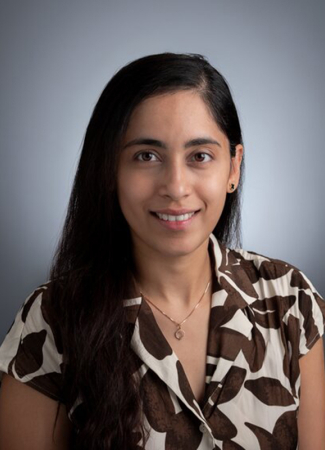
Kothekar attended medical school at Government Medical College in Nagpur, India. She completed a diagnostic radiology residency at Saint Vincent Hospital in Worcester, Massachusetts, where she also pursued Early Specialization in Interventional Radiology and had the privilege of serving as chief resident. She subsequently completed an independent interventional radiology fellowship at Brown University Health.
Kothekar comes with specialized training in vascular and interventional radiology and a passion for minimally invasive, patient-centered care.
Learn more about Kothekar, her journey into medicine, and her goals as a faculty member at UAB.
What inspired you to pursue a career in interventional radiology?
Kothekar: My earliest inspiration came from my father, who is also an interventional radiologist. Growing up, I often heard fascinating stories about his cases and, of course, all the cool tools and gadgets he got to use.
Despite his influence, I wanted to keep an open mind about other subspecialties and initially envisioned a career in diagnostic radiology. However, the moment I stepped into the IR suite during residency, I was hooked. There was no turning back.
What aspects of your new role at UAB are you most excited about?
Kothekar: What excites me most about becoming an attending physician is the opportunity to make a meaningful difference in someone's life through something as small as a tiny incision. The ability to provide effective, minimally invasive treatments that can significantly improve a patient's quality of life is what makes interventional radiology so rewarding.
What are your primary clinical interests?
Kothekar: My primary clinical interests include interventional oncology, women's health, and trauma interventions. I am particularly drawn to these areas because they allow me to combine innovative, minimally invasive techniques with life-changing patient care.
What are your goals for making an impact through both teaching and patient care?
Kothekar: One of the most rewarding aspects of teaching is seeing the excitement and sense of accomplishment on a resident's face when they successfully perform a procedure or master a new skill.
I find that same sense of fulfillment in patient care, whether it's seeing the relief on a patient's face when I tell them their follow-up imaging shows no evidence of residual tumor or knowing that a procedure has made a positive difference in their quality of life.
What makes interventional radiology such a rewarding field?
Kothekar: Interventional radiology offers a unique opportunity to combine advanced technology, innovation, and hands-on patient care. Being able to treat patients with minimally invasive techniques while helping improve their quality of life is incredibly fulfilling. Every procedure presents an opportunity to make a meaningful difference, and that's what continues to inspire me every day.