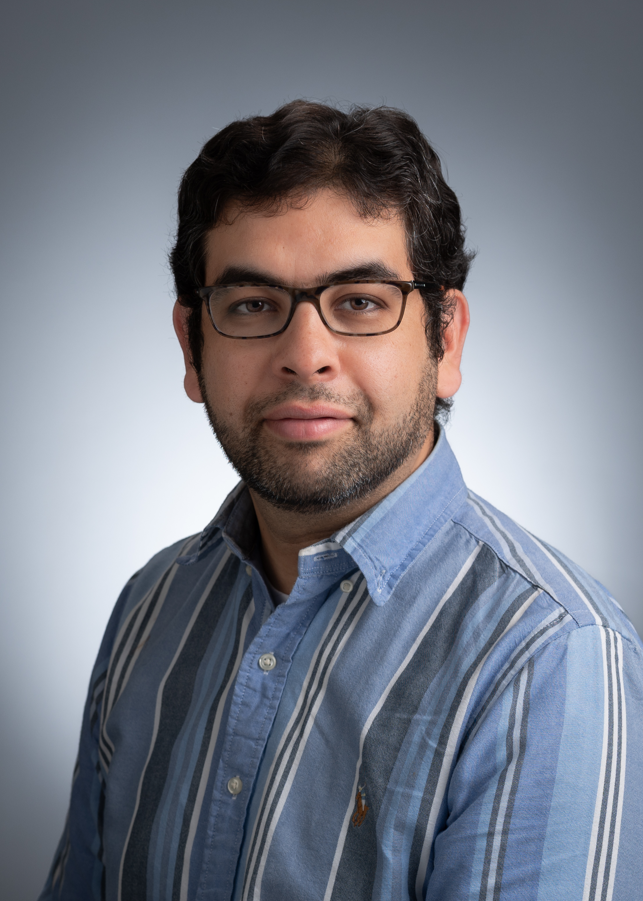
Abdelrahman Abdelazim, MBBCH, joined the UAB Department of Radiology as an assistant professor in the Division of Interventional Radiology (IR) in August 2026. He earned his medical degree from the Faculty of Medicine at Assiut University in Assiut, Egypt, in 2004. His career has spanned multiple institutions and subspecialties across two continents, providing a broad foundation in radiology.
He completed his radiology residency and served as an assistant lecturer at Assiut University Hospital, where he balanced clinical responsibilities with resident education. He later moved to the United States and began his academic career as a research fellow at the University of Florida before completing a neuroradiology fellowship at George Washington University in Washington, D.C. He then completed a diagnostic radiology residency at St. Vincent's Medical Center/Quinnipiac University in Bridgeport, CT, followed by an abdominal imaging and body intervention fellowship at the University of Wisconsin-Madison. He subsequently joined the University of Colorado as an assistant professor specializing in abdominal imaging.
Before returning to academic medicine, Abdelazim worked as an abdominal imaging radiologist in the Dallas-Fort Worth metroplex. He later completed an IR fellowship at UT Health San Antonio and is excited to join UAB's Division of IR faculty.
Learn more about his journey and what inspires his work.
What inspired you to pursue a career in this field?
Abdelazim: I have always been thrilled by the ability to use imaging technology to treat patients through minimally invasive procedures, achieving remarkable results without ever making a large incision. Beyond the technology itself, I deeply value the direct patient interaction that IR provides, as well as the opportunity to work in a multidisciplinary environment. Interventional Radiology sits at the heart of managing complex patients, collaborating with oncologists, surgeons, and other specialists to deliver care that would otherwise not be possible. That combination of cutting-edge technology, patient interaction, and teamwork is what drew me to this field and continues to drive my passion for it every day.
What is your primary area of expertise within your field, and what sparked your passion for it?
Abdelazim: My primary area of expertise is Interventional Oncology. What sparked my passion for Interventional Oncology is the profound impact that IR procedures can have on cancer patients. Being able to offer minimally invasive treatments such as Y-90 radioembolization and tumor ablation procedures that can meaningfully alter the course of a patient's disease, is deeply fulfilling. Seeing patients achieve good outcomes with these techniques, often when other options are limited, continues to drive my dedication to this subspecialty.
What aspects of your new role here are you most excited about?
Abdelazim: Building/growing the IR program at UAB, teaching and mentoring residents and fellows, research opportunities, working with a strong multidisciplinary team, Interventional Oncology specifically, and being part of a major academic medical center.
What are your goals for making an impact through both your teaching and patient care in this role?
Abdelazim: Training and mentoring the next generation of IR physicians, building a strong IR program at UAB, advancing minimally invasive treatment options for patients in Alabama and the region, research and innovation in IR, and improving access to IR procedures for complex patients.