The American Society for Radiation Oncology (ASTRO) 68th Annual Meeting, centered on the theme, "Data to Dialogue: Communicating Radiotherapy's Value to Advance Care.” The meeting provided a national platform for members of the UAB Department of Radiation Oncology to share innovative research, clinical advancements, and educational initiatives with colleagues from around the world. Held in Boston, Massachusetts, the meeting featured strong representation from department faculty, residents, physicists, researchers, and trainees through oral presentations, invited sessions, and scientific posters.
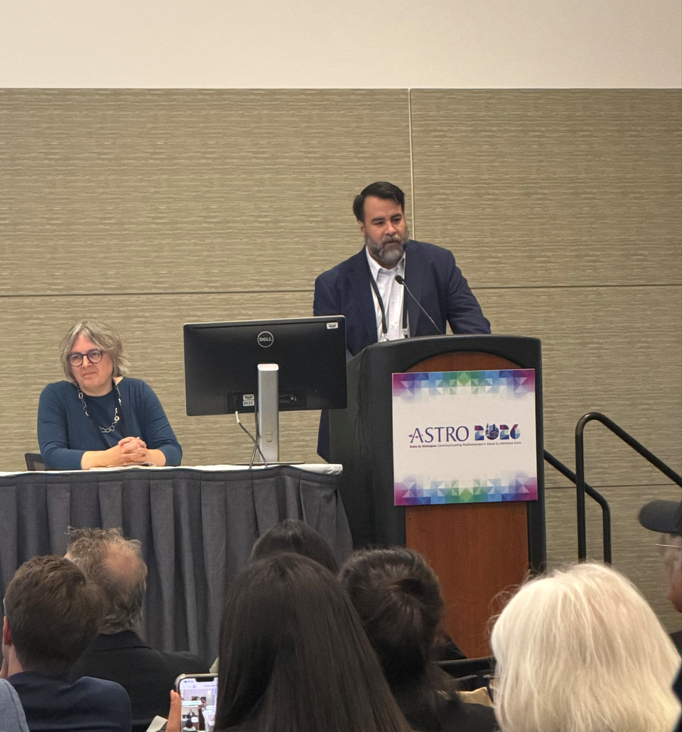
Members contributed more than 20 presentations spanning a wide range of topics, including artificial intelligence and automation in radiation treatment planning, adaptive radiotherapy, stereotactic radiosurgery, breast cancer treatment, head and neck cancer survivorship, gastrointestinal malignancies, and proton therapy.
Among the faculty highlights, Andrew McDonald, M.D., presented research examining long-term voice outcomes among head and neck cancer survivors and participated in a session focused on implementing automated treatment planning in clinical practice. Carlos Cardenas, Ph.D., shared expertise on the role of artificial intelligence in radiotherapy treatment planning, while Corey Speers, M.D., Ph.D., delivered presentations exploring mechanisms of treatment resistance and evolving treatment strategies for high-risk breast cancer.
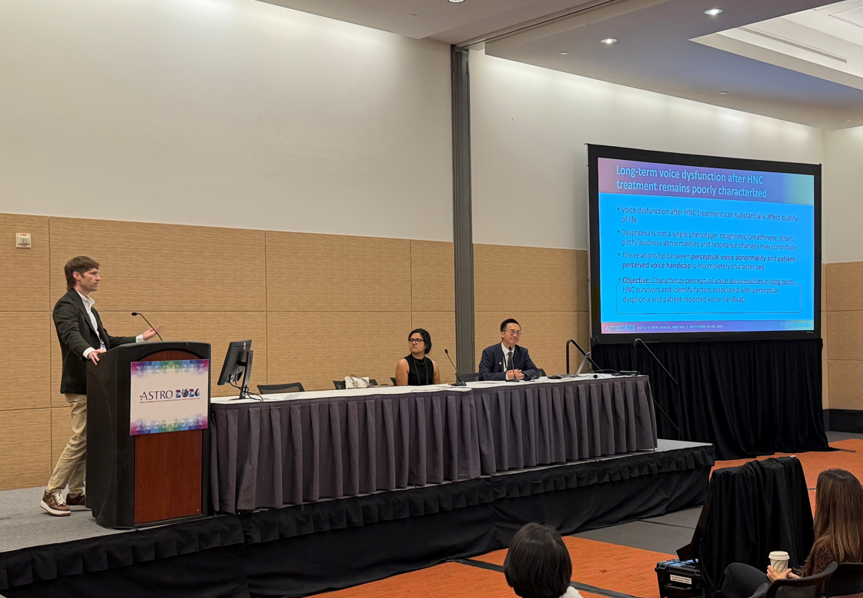
Research in adaptive radiotherapy and treatment optimization was prominently featured by several UAB investigators. Dennis Stanley, Ph.D., Joel Pogue, Ph.D., Matthew Trotta, M.D., and Yogesh Kumar, Ph.D. presented studies focused on adaptive treatment workflows, image-guided radiotherapy, planning efficiency, and dosimetric optimization. Natalie Viscariello, Ph.D., contributed scholarship examining disability and accessibility within radiation oncology.
Residents and trainees also demonstrated the department's commitment to developing the next generation of leaders in radiation oncology. Research presented by Andrew Simpson, M.D., Kayla Steed, M.D., Ph.D., Luke Moradi, M.D., Reza Djavadian, M.D., Ph.D., Krishmita Siwakoti, M.D., Samuel Chen, M.D., Nicholas Johnson, and Udbhav Ram, highlighted advances in radiosurgery, neuro-oncology, breast cancer treatment, rectal cancer management, and data-driven approaches to personalized cancer care. Gobind Gill, M.D., presented findings on dose-escalation strategies for rectal cancer, while John Hoyle, M.D., shared research on adaptive partial breast irradiation.
The department's culture of continuous quality improvement was also on display through multiple presentations by Madeline Evans, whose work addressed peer-review processes, workflow efficiency, and innovative approaches to low-dose radiotherapy delivery.
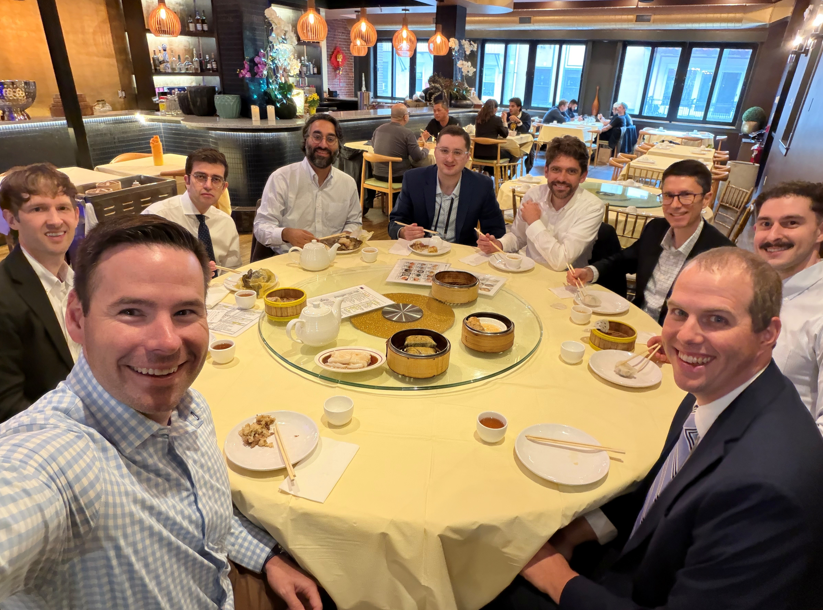
Beyond scientific presentations, faculty, alumni, and trainees gathered at the annual Robert Y. Kim Alumni & Friends Reception, strengthening professional connections and celebrating the department's continued success and growth. Adam Kole, M.D., Ph.D., also delivered a featured industry-sponsored presentation highlighting UAB's experience with fiducial marker tracking for precision lung stereotactic body radiation therapy.
The department's extensive participation at ASTRO 2026 reflects its ongoing commitment to advancing radiation oncology through research, innovation, education, and multidisciplinary collaboration. By sharing discoveries and expertise on the national stage, department faculty and trainees continue to contribute to improvements in cancer care for patients beyond Alabama.