Approximately one-third of patients with major depression do not respond adequately to two or more adequate antidepressant treatment trials, presenting a challenge to clinicians and frustration for patients. This condition is known as treatment-resistant depression (TRD). With a roster of innovative clinical offerings, the UAB Department of Psychiatry and Behavioral Neurobiology has positioned itself as a leader in the treatment of TRD, providing a lifeline for those who have not found success elsewhere in depression treatment.
The UAB Interventional Psychiatry Program for Treatment Resistant Depression is led by Matthew Macaluso, D.O., professor in the UAB Department of Psychiatry and Behavioral Neurobiology. Under Macaluso's leadership and with the help of skilled providers, UAB has steadily expanded its portfolio of advanced depression therapies, creating one of the most comprehensive treatment-resistant depression programs in the region.
"One of every three patients treated for major depression may not respond adequately to available antidepressant medications and may require a more advanced form of treatment," Macaluso reiterated. "Our goal is to make sure patients have access to evidence-based options when traditional treatments have failed."
Explore innovative therapies that UAB offers to address TRD.
Deep Brain Stimulation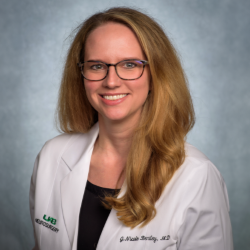 Nicole Bentley, M.D.
Introduced at UAB: 2025 (study began) - 2026 (first patient implantation)
Note: Offering remains investigational for depression. Clinical trials are currently in progress.
Deep brain stimulation (DBS) is a neuromodulation technology that aims to treat TRD by altering the activity of brain circuits involved in mood regulation rather than relying on medications that act broadly on brain chemistry. The system consists of thin electrodes implanted into a precisely targeted brain region that has been strongly linked to persistent depressive symptoms, along with a small pulse generator implanted under the skin of the chest that functions similarly to a cardiac pacemaker.
Although originally developed and widely used for movement disorders such as Parkinson’s disease and certain forms of epilepsy, advances in both the technology and surgical approach have renewed interest in its potential for TRD.
“Unlike traditional DBS, which delivers stimulation according to programmed settings, newer technologies can adjust stimulation based on signals recorded from the brain,” Macaluso said. “This offers the potential for a much more individualized and sophisticated approach to treatment.”
UAB began participation in the TRANSCEND DBS trial in 2025 and implanted its first patient in January 2026. UAB is among a select group of academic medical centers studying the next generation of this technology.
“DBS for depression is a potentially very powerful treatment option for patients with TRD because it is modulating brain networks that we think are contributing to symptoms, all from a very small target where these networks converge,” said J. Nicole Bentley, M.D., associate professor in the Department of Neurosurgery. “This allows a precision medicine approach tailored to an individual’s anatomy."
Although DBS is an established treatment for certain neurological conditions, its use in depression remains investigational and is currently available only through clinical trials.
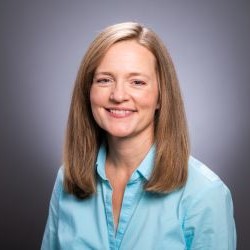 Kara Kilpatrick, M.D.Repetitive Transcranial Magnetic Stimulation (rTMS)
Introduced at UAB: Prior to 2025, with 2025 marking opening of new clinic
Repetitive Transcranial magnetic stimulation (rTMS) is an FDA‑cleared, non‑invasive neuromodulation technology that treats depression by using focused magnetic fields to stimulate nerve cells in specific brain regions involved in mood regulation, most commonly the prefrontal cortex. A new UAB TMS Clinic opened in 2025, led by Abhishek Wadhwa, M.D., associate professor, and Kara Kilpatrick, M.D., assistant professor, both in the Department of Psychiatry and Behavioral Neurobiology.
During treatment, an electromagnetic coil is positioned against the scalp, delivering brief magnetic pulses that induce electrical activity in targeted neural circuits, helping normalize patterns of brain signaling linked to depressive symptoms.
"We try to match patients to the treatments that have shown the greatest benefit in people with similar histories and symptoms," Macaluso said. "TMS has been studied extensively in patients who have not responded to several antidepressant trials, and it gives us an effective, non-invasive option before moving to more intensive interventions."
Unlike electroconvulsive therapy, TMS does not require anesthesia or sedation, and patients remain awake and alert throughout the procedure, which typically lasts about 20 minutes per session. Because it does not involve systemic medications, TMS avoids many of the side effects associated with antidepressant drugs and is generally well tolerated, with mild scalp discomfort or headache being the most common effects.
“One of the most potent gifts we offer as physicians is hope,” Kilpatrick said. “In providing TMS, we open another avenue for hope that the debilitating experience of depression will not remain forever. In this last year, I have witnessed multiple patients regain hope as they have found relief from their depression via TMS. It’s an honor to be a part of the process.”
Treatment sessions vary in duration depending on the stimulation protocol, ranging from approximately three minutes for newer theta-burst stimulation protocols to 20 to 40 minutes for conventional repetitive TMS.
Intranasal Esketamine Kelsi Sisk, CRNP
Introduced at UAB: 2020
Intranasal esketamine is a fast‑acting, FDA‑approved therapy for TRD that represents a significant shift from traditional antidepressant medications. Derived from ketamine, esketamine is an NMDA receptor antagonist with downstream effects on glutamatergic signaling and neuroplasticity.
Esketamine received Breakthrough Therapy designation from the FDA in 2013, and since then UAB has played an important role in the development of esketamine therapy. Before launching the UAB Esketamine Clinic in 2020, Macaluso and longtime depression researcher Richard Shelton, M.D., professor in the Department of Psychiatry and Behavioral Neurobiology, participated in some of the early clinical trials that ultimately led to the therapy's approval.
"It's rewarding to now be able to offer that same treatment to patients who need additional options,” Macaluso said.
Now, the UAB Esketamine Clinic is run by Rachel Fargason, M.D., professor, and Kelsi Sisk, CRNP, advanced practice provider, both in the Department of Psychiatry and Behavioral Neurobiology. Delivered as a nasal spray in a supervised clinical setting, esketamine is absorbed quickly and can begin improving depressive symptoms within hours to days, which is significant for patients who have not responded to multiple standard treatments. Esketamine is now FDA-approved for TRD as monotherapy as well as with an oral antidepressant.
Because of its potent effects and potential for short‑lived side effects such as dissociation or changes in blood pressure, treatment is administered under close medical observation, allowing clinicians to monitor patients during and after dosing.
“For individuals who have spent years navigating treatment-resistant depression, esketamine offers another evidence-based treatment option with the potential to provide meaningful relief, sometimes much sooner than traditional antidepressants,” Sisk said. “It’s incredibly rewarding to see patients begin to experience improvement, regain a sense of hope, and rediscover parts of their lives that depression has taken away.”
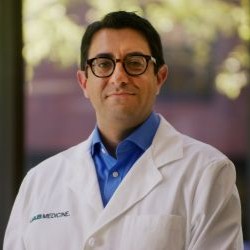 Matthew Macaluso, D.O.Vagus Nerve Stimulation
FDA Approved for TRD: 2005
Vagus nerve stimulation (VNS), originally approved for epilepsy in 1997 and then TRD in 2005, is an implantable neuromodulation therapy. The technology consists of a small, pacemaker‑like device implanted just below the collarbone and connected by leads to the left vagus nerve in the neck, a major neural pathway linking the brain with key organs involved in emotional and physiological regulation.
Once activated, the device delivers regular, mild electrical pulses to the vagus nerve, which then transmits signals to brain regions associated with mood, motivation, and stress response. Unlike fast‑acting therapies, VNS works gradually, producing changes over months by helping normalize long‑term brain network activity, and stimulation parameters can be adjusted non‑invasively during follow‑up visits.
Since joining UAB in 2020, Macaluso has helped lead one of the largest and longest-running studies of implantable VNS therapy for treatment-resistant depression. Macaluso is also a co-author of publications from the landmark RECOVER study, one of the largest investigations of VNS for treatment-resistant depression, which has provided important evidence regarding the long-term effectiveness and durability of antidepressant benefits associated with VNS.
"One of the lessons we've learned is that VNS is a long-term treatment," Macaluso said, adding that it may require six months to a year of stimulation before patients experience its full therapeutic effect. "The early studies were relatively short, but we've since seen that many patients continue to improve over much longer periods of stimulation."
VNS received FDA approval in 2005 as an adjunctive, long-term treatment for adults with chronic or recurrent depression who have not responded adequately to at least four antidepressant treatments.
Electroconvulsive therapy (ECT)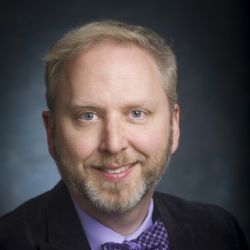 Bates Redwine, M.D.
ECT has been offered at UAB for more than 30 years
Electroconvulsive therapy (ECT) is a highly effective, long‑established interventional treatment for TRD that works by using carefully controlled electrical stimulation to rapidly alter brain activity. Bates Redwine, M.D., is the director of the Electroconvulsive Therapy Program at UAB.
“ECT is one of the oldest treatments in psychiatry that is still in common use,” Redwine said. “The reason it is still in use is that it is also one of the most effective treatments in psychiatry, with response rates of 80 to 90 percent, even in patients who have failed multiple medication trials. This is not to say that ECT is a treatment of last resort; for certain diagnoses like Major Depressive Disorder with psychotic features or severe catatonia, it may be considered the treatment of choice, given its high efficacy rates and rapid response.”
During ECT, patients are placed under brief general anesthesia and given a muscle relaxant before small electrical currents are delivered through electrodes placed on the scalp, inducing a short, controlled therapeutic seizure in the brain that is not felt by the patient.
"ECT has been a cornerstone treatment for severe depression for decades," Macaluso said. "While we've added many new options, ECT remains one of the most effective interventions we have for patients with the most serious forms of illness."
Modern ECT uses advanced monitoring, precise dosing, and individualized electrode placement to maximize benefit while minimizing side effects, making it dramatically safer and more refined than earlier versions.
The treatment typically produces faster symptom relief than medications or psychotherapy, particularly for patients with profound depression, catatonia, or high suicide risk, and is administered over a series of sessions with the option for maintenance treatments to sustain improvement.
“We are proud to continue to offer this frequently lifesaving treatment at UAB in its most modern and advanced form,” Redwine added.
ECT remains one of the most effective treatments for severe depression, particularly in patients with psychotic depression, catatonia, or clinical circumstances in which rapid improvement is essential.
Matching the right patient with the right care
For Macaluso, the growing number of treatment options for TRD reflects a broader shift toward precision psychiatry, in which clinicians aim to match patients with therapies based on their individual biology, symptoms, and treatment history.
"This is one of the best places in the country to receive this kind of care," Macaluso said. "Our goal is to continue expanding access to evidence-based treatments while improving our ability to identify which treatment is most likely to help each individual patient. Every new option gives hope to people who may have exhausted more traditional approaches."
Through studies in genetics, epigenetics, and blood-based biomarkers led by Yogesh Dwivedi, Ph.D., professor in the Department of Psychiatry and Behavioral Neurobiology, investigators are searching for biological markers that may predict treatment response and help personalize depression care.
According to Macaluso, this work reflects a growing understanding that depression cannot always be explained by changes in brain chemistry alone.
"The brain uses interconnected chemical and electrical signaling," he said. “Medications and neuromodulation affect those systems in different ways. That's one reason medication alone doesn't work for everyone."