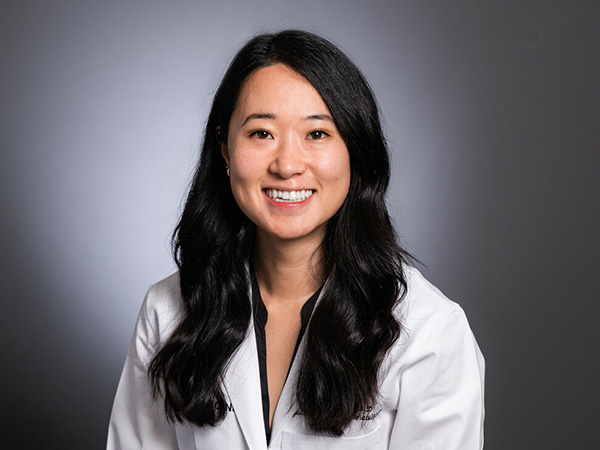
 Since joining the UAB Department of Physical Medicine and Rehabilitation (PM&R) in 2022, Rachel Teranishi, M.D., has dedicated her career to caring for individuals with traumatic brain injury (TBI). Her commitment to improving the lives of patients and their families extends beyond the clinic through her service on the board of directors for the Alabama Head Injury Foundation (AHIF).
Founded in 1983 by healthcare professionals and families affected by brain injury, AHIF works to increase public awareness of TBI and connect survivors and their families with resources, programs, and support services. The organization's mission is to improve the quality of life for individuals living with brain injury and their families.
For Teranishi, joining the board was a natural fit. Having witnessed the organization's impact firsthand, she frequently shares information about AHIF with patients and families navigating life after brain injury.
"I am always bragging to my patients about AHIF and how fortunate we are to have the support of such an incredible organization," Teranishi said. "When I was invited to join the board, it was an easy decision. I wanted to support this organization in any way possible since they have supported me and my patients so extensively."
As a board member, Teranishi hopes to help advance AHIF's mission while bringing a unique clinical perspective as the board's physician representative. She also hopes to strengthen engagement between AHIF and the UAB Physical Medicine and Rehabilitation and Spain Rehabilitation Center communities.
A board-certified physiatrist with subspecialty certification in brain injury medicine, Teranishi serves as an assistant professor in the Department of PM&R and director of consults at UAB. Her clinical and research interests focus on recovery and long-term outcomes following traumatic brain injury.
While acute medical care and rehabilitation are critical components of recovery, Teranishi emphasizes that many challenges arise after patients return to their homes and communities. She believes AHIF plays a vital role in bridging that gap through support groups, counseling, resource coordination, therapeutic camps, and other programs that help individuals and families navigate life after injury.
"There is understandably a lot of emphasis on care for people with TBI while in the hospital and rehabilitation, but a huge portion of their life is spent in the outpatient and community setting," Teranishi said. "AHIF fills a critical role in supporting people during this time and extends support for individuals and families beyond the hospital and medical setting."
Through her clinical care, research, education, and community service, Teranishi continues to advance UAB's mission of improving the lives of individuals living with brain injury while helping ensure patients and families have access to the resources and support, they need long after rehabilitation ends.