The UAB Department of Otolaryngology-Head and Neck Surgery recently welcomed Thomas “Gil” Townes, M.D., as an assistant professor in the Division of Head and Neck Oncology/Endocrine.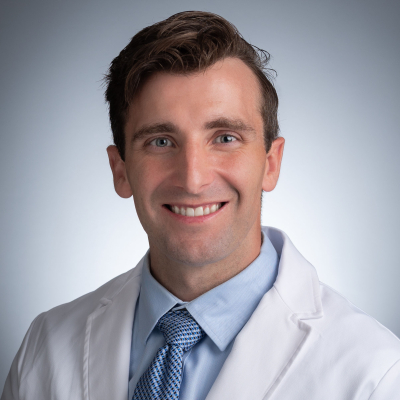 Thomas "Gil" Townes, M.D.
Townes attended Auburn University, where he studied biomedical science prior to attending the UAB Heersink School of Medicine. He went on to complete an internship in general surgery at the San Antonio Military Medical Center, followed by an ENT residency at Walter Reed National Military Medical Center in Bethesda, Maryland. Following residency, he served for four years in the Army as a general ENT at Fort Benning, Georgia, after which he separated from the military. He then went to Houston, Texas, where he completed a two-year fellowship in head and neck surgical oncology and microvascular reconstruction.
What excites him most about his new role is joining the collaborative environment of the department and teaching the next generation of head and neck surgeons.
Townes shares more about his background, his passion, and his goals for both education and patient care.
What inspired you to pursue a career in this field?
Townes: I loved surgery from the first time I shadowed a surgeon in college, and although I enjoyed my medicine rotations, I always loved the hands-on problem-solving required in the OR. After choosing to do surgery, I found the anatomy of the head and neck complex and fascinating, and I found that my personality meshed well with the people I spent time with in ENT.
What is your primary area of expertise within your field, and what sparked your passion for it?
Townes: My fellowship is in head and neck surgical oncology and microvascular reconstruction. My interests within this subspecialty are broad, but I particularly enjoy managing patients with mucosal malignancy. These patients require multidisciplinary planning and coordination, and individualized treatment plans can help both survival and long-term symptom control from treatment. UAB has a reputation as a leader in transoral robotic surgery for oropharyngeal cancer, and I hope to continue this tradition. Microvascular reconstruction is another part of my practice, which I find challenging and exciting; restoring function to areas affected by cancer and surgery is an area that we are continuing to improve.
What are your goals for making an impact through both your teaching and patient care in this role?
Townes: Consistently providing excellent patient care is my first priority. I believe this is the foundation from which education and other achievements are built. UAB has a great reputation for patient care, and upholding this reputation and contributing to it are my first goals. Having a prestigious medical school and residency program is a blessing as well, and I hope to encourage students and residents to feel confident managing ENT issues, whether they are treating patients themselves or initiating a workup to involve specialists for definitive treatment.
Anything else you’d like to add?
Townes: My father spent the majority of his career at UAB in the Department of Biochemistry and Molecular Genetics. I grew up admiring his work and seeing UAB as a venerable institution. Working at UAB is an incredible opportunity to serve a wonderful community of patients and simultaneously to advance the field of medicine through education and research. While here, I hope to collaborate with a diverse group of physicians, educators, and scientists to make an impact on our community and the field as a whole.