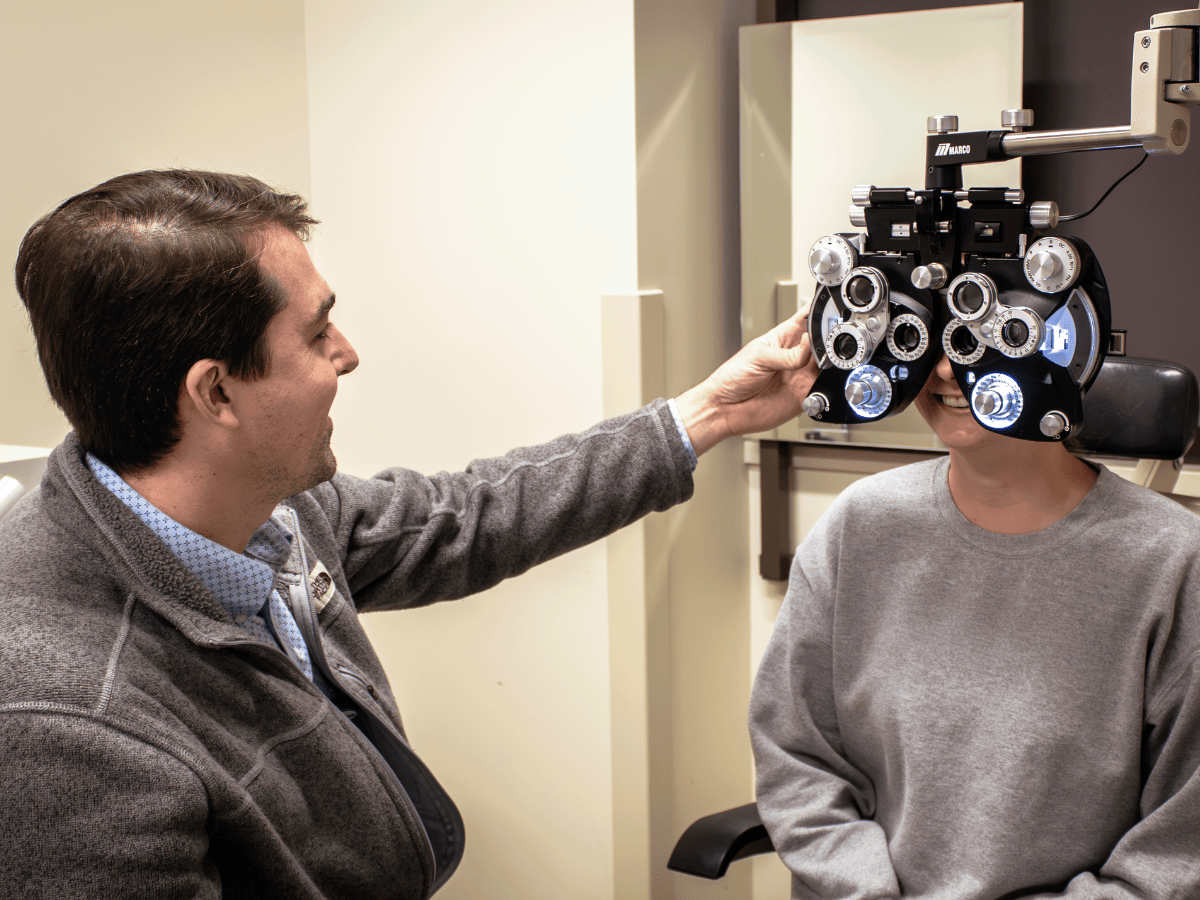
We spoke with Nik Hopkins M.D., an ophthalmologist at UAB Callahan Eye, about what patients can expect during an eye exam and why regular exams are essential for protecting your vision.
Vision screenings vs. eye exams
Many people don’t realize there’s a difference.
“A screening is a quick test to check for common vision problems, often done at schools or workplaces,” Hopkins said. “A full eye exam is more detailed and focused.”
A comprehensive eye exam evaluates:
- Vision
- Eye alignment
- Peripheral (side) vision
- Pupil function
- Need for glasses or contacts
It also allows your doctor to assess your overall eye health.
Why dilation matters
“Dilation is the gold standard for evaluating the back of the eye,” Hopkins said.
Eye drops are used to widen your pupils so your doctor can see important structures inside the eye. The drops typically take 20–30 minutes to work and may cause:
- Light sensitivity
- Blurry near vision for a few hours
While imaging technology can help, it does not fully replace dilation. This step is critical for detecting conditions like glaucoma, diabetes and other serious health issues early.
UAB Callahan Eye is here for your eye needs. To schedule an appointment with Dr. Hopkins or any of our providers, call or text 844-UAB-EYES or visit uabcallahaneye.org.
Do you need an eye exam?
Yes — even if your vision seems fine.
Many eye conditions have no symptoms in early stages. Routine exams can detect problems early and may even reveal signs of other health conditions affecting the brain, heart, blood vessels and more.
How often should you go?
Children: First exam at 6–8 months, then annually
Ages 18–40: Every 1–2 years
40+ or with health conditions: Annually
 Nik Hopkins, M.D.About Dr. Nik Hopkins
Dr. Nik Hopkins is a comprehensive ophthalmologist specializing in cataract surgery, ocular oncology and infectious eye diseases. He completed his residency at the University of Tennessee Health Science Center’s Hamilton Eye Institute.
He earned his medical degree with Alpha Omega Alpha honors and has published and presented research nationally and internationally. Dr. Hopkins is passionate about delivering patient-centered care and sees patients at our downtown, Gardendale, Oneonta and Trussville locations.