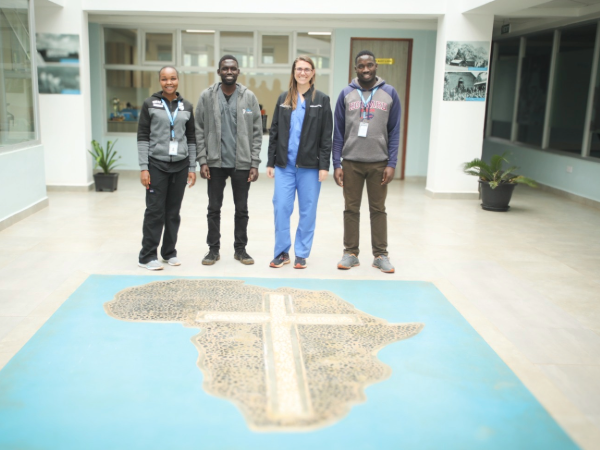
 Whether at UAB Hospital or 8,000-plus miles away in Kijabe, Kenya, neurologists recognize the clear parallels in the need for neurologic care.
“People all around the world have brains, and they all break,” said Juliana Coleman, M.D., assistant professor in the UAB Department of Neurology.
However, barriers such as limited diagnostic technology, a smaller selection of treatment options, and the prevalence of infectious diseases make the diagnosis and treatment of neurologic disease quite different in Kijabe and surrounding areas compared to the United States. This is one thing a group of providers in the UAB Department of Neurology is seeking to address through the Neurology Global Health Program, which has led them to extend their expertise in terms of both patient care and medical training to another region of the world.
“The developing world has done a phenomenal job of training primary care physicians,” Coleman said. “There's still a huge need there, but they have made up that gap in impressive ways. The biggest gap is actually in specialty care and particularly in neurology care.”
The desire to share expertise on a global scale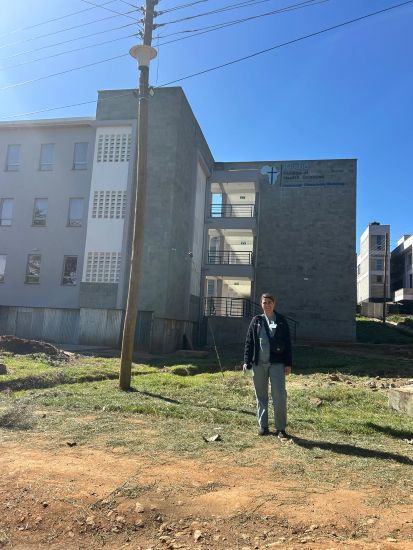
Coleman, with help from Rebeka Sipma, M.D., assistant professor in the Department of Neurology, started the global health initiative in the department, with Coleman taking the first organized trip to Kijabe Hospital, about an hour-and-a-half outside of Nairobi, in July 2024.
Sipma took a second trip in January 2025, and she recently returned from a third trip along with neurology resident Rebecca Massey, M.D., PGY4, having spent four weeks in Kijabe and its surrounding areas spending time with providers and trainees in clinic, hosting lecture days, and more.
For Coleman and Sipma, who both had experience with mission work prior to their careers at UAB, the initiative has been a long time coming.
“I wanted to work in medical missions before I knew that I wanted to be a neurologist,” Coleman said. “I grew up in a medical community at my church. We sent a lot of medical missionaries into various parts of the world, and they were my heroes growing up. They were amazing.”
Sipma said her inspiration for both neurology and global health work is similar to Coleman’s.
“But a bit of a difference was I grew up in a farm town, and we did not see many doctors,” Sipma said. “My family was all farmers who refused to go to the doctor unless there were problems that you just couldn't fix or wouldn't go away. All the problems we were seeing doctors for were neurologic problems.”
Medical mission trips to Guatemala and Honduras in college highly influenced Sipma’s desire to pursue medicine. While primary care typically dominates the global health landscape, both Coleman and Sipma said they eventually gravitated toward neurology in their training.
“I just kept getting drawn back to the neurologic patients because those were like my family members,” Sipma said. “And being able to speak to some of those more intimidating diagnoses. Neurology still has a lot of gray areas, but at least being able to explain, ‘Hey, we're with you through this process.’”
 Addressing the gap
According to Coleman, though neurology is considered an underserved specialty in the United States, the gap is even broader in the developing world.
“In Kenya, there are 18 neurologists, maybe 19, maybe 20,” Coleman speculated. “But the population is 55 million people, and that is staggering. That means that the vast majority of people who will need neurological care will not only never see a neurologist, but they will never see a doctor or provider who has ever even had a lecture from a neurologist.”
In addition to the provider-to-patient gap, Coleman explained that limited diagnostic technology presents a barrier in places like Kijabe compared to the United States.
“What’s wonderful about neurology is that you can do a neurological exam and take a history, and you can know where in someone's body the problem is,” she explained. “So you can make a really good guess based on the history and the pretest probability, and you can know that it's highly likely, for example, that someone has multiple sclerosis.”
“But unless you can get an MRI or spinal fluid analysis, it's very difficult to make that diagnosis with the degree of certainty that we can in the United States, which means that it's very difficult to then go and treat people with the aggression that we do here in the United States.”
Moreover, the treatment options themselves are more limited.
“For example, if we have someone here who has epilepsy, we have a list of, you know, 20 medications that we could choose from pretty easily,” Coleman said. “In Kijabe, we have four.”
Investing back in a global community
It is due to these barriers and others that, in Kijabe, UAB neurologists are not only treating patients but also teaching providers.
Kijabe Hospital has been established and has been seeing patients for 110 years and boasts several different residencies. Sipma explained that the UAB Neurology team primarily works with family medicine residents and clinical officers, which are similar to nurse practitioners or physician’s assistants in the U.S. Clinical officer students come from other countries like Sudan, South Sudan, and Ethiopia as well as other areas of Kenya and are part of an 18-month training program.
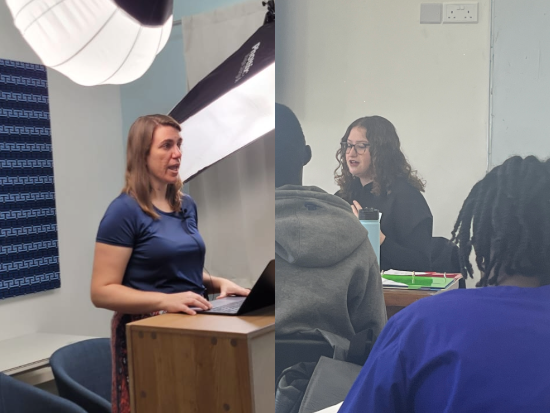
The UAB team’s time with the residents, clinical officers, and students consists of three clinic days a week with set days for lectures as well.
“So they're getting to practice skills like taking patient histories and doing the examinations, and with some guidance there, helping to formulate their clinical thinking,” Sipma said.
They also travel to Nairobi, where they have partnered with doctors at The Aga Khan University, which currently has five neurologists and is training three neurology fellows.
“Their first Kenyan-trained graduates graduated last year, which is exciting for the region, since there are not a whole lot of training opportunities there,” Sipma said. “They invited us to speak as movement disorder doctors, and I bring them movement disorder videos and discuss cases.”
In addition to training residents in Africa, UAB Neurology’s global outreach also trains its own aspiring neurologists.
As a fourth-year resident, Massey had done similar work previously in the Dominican Republic and was excited to take advantage of the opportunity with UAB Neurology.
“I love considering all the ways in which culture and language influence the way that people view health and illness and things like that,” Massey explained. “And so that really gave me a first glimpse into things.”
Massey pointed out that medicine is truly a global community, and getting to participate in both the clinical and teaching aspects of the trip feels like she is contributing back to the community that is shaping her.
“We're going and passing along some of the knowledge and hopefully helping them to be better clinicians and to take excellent care of the patients who are there and who are in the communities that they're going back to,” Massey said. “I think there's something cool about going over to another place when you're a trainee and getting to interact with and even be friends with some of the folks who are also trainees in that different setting. There's just something nice and encouraging about that.”