 For the International Medical Education (IME) office at the UAB Heersink School of Medicine, 2025 marked a defining year. What began as a collection of global programs has matured into an office-led effort that strengthens the school while building international partnerships and creating meaningful value across UAB.
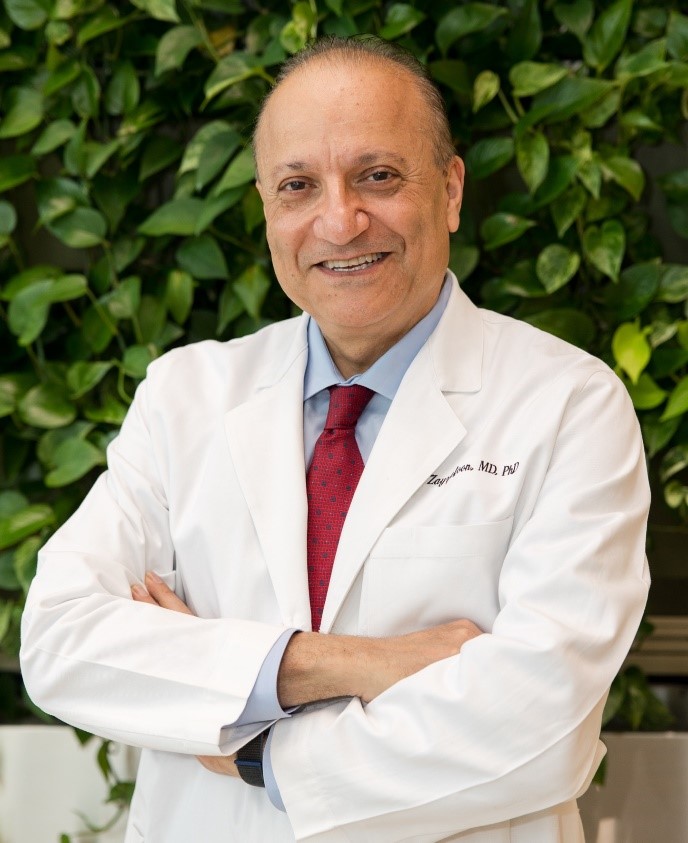
IME serves as a central hub for global engagement. It provides the infrastructure for international initiatives by coordinating partnerships and streamlining logistics. Through its structured training programs, IME supports departments across UAB while expanding the institution’s global presence. “Over the past year, International Medical Education has moved beyond building programs to sustaining a global ecosystem,” said Majd Zayzafoon, M.D., Ph.D., MBA, associate dean for Global Initiatives and International Medical Education. “We are seeing the strength of a model that is now fully integrated into the academic and clinical fabric of UAB Heersink School of Medicine.”
IME’s International Visiting Medical Students (IVMS) program illustrates this growth. Ten years ago, it began with 30 students annually and has grown to 240 in 2025. IVMS connects students from more than 200 international medical schools with UAB faculty and clinical experiences. The program’s success is evident in the 2025 National Residency Match Program, with 94 percent of IVMS students securing residency placements in the United States. Additionally, IVMS supports UAB clinical departments by reinvesting more than $320,000 last year into electives and training opportunities.
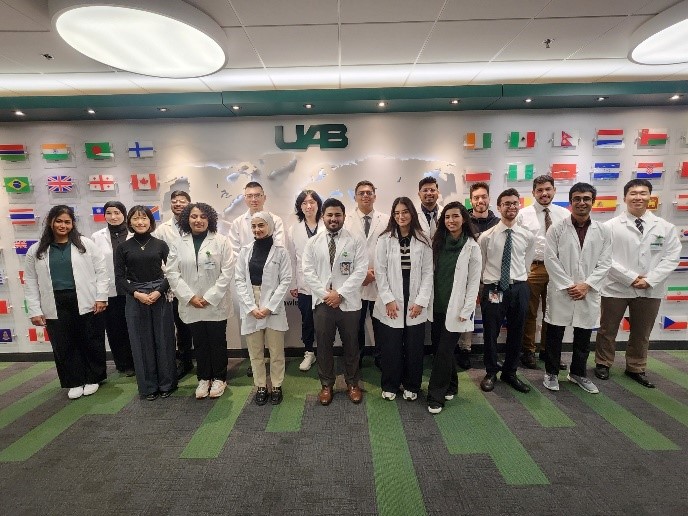 The International Visiting Scholars (IVS) program has established a centralized framework for visiting scholars at UAB. The program strengthens global academic partnerships while ensuring compliance and accountability across the institution. These partnerships have broadened academic collaboration by providing opportunities for 700 scholars to date to engage with more than 60 UAB divisions.
In 2018, the International Residency and Fellowship program began with a cohort of three international physicians and has since grown to more than 100 placed in UAB’s Graduate Medical Education (GME) programs. Through this program, IME turns available capacity within unfunded GME residency and fellowship positions into fully funded roles. Many of these international students now serve in clinical and academic leadership roles around the world.
IME’s work has extended into UAB graduate education, establishing fully funded academic pathways for nearly a decade. These programs provide international students with access to graduate education, research infrastructure, and funded doctoral study, allowing them to apply their training worldwide. IME has helped recruit and support more than 100 international students pursuing advanced research education at UAB through partnerships with global institutions and scholarship sponsors.
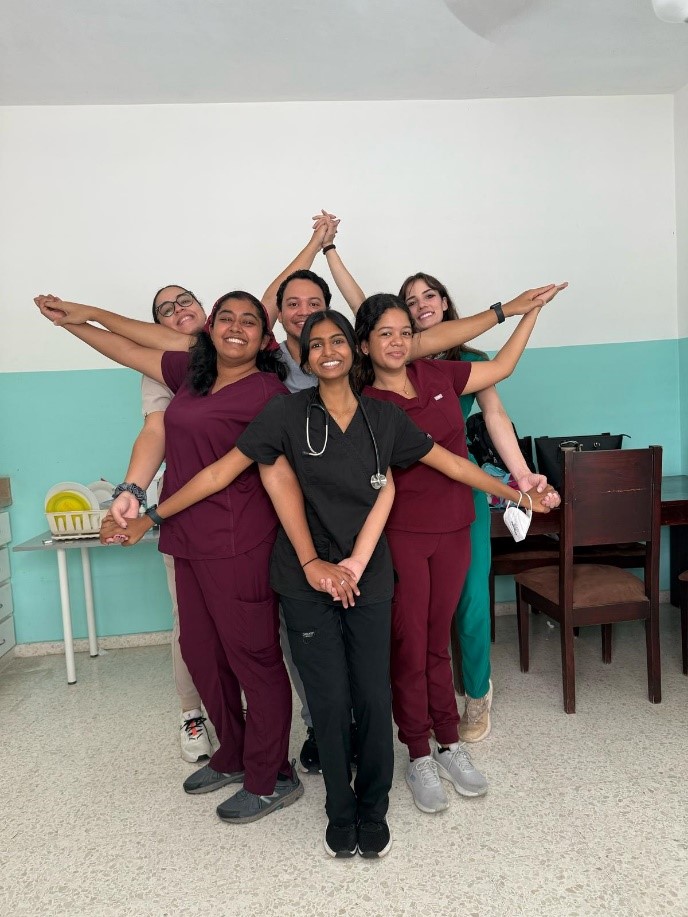 While IME brings international leaders to UAB, the office also creates opportunities for Heersink School of Medicine students to train abroad through programs like the Recognition of Distinction in Global Health (RDGH). Fully integrated into the MD curriculum, RDGH enhances medical training through community engagement, interdisciplinary learning, and experiential global health training, culminating in a distinction in global health upon completion.
As a part of the global health training aspect, RDGH offers clinical and research experiences in diverse healthcare systems while helping students develop perspectives they can carry into their future careers. To support the development of globally trained physician leaders, IME offers up to $80,000 in scholarships. The impact of international experiences continues long after students leave medical school, with more than 30 percent of Medical Student Enrichment Program alumni now practicing medicine in Alabama.
Together, these programs create more than individual training opportunities; they help UAB and the School of Medicine build lasting recruitment pipelines, research collaborations, faculty and departmental connections, and a global alumni network that extends the school’s impact well beyond Birmingham.
Building on this impact, IME now extends its reach across nearly 60 countries worldwide. What began as a collection of international programs has evolved into a lasting part of how UAB approaches education, physician training, and global collaboration.