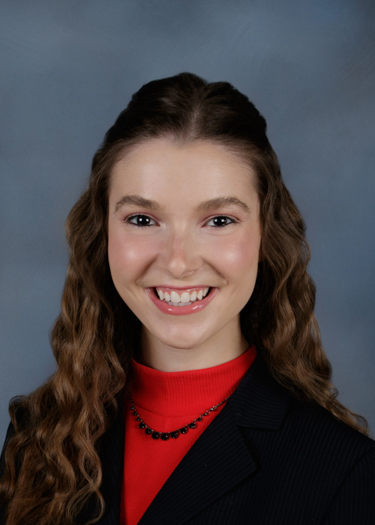
 For Jordan Beam, Match Day marks the culmination of years of preparation and purpose. From international research at the University of Oxford to hands-on training in Montgomery, she’s honed the skills and confidence that will guide her into the next chapter of her career.
Born and raised in Birmingham, Beam's interest in medicine started early, shaped by health challenges within her family. From a young age, she cared for her grandparents and helped manage their medications. The defining moment came during her senior year of high school, when her grandfather, “Poppy," became critically ill and later passed away. Assisting in his care and witnessing his care team communicate clearly and treat him with dignity left a lasting impression. Before he passed, she told him he had inspired her to pursue medicine.
Beam attended Auburn University for her undergraduate studies and had considered both physician assistant and medical school pathways. A summer spent shadowing Scott Morris, M.D., an orthopedic surgeon in Hoover, solidified her decision. Observing him connect with patients on a personal level further highlighted the humanism of medicine and showed what it truly means to be a physician. Through the Heersink School of Medicine’s Early Decision Program (EDP), she committed to attending and later received her acceptance letter—a moment she describes as being “over the moon.”
At Auburn, Beam majored in biomedical sciences and minored in Spanish. Though plans to study abroad in Spain were canceled during the COVID-19 pandemic, she pursued an international experience after her first year of medical school. Working closely with mentors like Majd Zayzafoon, M.D., Ph.D., MBA, associate dean for Global Initiatives and International Medical Education, helped her pursue research abroad at Oxford. Beam conducted bench research in a prostate cancer bone metastasis lab, gaining confidence while learning how research is conducted in a resource-conscious health system. The experience deepened her interest in global health and strengthened pathways for medical students who followed.
Beam completed her clinical training on the Montgomery Regional Campus, a decision she describes as transformative. Students often work one-on-one with attendings and take on significant responsibility. She assisted in surgeries, caught over 30 babies during her obstetrics rotation, and gained confidence presenting directly to faculty. The campus offers hands-on opportunities that prepare students exceptionally well for competitive specialties. She embraced the excitement of being with patients while learning to navigate new teams and balance confidence with humility. These experiences shaped her clinical independence and prepared her for rotations in her fourth year.
Beam applied to dermatology, a specialty she grew to love for its blend of medicine, procedural care, and longitudinal patient relationships. Like many students, picking a specialty was not easy; she wrestled with doubt and the weight of committing to a competitive field. Jo Herzog, M.D., a dermatologist in the Birmingham community, gave her invaluable encouragement and guidance throughout medical school. She also appreciated advice from medical students and residents who pursued dermatology, and she appreciated each piece of advice she received. These mentors reminded her that there is no single blueprint for success and emphasized the importance of seeking guidance from physicians who have navigated the path before.
Medical school brought challenges at every stage, stretching students just enough to grow into the next level of responsibility. Early on, Beam, an accomplished guitarist and vocalist, maintained a busy performance schedule. With guidance from a mentor, she scaled back to protect her academic focus, later finding a healthier balance. “You don’t have to give up what brings you joy,” Beam said, “but you may have to adjust.”
Her advice to current students is simple but powerful: “There are challenges at every point, but you grow in proportion to them.” Beam encourages students not to rush into taking on too much too soon, but to give themselves space to adjust, learn, and evolve at their own pace.
The weeks leading up to opening the match email were incredibly nerve-wracking for Beam. She described the moment as the culmination of eight years of preparation—four years of undergraduate education and four years of medical school—along with countless hours of shadowing, volunteering, and research, and the many patient stories that inspired her to pursue dermatology. No matter what the email said, she knew she had given the journey her best and felt grounded in God’s plan. When she opened the email and saw that she had matched into residency, she felt overwhelming gratitude. Beam celebrated with her mother, who opened the email beside her, before sharing the news with the rest of her family. “I am so thankful for the many people who have supported, encouraged, and prayed for me along the way,” Beam said.
As she looks ahead, Beam hopes to be a dermatologist who helps patients feel confident and comfortable in their own skin. She wants to partner with them in their care and support them through challenging moments. Grateful for the mentors who helped her reach this point, Beam hopes to pay that support forward by mentoring future medical students and aspiring physicians. “I feel incredibly blessed and excited to begin this next adventure,” she said, “wherever it may lead.”
Meet the other Heersink School of Medicine MS4s featured in the Countdown to residency series and explore their journeys toward Match Day.
Read their stories: Brenton Bicknell | Audria Wood | Philip Harden