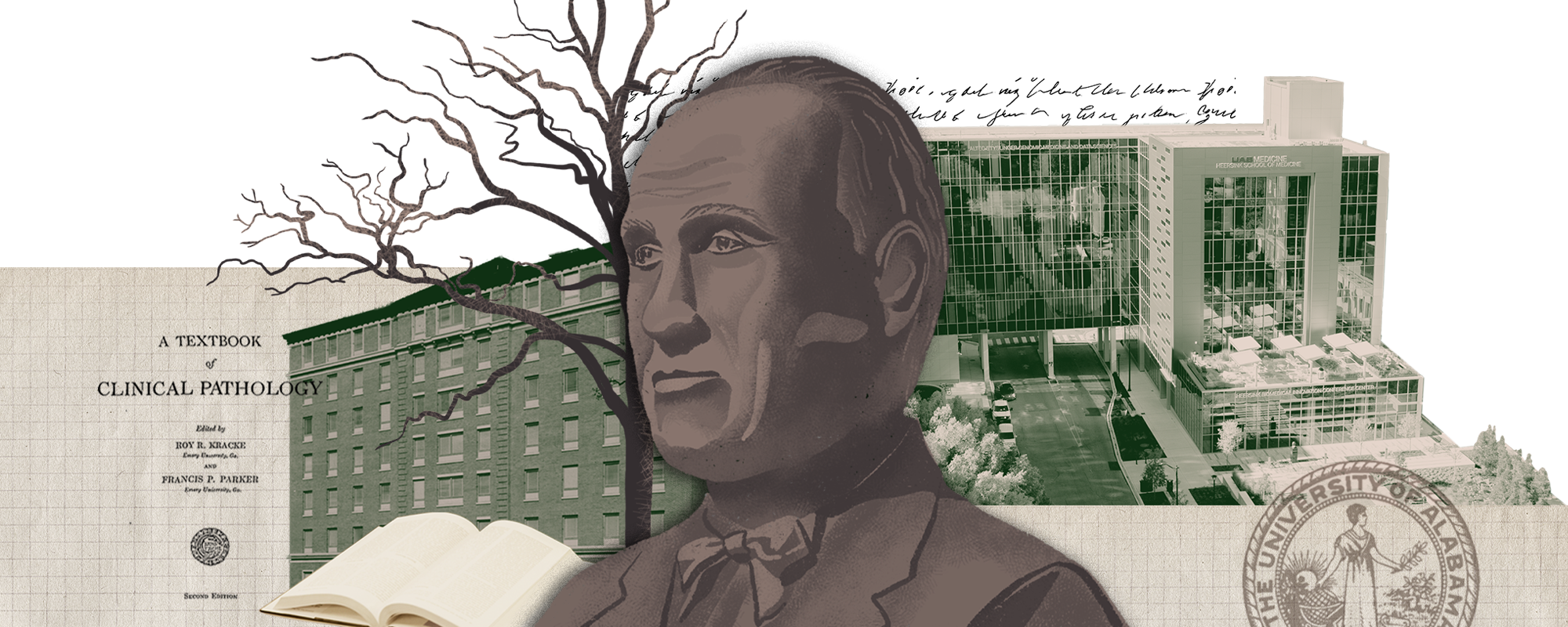
Exploring the legacy of UAB’s first dean of medicine
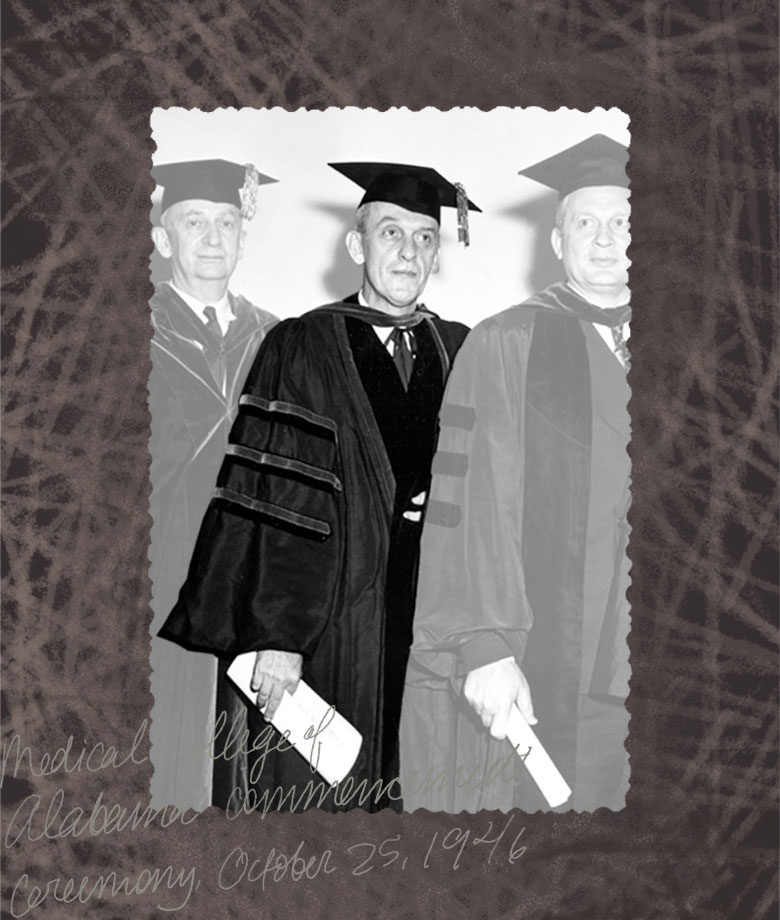
Archival photos courtesy of UAB Archives
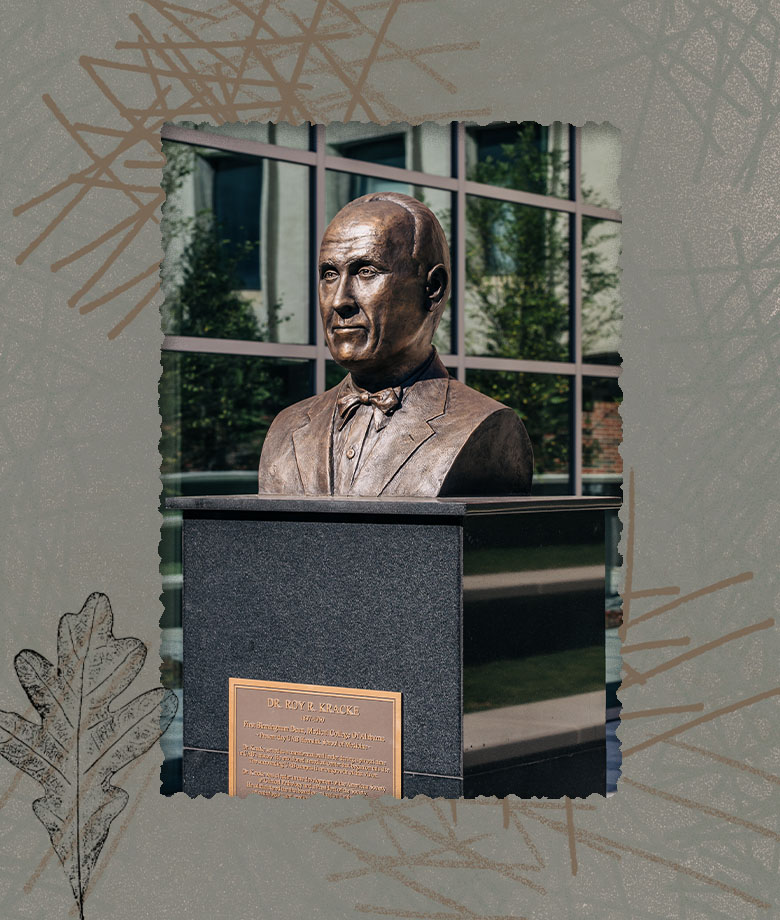
In the heart of UAB’s medical campus, you’ll find the new Altec/Styslinger Genomic Medicine and Data Sciences Building. It’s a building not easily missed, as a massive double-helix design stretches across its windows, making it instantly recognizable in the city’s skyline. Right outside the building’s Marnix E. Heersink Conference Center is a calming green space, complete with a bronze bust marking its entrance. This space is named Kracke Plaza and the bust depicts the man himself: Roy Kracke, M.D., the first dean of the four-year Medical College of Alabama, or as we know it today, the UAB Heersink School of Medicine.
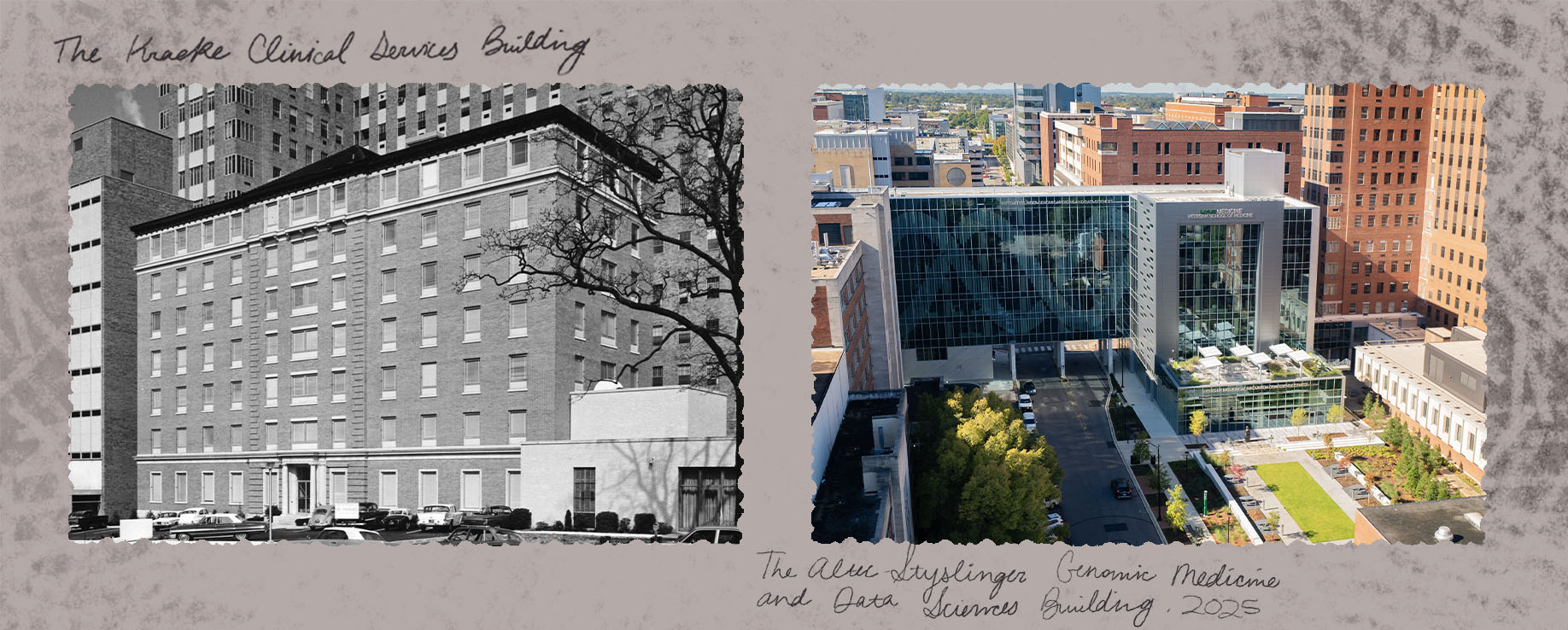
The plaza is not Kracke’s first namesake structure on campus. That title belonged to the Roy R. Kracke Clinical Services Building, which was demolished in 2021. Originally built as a nurse dormitory in the 1920s—making it one of the oldest buildings on campus—it was dedicated to Kracke in 1965, 15 years after his death. When UAB eventually made the decision to take down the building for a grander purpose, Kracke’s family gave their blessing. As plans for the new building started to fall into place, the idea of Kracke Plaza emerged. The bust was generously provided by the family, which includes Kracke’s four living children and several grandchildren and great-grandchildren.
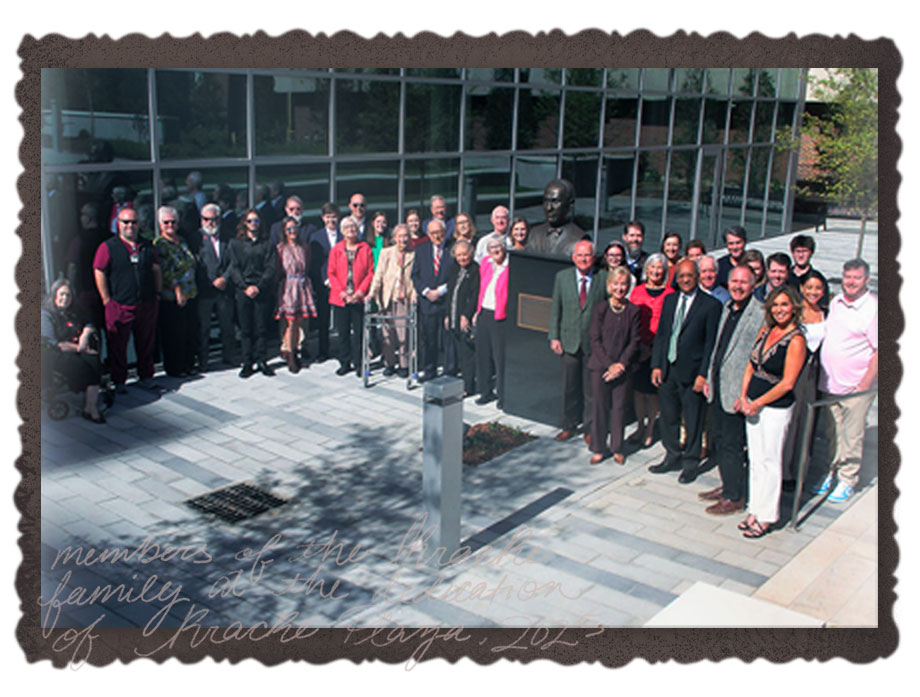
“We're very happy and honored by it,” said Mary Boehm, Kracke’s granddaughter. “Forty family members showed up for the dedication, many of whom matriculated at UAB. We’re proud of his legacy.”
Looking at Kracke’s early life, it seemed almost like fate that he’d one day pursue a career in medicine. Before enrolling in medical school, he spent a period working in a pharmacy. He then went on to serve as a lab technician in the Navy during World War I. After the war, Kracke enrolled at the University of Alabama’s two-year medical school, where he also worked as a part-time lab tech. Since the state of Alabama didn’t have its own four-year medical school, he transferred to Rush Medical College in Chicago to complete his degree. Once he graduated, he was offered a faculty position at Emory University in Atlanta, where he worked for several years.
Dr. Kracke served as a transformational leader during a pivotal time in UAB’s history. He envisioned a medical center that began on this site. The surrounding UAB campus is an outgrowth of that vision.
Dr. Kracke was a leader in the development of the American Society of Clinical Pathology and a president of the society. He administered the first board examination for the certification of pathologists, and medical publications authored by him on the subjects of hematology and pathology were translated into 14 languages.
Plaque inscription on the bust of Roy Kracke at Kracke Plaza
After spending years out of state, Kracke, along with his wife and six children, returned to Birmingham in 1944 with a mission: He had been recruited by the president of the University of Alabama to establish a four-year medical school. Kracke was the ideal candidate. Not only was he born and raised in Alabama, he was also a respected physician who had written a definitive textbook on pathology and hematology that had been translated into 14 languages. As Boehm put it, he was a “doctor’s doctor.” The university’s leadership knew he’d be able to garner the respect needed to not only get the school off the ground, but for it to flourish.
Jefferson County was providing the hospitals as incentive to locate the school in Birmingham, but Kracke had the rest of his work cut out for him. As the dean of a school that didn’t technically exist yet, his job was to plan curriculum, hire faculty, find space to house students, and start recruitment. Against all odds, it only took him a year to put the pieces in place. The first full-time faculty member was hired in December 1944, with more following soon after. The first class of students arrived the following summer.
Alabama’s four-year medical school was finally here, but the work was far from over. Kracke would continue to make several advancements during his tenure. He was a driving force in the placement of the Veterans Administration Hospital at the university medical center in Birmingham. He also worked with Joseph Volker, DDS, Ph.D., the first dean of the UAB School of Dentistry, to establish Joint Health Sciences.
“What I'm most proud of is the difficulty that Dr. Kracke overcame in those early years,” said Boehm. “Once he got here, he absolutely dedicated his life to establishing something more than a medical school. His vision from the very beginning was for a medical center.”

Kracke never got to see the full impact of his vision. He passed away in 1950 at the age of 52, only six years after moving to Birmingham. Despite such a short tenure, his legacy is felt on campus to this day. When Kracke began his endeavor, he was the sole faculty member without any students to teach. To date, the Heersink School of Medicine has trained over 10,000 physicians, with more than 800 students and 1,100 residents and fellows currently enrolled in the 2025-2026 academic year. UAB was recently ranked the fifth largest hospital in the nation, caring for a record 929,021 unique patients in 2025.
“I just can't imagine the joy and awe that he would have at seeing UAB today,” said Boehm. “I couldn't be prouder of the vision that he worked to create, to establish this legacy of UAB. It's the engine of our city that he never dreamed possible. I'm sure that he would be so proud.”


Read more stories from UAB Medicine Magazine.