UAB Medicine Magazine | Fall 2024

Families of children with autism spectrum disorder (ASD) face complex and often overwhelming challenges—understanding how the condition impacts their child, accessing support services, and coping with the financial strain of therapies and interventions that health insurance may not cover. Birmingham business owner and CEO Sheila Benson and her family experienced many of these struggles when her grandson, now 16, was diagnosed with ASD at age 2.

Growing up in Eutaw, Alabama, (pop. 2,803), Drake Lavender, M.D., suffered from asthma and severe allergies. His lifeline was his family doctor, Rucker Staggers, M.D., who treated him weekly with allergy shots, and the two developed a strong patient-doctor bond.

In the early 1980s, a hit TV show introduced many Americans to artificial intelligence (AI). While Michael Knight, famously portrayed by David Hasselhoff, was technically the main character of “Knight Rider,” it was KITT, a black 1982 Pontiac Trans Am with the power to think and talk, that spurred fans of the show to tune in week after week.

Once a year, when Gabrielle Rocque, M.D., an associate professor in the Division of Hematology and Oncology, enters the Kirklin Clinic on the night of the annual ArtBLINK gala, she sees the space where she normally cares for breast-cancer patients reimagined as the site of a lively, black-tie celebration. “It blows me away,” she said. “It’s completely transformed.”

“Alabama is a hotbed for fungal diseases,” said Peter Pappas, M.D., professor in the Division of Infectious Diseases in the Heersink School of Medicine. “We see as much or more in the way of fungal infections as anyone in the country.” Pappas is a leader of the Mycoses Study Group, a world-renowned, UAB administered group of experts who focus on understanding and treating invasive fungal infections and have led most of the clinical trials for FDA-approved antifungal treatments. (Mycology is the study of fungi; mycoses are invasive fungal infections.)

A distinguished professor in the Heersink School of Medicine, a professor in the Department of Surgery, and holder of the Champ Lyons Endowed Chair in General Surgery, Aurelio Galli, Ph.D., D.S.c, was introduced to martial arts at age 6, when his father enrolled him in judo to manage his frequent falls. Growing up in northern Italy, Aurelio swiftly excelled, becoming a multiple-time regional champion and achieving a brown belt.

The summer of 2024 marked a transformational turning point for health care in Alabama with two important developments. These advances promise to not only improve access to care for people in the Birmingham area and across the state, but also to advance the UAB Health System’s mission to provide life-changing care to all it serves.

Throughout her career as a young physician, the late Priya Nagar, M.D., had a special understanding of her patients’ challenges because of her own experiences with pain, serious illness, and healing.
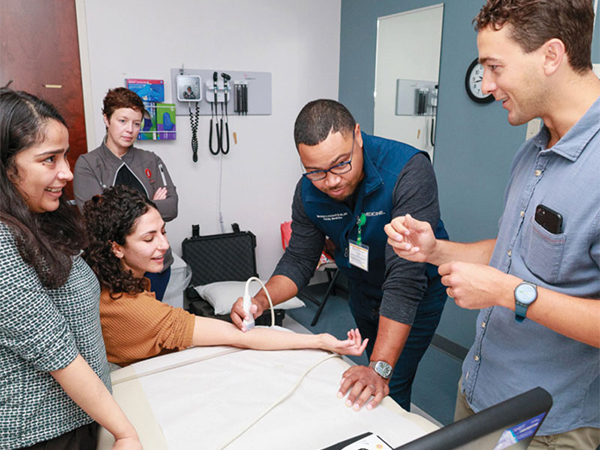
It’s been called “The Stethoscope of the Future.” Point-of-care ultrasound (POCUS) can be applied in a variety of settings thanks to its small size and portability, from hospital bedsides to sports sidelines to primary care clinics. These palm-sized devices allow health care providers to quickly and easily perform ultrasound scans, creating detailed images that can help clinicians make informed decisions or provide real-time guidance during a procedure. The devices can aid in identifying various conditions, including soft-tissue infections, fluid accumulation, and heart failure.
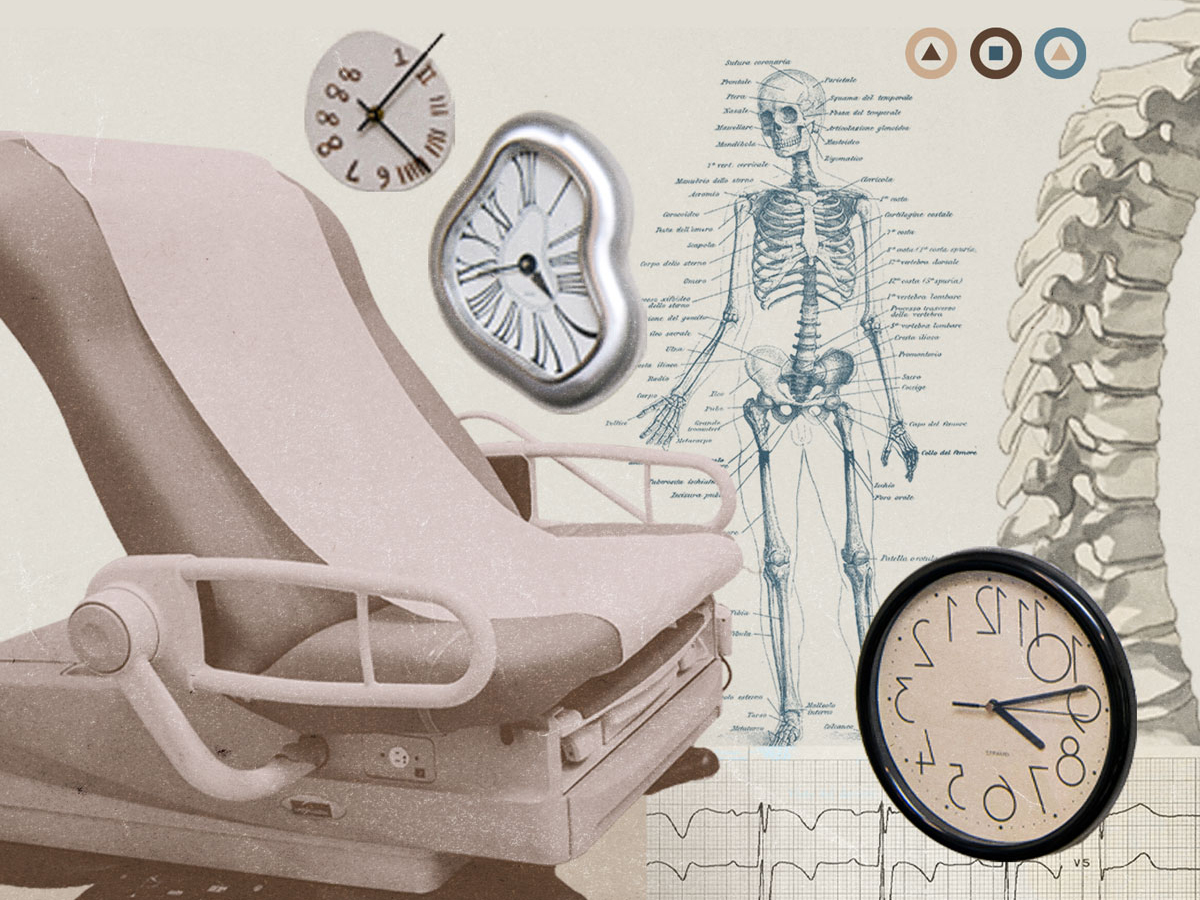
As our society evolves so, too, do the health challenges we face. UAB Medicine is at the forefront of addressing emerging and evolving health issues with the introduction of new clinics and programs designed to meet the dynamic needs of patients at every stage of life. Among these are the UAB Comprehensive Smell and Taste Clinic, which responds to the increased prevalence of smell and taste disorders following the COVID-19 pandemic, providing specialized care and innovative treatment options.

As chair of the UAB Department of Psychiatry and Behavioral Neurobiology, Adrienne Lahti, M.D., has a unique perspective on the mental health care landscape in Alabama. “Alabama ranks very low in mental health care,” she said. “In metrics comparing different states’ mental health statistics and access to care, Alabama is usually at 47, 48, 49. The demand is huge.”

A nationwide study of 196 cities shows that housing discrimination from 90 years ago still casts a shadow of inequities in colon cancer care today, S.M. Qasim Hussaini, M.D., assistant professor in the Division of Hematology and Oncology, and colleagues at the American Cancer Society and Johns Hopkins School of Public Health reported in the journal JCO Oncology Practice.

There is an open secret among tattoo artists, dermatologists, and the small group of researchers studying the effects of tattoo ink: Red ink causes the most problems.