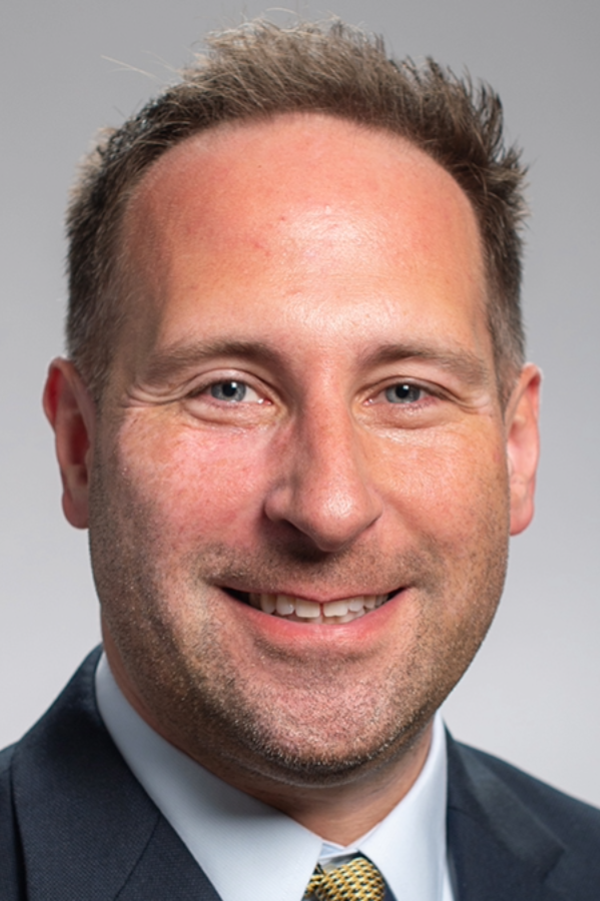
 Robert Welner, Ph.D.Rob Welner, Ph.D., associate professor in the Department of Medicine and co-leader of the Cancer Biology & Immunology program at the O'Neal Cancer Center, has been named the school’s latest recipient of the Featured Discovery award. This recognition celebrates notable faculty research contributions and highlights the impact of their scientific advancements.
The study, “Integration of phospho-signaling and transcriptomics in single cells reveals distinct Th17 cell fates,” was published in Cell Reports.
In the study, first author Seth Fortmann, M.D., Ph.D., together with Welner and his team aimed to understand how immune cells decide what role to take in the body. To do this, the researchers developed Vivo‑seq, a technique that lets them measure gene activity and internal cell signaling at the same time in individual cells. This gives a much more complete and realistic picture of what a cell is doing at any given moment.
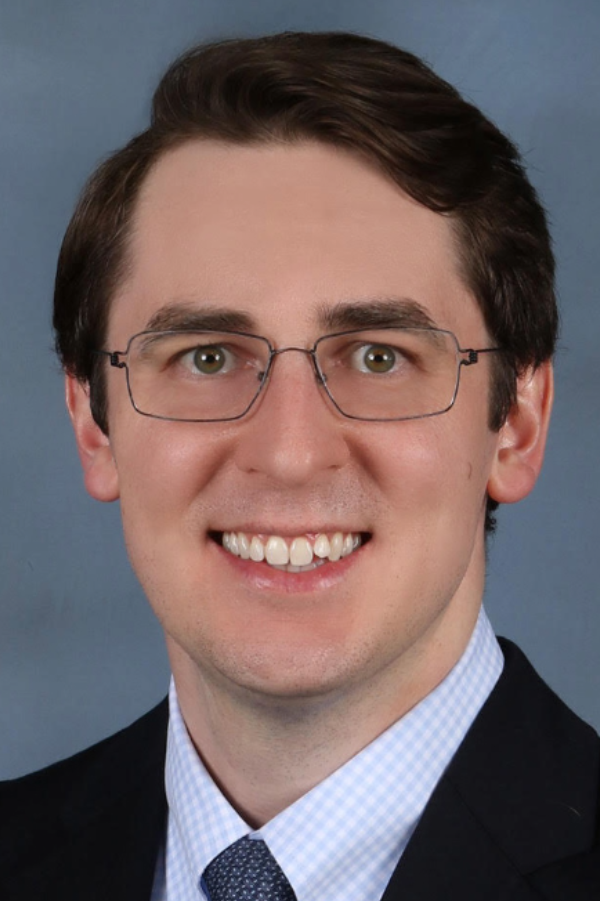 Seth Fortmann, M.D., Ph.D.“Science is often about finding new and creative ways of using our existing toolkit to answer important questions,” said Fortmann. “Developing Vivo-seq was especially rewarding because it gave us a new way to investigate previously inaccessible aspects of immune cell behavior.”
The Heersink communications team met with Welner to gain insights into the study and help raise awareness about both the research and the Heersink School of Medicine.
What compelled you to pursue this research?
We wanted to understand not just what genes a cell expresses, but what the cell is actively doing at the moment it makes important decisions. While new technologies let scientists examine gene activity in single cells, they often miss fast‑moving protein signals that help determine a cell’s fate.
This gap is especially important in immunology. Immune cells constantly respond to signals from their environment, and those signals can determine whether they protect the body or contribute to disease. We wanted to develop a way to capture both gene expression and these real‑time signaling events in the same cell, so we could better understand how immune cells make decisions that have long‑term effects.
What was your most unexpected finding?
We discovered a previously unrecognized state of immune cells that showed unusually strong activity and function. These cells had a specific combination of active signaling proteins and produced much higher levels of immune molecules than other cells.
What surprised us most was that these early signaling events weren’t short‑lived. They influenced how the cells behaved much later, shaping whether they stayed in their original state or changed into another type. This showed us that brief signals during cell development can have long‑lasting effects.
It also reinforced an important lesson: cells don’t respond to signals one at a time. The combination of signals matters, and measuring them together revealed insights we would have missed otherwise.
How do you feel your research will impact the science community?
This work provides a simple and widely accessible way for researchers to study both gene activity and protein signaling in single cells at the same time. Until now, scientists usually had to choose between one or the other.
By combining these two layers of information, researchers can identify important intermediate cell states that are invisible when looking at genes alone. This approach has broad potential across fields such as immunology, cancer research, and stem cell biology.
More broadly, our work helps shift biology from simply describing cell types to understanding how those types are formed, and how short‑term signals can shape long‑term outcomes.
What is your research’s relevance to human disease?
This research helps explain how the immune system can become overactive and drive harmful inflammation. The immune cells we studied are important for fighting infection, but when their activity is dysregulated, they can contribute to autoimmune diseases, cancer, and chronic inflammatory conditions.
We found that early signals inside these cells can influence how aggressive or inflammatory they become over time. Understanding these early decision points may help researchers develop treatments that better control immune responses, reducing harmful inflammation while preserving the body’s ability to fight disease.
When did you know you had an important discovery?
We knew we had something important when we realized we could preserve both genetic material and delicate protein signals in the same single cell. Previously, researchers had to sacrifice one to study the other.
Seeing high‑quality gene data alongside reliable protein signaling data confirmed this was more than a technical improvement. It opened the door to discovering entirely new cell states. That’s when we realized the broader impact of what we had developed.
How has being at UAB and living in Birmingham affected your research?
UAB has greatly influenced this research. Support from the Division of Hematology/Oncology, the Department of Medicine, and the School of Medicine helps make big ideas possible when harder to fund at the national level. The excellent core facilities combined with a community of peers who challenge and support each other are just as important. The atmosphere is collaborative and the graduate students are talented and driven. In fact, this work was driven by an outstanding, creative M.D.-Ph.D. student, Seth Fortmann, who was moonlighting in my lab to explore our shared interests in cell signaling. Being around colleagues who are always pushing science forward creates a motivating and supportive energy that has been key to our progress.
What made you come to UAB?
UAB stood out because of its strong focus on team-science and collaboration. The leadership and mentoring here encourage junior PIs and scientists to work together across different fields instead of remaining isolated. While some places become divided due to productivity pressures, UAB always puts cooperation, shared discovery, and translational science first. This collaborative environment, along with great mentors and leaders, made it the perfect place to start our research program.
What do you find makes the science community here unique?
The science community here is special because people are open to and have ideas outside their own research. Researchers often go beyond their own fields of expertise to help with other projects or share different viewpoints. This openness leads to real partnerships and encourages teamwork across disciplines. When scientists with different backgrounds work together on tough problems, it creates a place where new solutions come freely.