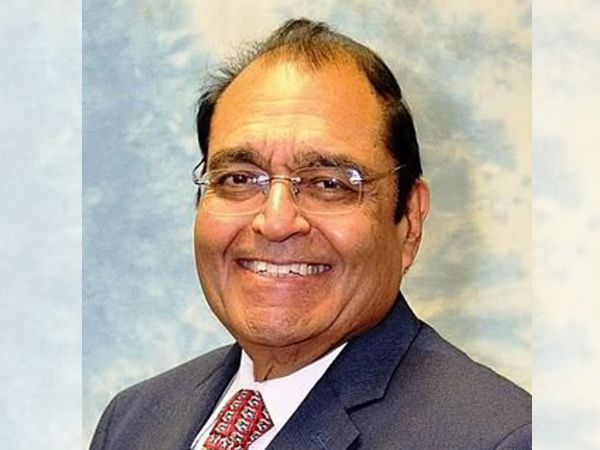
 Navin Nanda, M.D.Navin Nanda, M.D., Distinguished Professor in the Division of Cardiac Disease within Department of Medicine, recently reflected on his career journey that transformed the field of echocardiography and cardiovascular imaging as part of the SCAI Complex Cases in Coronary Interventions (CCI) 2026 program. Nanda participated in a session titled “In Conversation with Legends,” and was recognized by the president of the Society for Cardiovascular Angiography and Interventions as "one of the true legends in cardiology."
The recognition reflects a career that has helped transform how physicians visualize the heart. Over more than five decades, Nanda has advanced the field of echocardiography through groundbreaking research, education, and innovation—most notably through the development and clinical advancement of real-time three-dimensional transesophageal echocardiography, or 3D TEE.
Today, 3D TEE is considered an essential tool in structural heart interventions. The technology allows physicians to view heart valves and other cardiac structures front-on while procedures are underway, providing a level of anatomical detail and pathology assessment that was previously unavailable with conventional two-dimensional imaging.
Laying the foundation for innovation
The foundation for that work was laid early in Nanda's career. As a cardiology fellow at the University of Rochester in the early 1970s, he became intrigued by a longstanding challenge in cardiac ultrasound. At the time, physicians could visualize only three of the heart's four valves, as the pulmonary valve was believed to be impossible to image because it was obscured by lung tissue. After discussions with a pathologist during an autopsy, Nanda and his mentor questioned that assumption and were determined to image the valve.
Their work ultimately demonstrated that the pulmonary valve could be visualized by echocardiography. Nanda applied breakthrough to his work in pediatrics, revolutionizing pediatric echocardiography and the diagnosis of transposition of the great arteries in newborns. That experience sparked a lifelong interest in pushing the boundaries of cardiovascular imaging.
“As an example, we could then very quickly and non-invasively diagnose and manage critically ill and cyanotic newborn babies who would have otherwise most likely died,” Nanda said. “This discovery and other pioneering advances subsequently made by our team greatly spurred my interest in echocardiography and shaped my career.”
From discovery to standard clinical practice
As structural heart procedures emerged and grew more sophisticated, Nanda recognized the need for imaging tools that could provide a more complete understanding of complex cardiac anatomy. While conventional transesophageal echocardiography provided only cross-sectional views, three-dimensional imaging offered physicians a far more realistic representation of the heart's structures.
The technology quickly proved valuable in procedures such as mitral valve repair, transcatheter valve interventions, and atrial septal defect closure. By allowing clinicians to view cardiac anatomy from multiple perspectives, 3D TEE improved procedural planning, guidance, and outcomes.
"Comprehensive assessment of the mitral valve viewed from any desired angle and viewpoint, including most importantly en face views, has resulted in more accurate repair with minimal or absent residual regurgitation."
Unlike many medical innovations that take years to achieve widespread acceptance, 3D TEE was rapidly embraced by physicians around the world, and with it came the field of interventional cardiology. Today, it is routinely used in catheterization laboratories and operating rooms and is considered a cornerstone of modern structural heart care, providing better outcomes to patients every day.
"I feel overwhelmingly grateful that now we have an imaging technique that is very useful to the interventionist cardiologist in enhancing patient care,” Nanda said.
The influence of his work extends beyond the technology itself. Throughout his career, Nanda has trained and mentored generations of cardiologists and echocardiographers at UAB, across the country, and around the world, many of whom now lead programs and perform advanced structural heart procedures.
"I see many, many echocardiographers personally trained by me in eminent positions performing 3D TEE during interventional procedures,” he said. “That is an incredible feeling of deep satisfaction and fulfilment."