Our Get to Know series highlights our dynamic researchers from across the UAB Comprehensive Diabetes Center (UCDC), from faculty members to trainees and laboratory staff. This month, we’re spotlighting Huixian Hong, M.D., Ph.D., an experienced researcher who joined the lab of Kirk Habegger, Ph.D., as lab manager in 2025.
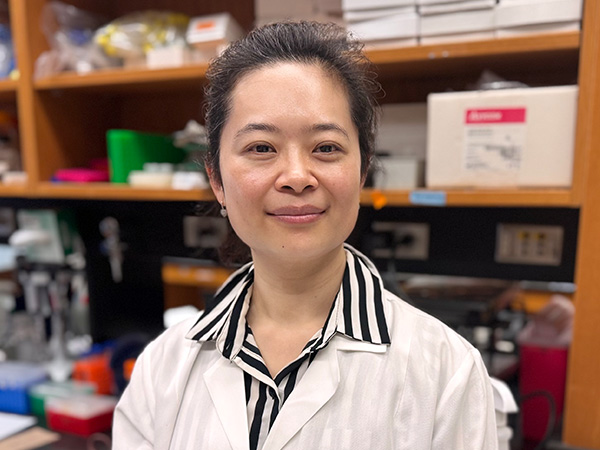 Hong Huixian, M.D., Ph.D.Tell us a little bit about you and what brought you to UAB.
I am originally from China and obtained a master’s degree from Guangzhou Medical University and a medical degree from Dalian Medical University. I came to UAB as a visiting student in 2011 when I was studying for my master’s degree. I obtained my Ph.D. from UAB in 2020. Since then, I have been studying and working at the university. Before joining the UCDC in 2025, I finished my postdoc training/fellowship studying the role of neuroinflammation in the pathogenesis of neurological diseases.
Did you have any experience in diabetes research before you joined the Habegger lab?
I did not have any experience in diabetes research before I joined the Habegger lab, but I have extensive wet lab research experience and was looking for a great team to continue my work in scientific research. I have always been interested in metabolic disease research, so when I saw Dr. Habegger’s job opening, I did not hesitate to submit my application.
Tell us a little bit about your lab’s research focus and some of the current projects you are working on.
Our lab’s research focuses on elucidating the mechanism of obesity and strives to test and validate anti-obesity medications, especially the incretin-based compounds. I am currently involved in 1) Investigating how the expression of the klotho beta (KLB) gene in glutamatergic neurons is implicated in obesity metabolism; 2) Studying the role of hepatic glucagon receptor (GCGR) expression during the development of metabolic dysfunction-associated steatohepatitis (MASH); 3) Testing the different incretin-based therapies and their efficacy of treating diet-induced obesity (DIO) as well as their specific role in metabolic processes; 4) Elucidating the role of hepatic thioredoxin interacting protein (TXNIP) expression in the pathogenesis of metabolic disease.
What does it mean to be a lab manager in the UCDC and contribute to the UCDC’s mission?
I feel very proud to join the UCDC group and to have the opportunity to contribute to its mission of improving the lives of those living with diabetes. I feel grateful to perform each task and experiment, no matter how big or small. This is the first time in my research career to be a lab manager, so I am still learning.
What advice would you give a new lab manager or someone who wants to work in a research lab?
As a lab manager, responsibility and communication are essential. Of course, these are the two key characteristics for every job in any workplace. To be a lab manager to me means that you are obligated to take responsibility to maintain the lab and ensure it is in good working order, which lays a foundation for conducting research projects smoothly. Being confident in coordinating and decision-making as well as having open communication and maintaining good rapport with labmates is what makes a great lab manager in my opinion.
Tell us about what you enjoy doing outside of work/lab?
Outside of work/lab, I spend a lot of my time with my husband, my 5-year-old boy and my 8-year-old Corgi puppy. I also love reading, writing, cooking and exercising.