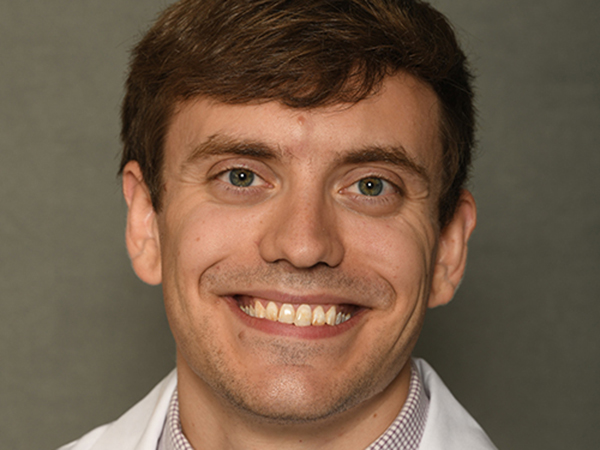
By: Cole Kennum, PGY-1
Aletheia (ἀλήθεια) is the Greek word translated as “truth” or “disclosure.” The term ἀλήθεια features prominently on the old seal of the University of Alabama School of Medicine.
At the beginning of intern year, I received the face sheet with the names and photos of my fellow trainees. On the back, however, I found a mysterious symbol: the old seal of the School of Medicine, anchored by the Greek word aletheia. What is aletheia, and why is it included in the seal of a medical school?
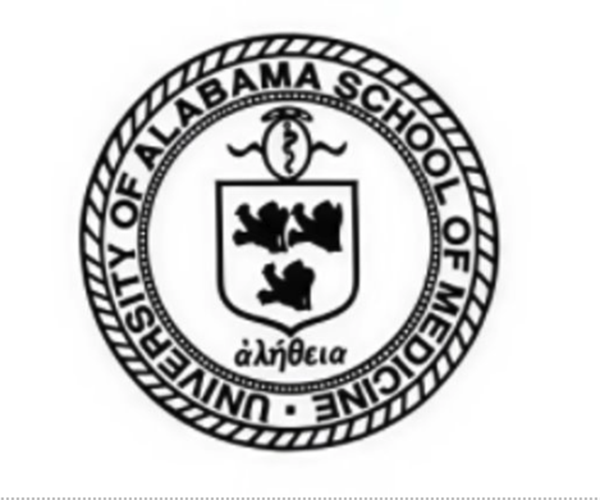 Aletheia translates to “truth,” “disclosure” or “uncovering.” Aristotle, the son of a court physician, used the term to develop the correspondence theory of truth: “To say of what is that it is, or of what is not that it is not, is true.”¹ St. Thomas Aquinas rephrased Aristotle’s idea: “A judgment is said to be true when it conforms to external reality.”² In a medical context, aletheia transcends mere diagnostic accuracy. It is correct judgment, ensuring that a physician’s medical opinion and decisions correspond to the reality of the patient. The physician is then a detective, applying the art of medicine to uncover the truth in service of the patient.
Truth cannot be grasped without knowledge. Aristotle uses, among other terms, episteme, techne and phronesis to differentiate forms of knowledge.³⁻⁴ Medically, episteme reflects knowledge of scientific principles. Techne describes knowledge bound up in the art, skills or craft of medicine. Phronesis, however, encapsulates the concept of practical wisdom—the judgment to know whether a particular treatment is right for this particular patient at this particular time.
Consider a patient with dyspnea. Episteme is knowing that the lungs are the organs of gas exchange. Techne involves both interpreting the chest radiograph to diagnose a pleural effusion and performing the thoracentesis to drain it. Lastly, phronesis determines whether the procedure should be recommended at all, according to what is good for the patient at hand. A frail patient on home hospice might benefit more from symptomatic relief with medications than from an invasive procedure. Placing a chest tube in a frail patient on hospice may very well violate the truth (aletheia) that the patient is at the end of life and may not benefit from such an intervention.
I suspect that everyone reading this wants more than the head knowledge of episteme. We all desire to be excellent in the practiced art of medicine—the techne of being a physician. Bound up in this techne are our productivity, our constant striving toward high professional standards and our iterative refinement of medical practice. We are very busy with techne, perhaps exhausted by its pursuit. But what good is our techne without phronesis—the wisdom to guide it?
Stamped on the old seal of our institution, aletheia invites us to search for truth. This truth is not merely found in universal scientific principles (episteme), nor solely in the best deployment of those principles toward clinical ends (techne). Beyond being a mere clinical technician, aletheia invites the budding physician to become a professional in medical phronesis—to pause amid the hurried business of work and consider what is best for the particular patient at hand.
Ultimately, our work is not to manage “the patient in S945,” but to uncover the truth of the human being before us and to do good for them. What is good for one patient may not be good for another, yet wisdom requires truth to know the difference.
References
- Aristotle. Metaphysics 1011b25.
- Aquinas. De Veritate, Q.1, A.1–3; cf. Summa Theologiae, Q.16.
- Aristotle. Nicomachean Ethics, Book VI, Chapter 3.
- Collier KM. BMJ Leader. 2024;8:55–58.
Thank you to Tammy Pickens for providing an electronic copy of the seal.