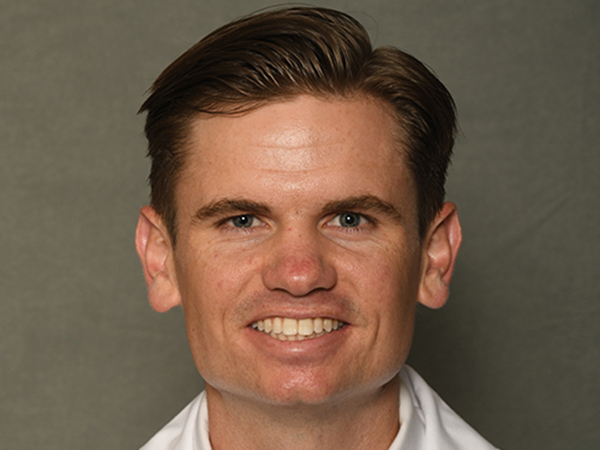
By: Jackson Carlyle, PGY-1
There is a certain randomness to how disease impacts the world around us. There is also a certain disorder in the health care system that is easily ignored amid incredible accomplishment.
We are transplanting more kidneys than ever before, yet the estimated proteinuria screening rate for those with newly diagnosed hypertension is at or below 10%. We can spend millions pursuing the workup for a rare cancer diagnosis while the patient spends their last two to three weeks of life in a hospital bed, none the richer for having a diagnosis. We have access to lifesaving machines and medications, but when a code is called, there are still times when no one can find the backboard, there are 10 people in the hallway and no one is over the airway. Our system, in line with every other system since the dawn of time, is bound by the law of entropy. As I reflect on my role as housestaff at UAB, it is my view that the most helpful goal we can seek each day is to attempt to promote order in the various avenues in which we are blessed to have influence.
As a starting point, establishing order is practical and foundational, enabling physicians to assume responsibility for their patients throughout the course of care. There is much nomenclature in the health care world that deals with healing patients and curing diseases. While this can happen, I would argue that these processes are set in motion by a physician appropriately ordering the substrate and sequential catalysts to produce the desired outcome. In time, there are many well-laid plans that fail to produce healing. If our perceived calling were healing alone, we would shrink back in those moments, as our role would be no more. On the contrary, two of the most rewarding interactions from intern year have occurred amid family members expressing deep gratitude for how much effort our team put in so their loved one could pass peacefully at home. In our patients’ final moments, when families are grasping for direction and clarity, what a blessing it has been when the medical team is committed to intentionally ensuring that needed medical devices, medications and transportation are arranged without delay.
Order is also necessary for productive team-based care. When admitting patients, are all the orders timed to be released at the same moment, or will the nurse be returning to the bedside twice in the next 30 minutes because I forgot to order labs earlier? When a page comes through that is unclear, will I brush it off and assume I will be paged again if it is “really important,” or will I spend the time to remedy the situation promptly? Most importantly, when someone is decompensating or a code is called, will I prioritize calm, clear requests or move with undue haste as thoughtfulness evades me? The order I am referring to with my co-workers is not pure hierarchy. It is also not performing perfectly in every scenario. It is realizing that stressful situations provoke disorder, and that responding intentionally provides remedy more often than pure reactivity. Put differently, are our “orders,” whether verbal or electronic, actually promoting order? We would be wise to think of our interactions in patient care much like our procedures. No matter how skilled the proceduralist, if the tools and equipment are not arranged properly, the procedure is unlikely to be successful. Likewise, when we admit, round and discharge without thoughtful intentionality, we allow our system to continue down its natural, entropic path.
Finally, bringing order is transcendent. The word physician finds its roots in the Greek physiko. This word is best defined as “nature,” and thus it was fitting for early practitioners of medicine. There really was no medicine; there was only a seeking to understand how the human body should function and futile attempts to restore sick patrons to their prior state. It is no surprise that this Greek word is also the basis for physics, which is, intuitively, the study of nature. Teaching nature is part of the modern medical school’s role, but there is much more the modern-day physician must learn. In our profession, we are constantly sowing seeds of order or disorder, and it is imperative to recognize this and practice accordingly.
In summary, there are many things we imagine as enemies in the delivery of health care: death, disease, poverty, injustice and expense, to name a few. There is a time and place to discuss how to address these opponents, but in the short term, there is an enemy that is ever present and readily addressable: disorder. In our world, disorder will only increase according to its nature. What our system needs are individuals willing to pause, step outside the natural flow of modern health care and arrange their practice in a way that brings order.