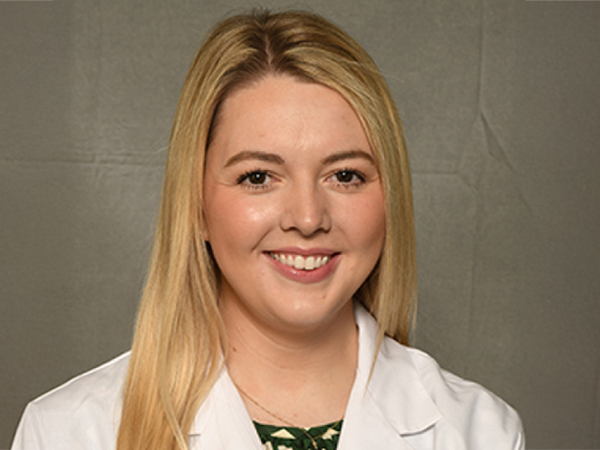
By: Sally Jones, PGY-2
The first time I met Jeff Woods was in 2017 in the UAB Emergency Department. As a newly minted clinical research assistant in the throes of figuring out if I wanted to apply to medical school, Jeff was a steady, calm presence outside the trauma bay. We developed a friendship between trauma codes; I scurried around collecting data and Jeff guided patients and their loved ones through arguably the worst day of their lives.
Several years later, when I walked into the ER to admit my first patient as a nervous intern, it felt full circle to see Jeff in his usual perch. In our hallway conversations, we have often discussed together the emotional toll of walking alongside people through devastating illnesses. I treasure Jeff’s insight and wisdom as a chaplain with over 14 years of experience working both with families and alongside residents at UAB. From our conversations, I have learned from Jeff how early chaplain involvement, emotional vulnerability, and reflection allow us to better care for ourselves and the people we serve.
The Earlier the Better
Jeff demonstrates how chaplains are integral members of the healthcare team, providing invaluable support to both families and staff. I think about how often I have not offered chaplain services to patients and families until comfort care or hospice discussions begin. Jeff shares, “The best thing you can do is put patients on our radar as early in the process as possible, especially if you are worried about the severity of the illness.” This allows chaplains to meet patients and families over several visits, building relationships over time. “When I get to know families throughout a hospitalization, I can learn how to best support them and even the residents caring for these patients. There is nothing more difficult than meeting people on their worst day when emotions are so high that I have a difficult time sorting out how to provide the support they need.”
Emotionally Available
I will never forget telling Jeff how I was embarrassed when I burst into tears on rounds while watching a daughter my age say goodbye to her mother in the ICU. Instead of seeing this as a weakness, Jeff began to share a time he was with a surgical resident in a family meeting. “The resident began to tear up as she shared difficult news and when she left, the family could not stop talking about how she was a great doctor.” Despite the bad news, the family was able to acknowledge the provider’s empathy through her tears, and it brought them comfort. Jeff taught me that emotional availability in our time with patients and families makes all the difference in not only our relationships with them, but in how they process difficult news.
Questions We Carry
We are taught algorithms and trained meticulously in how to best care for patients in cardiac arrest or respiratory distress. Beyond reviewing depth and timing of compressions or how quickly an airway was secured, we often must quickly move on to the next patient care task. Jeff encourages me to intentionally take time to process and reflect on these experiences. “I have seen thousands of traumatic injuries, and a few will always stick with me,” Jeff shares, “I have had to ask myself not only how I feel about what happened, but what does it mean to me?” Whether it was realizing a patient with a terminal illness was close to your age or had similar traits as your grandparent, Jeff explains how this parallel processing of patients’ stories alongside our own can allow us to unpack the emotional baggage we accumulate as providers and spur us on to be even more compassionate and communicative physicians.
Meeting Jeff Woods in 2017 marked the beginning of a friendship and mentorship that has deeply shaped my journey in medicine. Through his calm presence and compassionate work as a chaplain, Jeff has taught me the importance of early emotional connection, vulnerability, and reflection in caring for patients and ourselves. His wisdom has reminded me that showing empathy, even through tears, is not weakness but a gift that brings healing to others and to us. I am profoundly grateful for Jeff’s guidance, his steady example, and the lessons he continues to share about what it truly means to care.