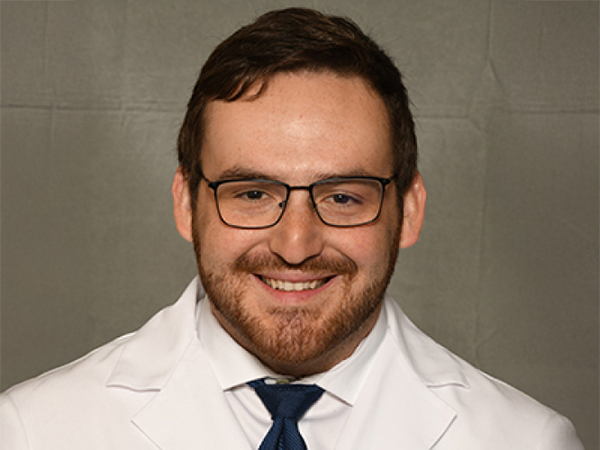
By: Charles Heald, PGY-2
Long before I ever rounded on a patient in the hospital, I was one. I was born with supravalvular aortic stenosis and a bicuspid aortic valve, types of congenital heart disease. I had my first open-heart surgery at five years old, when my surgeon used a piece of my pericardium as a patch to enlarge my stenotic aorta.
That repair carried me through a mostly normal childhood until, just a few months before starting medical school, my leaky bicuspid valve needed to be replaced.
I only remember fragments of my first surgery, but the second one is etched vividly in my memory. For me, February 19th of 2020 was one of the most defining days of my life, but for my doctors, it was just another Wednesday at work.
Being a hospitalized patient is confusing, isolating, and frightening. Stress, pain, and sleepless nights from beeping monitors and lab draws only exacerbate those feelings. You see your doctors for a few minutes each day, often before you’re fully awake, and you hang on to every word they say. Now, as a resident physician, I can see both sides of the equation. I see how much thoughtful effort goes into those encounters long before we walk into the patient’s room: the pre-charting before dawn, the long discussions on rounds, the careful handoffs during shift change.
Patients rarely see or even understand the behind-the-scenes work of practicing medicine. Too often, miscommunication, time pressures, or mismatched expectations widen the gulf between patients and providers. But I’ve learned, both as a patient and now as a physician, that the gap can be closed.
During my own hospitalization, the most meaningful interactions were the small acts of kindness and humanity: the nurse who wished me luck and told me she hoped this would be my last surgery; the nurse practitioner who put a hand on my shoulder when discussing my pain; the fellow who lingered on a busy morning to answer all of my questions; the physical therapist who played it cool when I vomited in front of him during my first attempt to walk after surgery (a moment I still cringe at). For them, these gestures may have faded into the blur of a long shift. For me, they meant everything.
Years later, I sometimes catch myself slipping into autopilot, checking boxes and going through the motions of a busy day. But then I remember what it felt like to sit in that hospital bed.
They say medicine is both an art and a science. Mastery of the medical details matters, but so does the human connection. Patients may not always appreciate every technical aspect of their care, but they will carry our acts of kindness with them long after they leave the hospital.