By: Nathan Anderson
As a Spring 2026 graduate of the Interdisciplinary Graduate Studies (IGS) master’s program at the University of Alabama at Birmingham, Kelsey Greathouse set out to strengthen her skills beyond the lab bench and found a program that allowed her to do exactly that while continuing her full-time work in Alzheimer’s disease research.
Greathouse, a staff scientist at the UAB Killion Center for Neurodegeneration and Experimental Therapeutics in the Department of Neurology, has spent years building a foundation in laboratory research. But as her career progressed, she recognized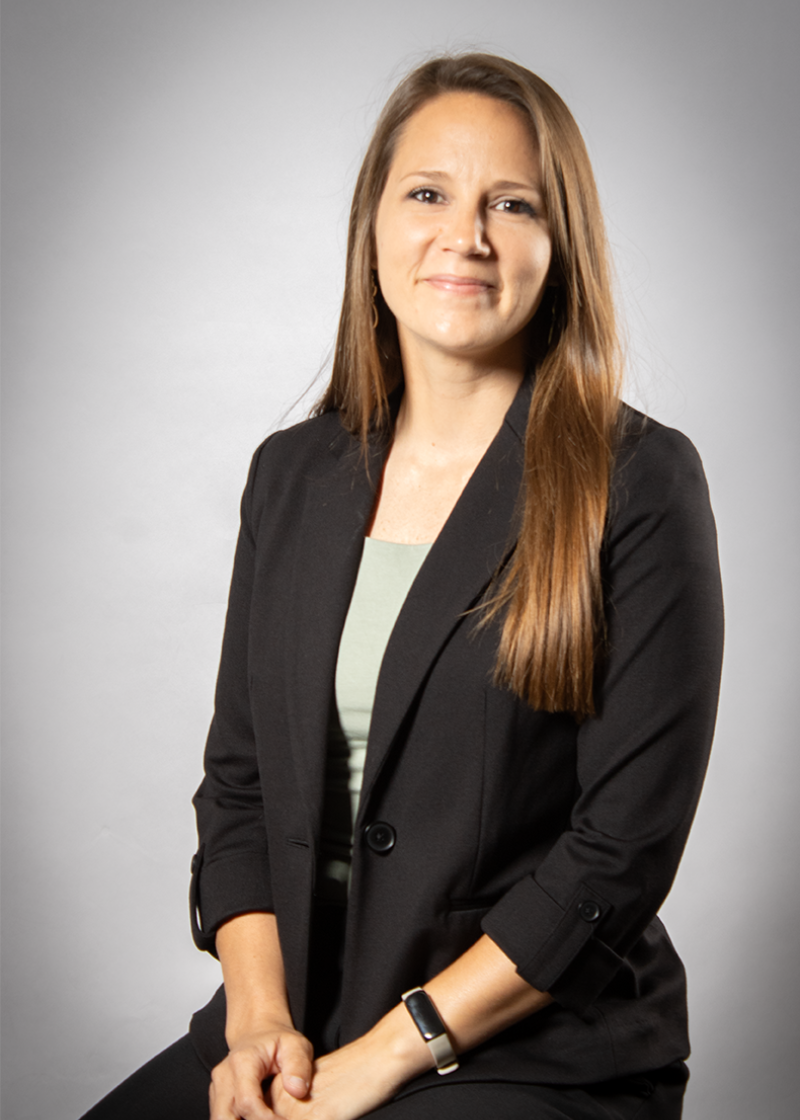 that technical expertise alone was not enough to reach her long-term goals. She needed a way to grow in areas like lab management, communication, and strategy without stepping away from the work she was already doing.
That’s what led her to the IGS master’s program housed in the Office of Interdisciplinary Graduate and Professional Studies (IGPS).
“What really stood out was the ability to tailor the program by selecting certificates that match my interests,” Greathouse said.
Unlike traditional degree paths, the IGS master’s program allowed her to customize her experience through certificate options. She chose to focus on Research Laboratory Management (RLM) and Research Communication (RECM), two areas that aligned closely with both her current role and future aspirations.
That flexibility is one of the program’s defining strengths and one of the key reasons Greathouse now encourages other students to consider IGS or IGPS certificates.
Rather than following a fixed curriculum, she was able to select courses that immediately complemented her day-to-day responsibilities. The result was an academic experience that felt less theoretical and more like an extension of her professional growth.
“I was able to apply what I was learning in real time,” she explains. “Which made a noticeable difference in how I approach my work in the lab.”
Through her coursework in laboratory management, Greathouse developed a stronger understanding of workflow optimization, organization, and efficiency. These skills, while often overlooked, play a critical role in the success of any research program. By improving processes within the lab, she found that more time could be dedicated to experimental design and execution, where scientific discovery truly happens.
At the same time, her training in research communication helped her become more confident in presenting complex scientific ideas clearly and effectively. Whether contributing to manuscripts, supporting grant proposals, or collaborating across teams, she gained the ability to adapt her communication style for different audiences an increasingly essential skill in today’s interdisciplinary research environment.
Together, these experiences expanded her role beyond technical bench work. She began contributing more broadly to the management and communication of research, positioning herself for greater leadership and responsibility.
Her capstone project reflects that broader perspective. Titled “Integrating Human-Relevant Models into Alzheimer’s Disease Research: A Framework for Experimental Model Selection,” the project addresses a key challenge in Alzheimer’s research: how to choose the most appropriate experimental models for specific research questions.
Greathouse developed a practical framework to guide researchers in making more intentional, strategic decisions, with an emphasis on the use of human-relevant models. Her work aligns with recent national shifts toward New Approach Methodologies (NAMs), highlighting the growing importance of translational relevance in scientific research.
While her project focused on Alzheimer’s disease research at UAB, its applications extend far beyond a single field, demonstrating the kind of scalable, real-world impact that IGS coursework is designed to support.
Now, as a recent graduate, Greathouse sees the IGS program as an ideal option for students who want their education to directly enhance their careers.
“One of the biggest strengths of the program is that it allows you to tailor your coursework through certificate options, so you’re not following a one-size-fits-all path,” she says. “That makes it especially valuable for prospective students who already have a clear direction and want to build specific skills that complement their current role or future goals.”
She also notes that even individual IGPS courses or certificates can provide meaningful value, especially for students looking to strengthen specific skills like communication or laboratory management without committing to a full degree program.
Looking ahead, Greathouse plans to continue her work in Alzheimer’s disease research while taking on greater leadership in lab operations. Her goal is to contribute not only to the science itself but to the systems that make impactful research possible.
Her journey offers a clear example of what makes IGS unique: a program designed not just to educate, but to adapt—meeting students where they are and equipping them with the tools to grow.