By: Nathan Anderson
Some of the most meaningful opportunities happen where disciplines intersect. Throughout JaMor M. Hairston’s, PhD, MSHI, MS, career, he has built a reputation for connecting people, ideas, and technologies to address complex healthcare challenges. That interdisciplinary mindset first took shape at the University of Alabama at Birmingham’s (UAB) Interdisciplinary Graduate Studies (IGS) program, where he designed a degree that combined business, technology, and biotechnology to support his goal of leading innovation in healthcare.
Today, Hairston serves as a digital health leader, scientist, and AI advisor based in Atlanta, GA. He leads the Research Informatics Project Management Office at Children's Healthcare of Atlanta, where he is developing the infrastructure that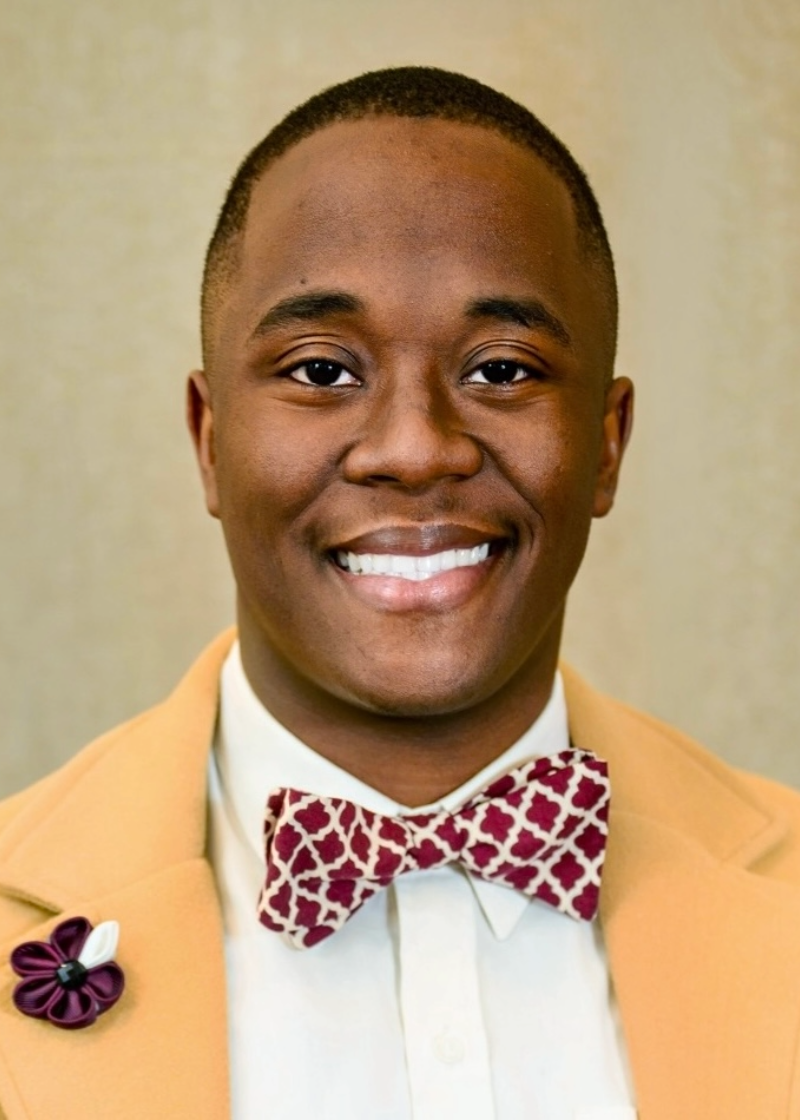 helps move pediatric research discoveries from the bench to the bedside.
His interdisciplinary approach to leadership and innovation can be traced back to his time at UAB’s IGS program.
"I came in wanting to learn how to lead biotechnology innovation, which meant understanding both sides: the business and management of technology, and the science and regulation that govern how it actually reaches people," Hairston said.
Traditional degree programs did not offer the unique combination of expertise he sought. Through IGS, Hairston designed a master’s degree that combined Management Information Systems from the Collat School of Business with Biotechnology Regulatory Affairs from the School of Health Professions.
Rather than forcing his interests into a predefined curriculum, IGS allowed him to build an academic experience tailored to his professional goals.
"It was a self-curated pairing designed to give me the foundation to lead biotechnology innovation, blending business strategy with the scientific and regulatory knowledge required to bring that innovation to market," he said.
For Hairston, one of the program's greatest strengths was the opportunity to take ownership of his educational journey.
"The most valuable part was the freedom to be intentional about my education," he said. "Being responsible for shaping my own program taught me to think like an academic before I ever stepped fully into it."
That experience challenged him to identify the knowledge and skills he needed, connect concepts across multiple schools and disciplines, and articulate why those connections mattered. The ability to think critically across traditional boundaries continues to influence his work today.
A particularly transformative experience came through his master's thesis, titled “Exploration of Data Applications: Examining the Factors of Maternal Mortality of Women of Color in the United States.”
The project explored how data collection and data quality contribute to understanding maternal mortality trends among women of color in the United States. The research combined lessons from both of his academic disciplines and helped shape the direction of his future work.
"That work was personal, and it set the direction for much of my research and advocacy today," Hairston said.
His continued efforts in maternal health research have included work on federal maternal health data standards and ongoing studies focused on health disparities.
Throughout the program, Hairston developed skills that extended well beyond any single field of study. Business coursework strengthened his understanding of strategy, organizational decision-making, and technology management, while biotechnology and regulatory studies provided insight into how healthcare innovations safely reach patients.
Together, those experiences taught him how to communicate effectively across diverse audiences.
"I learned to translate among technical teams, clinicians, and executives, a skill no single discipline would have given me on its own," he said.
That ability has become central to his current role. Whether working with engineers, researchers, physicians, or executive leaders, Hairston regularly serves as a connector between groups with different perspectives and priorities.
"Leading a research informatics office means sitting with engineers, clinicians, researchers, and senior executives, often in the same meeting, and helping them arrive at a shared decision," he said.
Just as important as the coursework were the relationships and interactions he developed across disciplines. Engaging with students and faculty from different academic backgrounds broadened his perspective and reinforced the value of collaboration.
"It taught me that the most interesting and impactful work usually happens at the edges where fields meet," Hairston said. "Working with people who framed problems differently from me made me a better listener and a more humble collaborator."
That philosophy continues to guide his leadership style and his commitment to building diverse, cross-disciplinary teams. For Dr. Carmel McNicholas-Bevensee, program director of the Master’s in Interdisciplinary Graduate Studies (IGS), Hairston's journey exemplifies the transformative potential of interdisciplinary education.
“As program director, I am inspired by the creativity, intentionality, and purpose our learners bring to their educational journeys,” Dr. McNicholas-Bevensee said. “The IGS program empowers learners to design individualized, truly interdisciplinary pathways that align with their profession.
“In an evolving job market that increasingly values continuous learning and commitment to upskilling, these personalized educational experiences position our graduates to remain agile and competitive in a range of fields. The diversity of topics addressed during the capstone experience reflects the strength of the program. JaMor’s experience is a testament to this approach, and it is deeply rewarding to see these experiences translate into meaningful impact on the careers of our graduates.”