By: Nathan Anderson
For Dr. Nicole Kocher, healthcare has never been confined to a single role or setting. Throughout her career, she has intentionally pursued opportunities that allow her to bridge clinical care, research, leadership, and public health to create meaningful change for patients and communities.
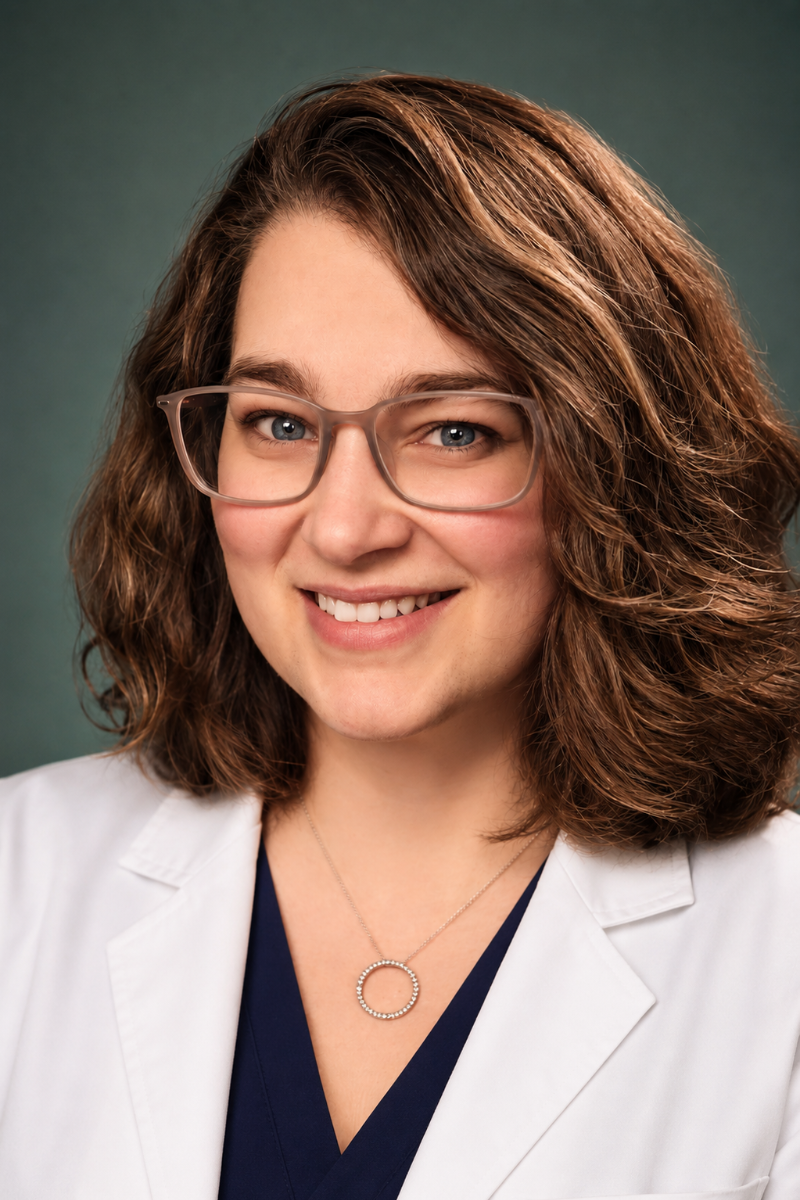 That same mindset led her to the University of Alabama at Birmingham's (UAB) Interdisciplinary Graduate Studies (IGS) program, where she found an opportunity to design an education that reflected the type of healthcare professional she aspired to become.
Today, Kocher serves as a Research Nurse Coordinator in UAB's Department of Nutrition Sciences while pursuing her Doctor of Nursing Practice (DNP) as a Family Nurse Practitioner student in the UAB School of Nursing. Looking ahead, she hopes to work as an advanced practice provider in a primary care setting before eventually returning to clinical research as an investigator or manager overseeing clinical trials.
"The IGS program gave me the opportunity to intentionally develop each of these areas and connect them into a single professional identity," Kocher said.
Kocher completed her Master of Science in IGS by combining graduate certificates in Leadership and Professional Development and Public Health.
Her decision to join the program came at a unique moment in its history.
"I was part of the inaugural IGS class," Kocher said. "The director of my leadership certificate program was instrumental in launching the new program and encouraged me to enroll."
Already interested in expanding her knowledge of public health, she immediately recognized the opportunity to combine disciplines in a way that aligned with both her professional goals and personal interests.
"As a member of the inaugural class, I also had the unique opportunity to help shape a program designed to break down traditional academic silos and encourage students to build an education around their individual goals," she said.
That flexibility quickly became one of the most impactful aspects of her graduate experience.
Through her leadership coursework, Kocher developed confidence in leading teams and navigating organizational change. Simultaneously, her public health coursework transformed how she understood healthcare access and population health.
More importantly, she discovered how these disciplines could work together.
"Leadership taught me how to guide people through change, while public health taught me how to identify the underlying factors that drive outcomes," Kocher said. "Together, they gave me a broader perspective on how to create meaningful and sustainable improvements for individuals and communities."
One experience, in particular, would leave a lasting impression.
For her capstone project, Kocher combined principles of design thinking, also known as human-centered design, with public health program development to create a framework for engaging stakeholders throughout the design process. That project fundamentally changed how she approaches problem-solving.
"Rather than assuming I know the solution, I learned to start by understanding the experiences, needs, and perspectives of the people I hope to serve," she said. “The project reinforced the idea that the people closest to a problem are often the ones best equipped to help design the solution.”
Although nursing already requires professionals to balance science, communication, advocacy, and critical thinking, Kocher says the interdisciplinary nature of the program pushed her to think even bigger.
"It challenged me to think beyond individual patient encounters and consider larger systems, populations, and organizational structures," she said. “As a result, I became more effective not only as a clinician, but also as a leader, collaborator, and problem-solver.”
That broader perspective ultimately transformed her approach to healthcare.
"My experience in this program helped me become the best version of myself, both personally and professionally," Kocher said. "It taught me how to identify a need, understand the people affected by it, and build meaningful solutions.
"Whether I am caring for patients, conducting research, or leading a team, those are skills I use every day."
Among the many lessons she learned, one skill stands out as especially valuable: conflict management.
"As both a nurse and a working professional, achieving any goal requires collaboration among many people with different priorities, personalities, and perspectives," Kocher said. "Sometimes the only way to move forward is through compromise."
The leadership training she received helped her recognize that conflict is not something to fear or avoid, but an opportunity for growth, innovation, and stronger collaboration.
Her public health education has also profoundly shaped the provider she is becoming. Kocher explains that health outcomes are often determined long before a patient enters a clinic.
"No one can focus on taking medication if they cannot afford it. No one can make meaningful changes to their diet or lifestyle if they do not have stable housing or are struggling to decide which bills to pay each month," she said.
That understanding has become central to her philosophy of care.
"The program taught me that healthcare does not begin when a patient walks into a clinic," Kocher said. "It begins with the conditions in which they live, work, learn, and raise their families."
Working alongside students and faculty from different disciplines only reinforced the value of collaboration.
"Diversity of thought is incredibly powerful," she said. "The strongest solutions rarely come from a single discipline. They emerge when people with different expertise, experiences, and perspectives work together toward a common goal."
Looking back, Kocher says one of the biggest surprises was how meaningful the experience ultimately became.
"There are many graduate programs where you simply complete requirements and check boxes," she said. "This program challenged me to be intentional about my growth and to design an education that reflected both my personal values and professional aspirations."
For anyone considering an interdisciplinary graduate degree, her advice is simple: embrace the opportunity to create something uniquely your own.
"The greatest value of the program is not simply the degree itself," Kocher said. "It is the opportunity to intentionally build an education around the person and professional you want to become."