By: Jenny Douglas
Faculty members were honored with the 2026 UAB Graduate Dean’s Excellence in Mentorship Award on April 15 at the UAB National Alumni Society House. This annual award recognizes six full-time, regular UAB faculty members who have demonstrated exceptional accomplishments as mentors of graduate students and postdoctoral fellows.
The first Dean’s Excellence in Mentorship Awards were presented in 2008. Since its inception, more than 200 faculty members across campus have received this honor.
This year, the selection committee reviewed 15 nominations and selected six faculty members to receive this prestigious honor. In making its decisions, the committee carefully evaluated the qualities that define exceptional mentorship.
Awards are based solely on demonstrated excellence in mentoring, as evidenced by one or more of the following:
- Inspiring and motivating students and postdoctoral fellows in the pursuit of research, grant funding, and scholarly publication
- Promoting the highest standards of ethical conduct and professional integrity
- Fostering a collaborative, inclusive, and intellectually stimulating training environment
- Cultivating a commitment to lifelong learning and continuous professional development
- Supporting mentees’ individual career goals with openness, respect, and adaptability Serving as an exemplary role model through excellence in scholarship, service, and leadership
“Mentorship plays an essential role in academic and professional development. Outstanding mentors provide guidance, inspiration, encouragement, and support to their mentees at every stage of training. This responsibility is among the most meaningful contributions our faculty make, with a lasting and significant impact,” said David A. Schneider, PhD, Interim Dean of the Graduate School.
“We are proud to honor and celebrate the exceptional mentors who received this year’s award.”
Award winners received a crystal trophy and a copy of the nomination letters submitted by their mentees and colleagues.
2026 Graduate Dean’s Excellence in Mentorship Award Recipients
 Melissa Harris, Ph.D. – College of Arts and Sciences
Dr. Melissa L. Harris is an Associate Professor in the Department of Biology at UAB and currently serves as Graduate Program Director. Her research focuses on stem cell biology, aging, and pigmentation, using melanocyte stem cells and hair graying as a model to understand the cellular mechanisms that drive tissue aging. Beyond her scientific contributions, Dr. Harris is a dedicated and compassionate mentor who has trained 31 undergraduate, postbaccalaureate, graduate, and postdoctoral researchers. Notably, 20 of these trainees are women or individuals from groups underrepresented in STEM, reflecting her strong commitment to inclusive mentorship and expanding opportunities in science.
One of her nominators stated, “A hallmark of Dr. Harris’s mentorship is her ability to inspire students to pursue ambitious research goals while providing the guidance needed to achieve them. Her trainees regularly present their work at national and international conferences and have received numerous awards and fellowships. This success reflects Dr. Harris’s dedication to helping trainees develop strong research skills, competitive grant proposals, and high-quality publications."
Nicholas Lennemann, Ph.D. – Heersink School of Medicine
Dr. Nicholas Lennemann is an Associate Professor in the Department of Microbiology at UAB. His laboratory integrates molecular virology and cell biology approaches to investigate the mechanisms underlying RNA virus infection. Over the course of his career, Dr. Lennemann has contributed to 26 publications and has received federal funding through the NIH, including a Ruth L. Kirschstein Individual Postdoctoral Fellowship, a K22 Career Transition Award, and an R35 MIRA Award. As an academic researcher, he is deeply committed to mentorship and education, particularly in shaping the early development of trainees and students. He has mentored four PhD trainees in his laboratory, the first of whom graduated in 2025.
A nominator remarked, “Dr. Lennemann’s guidance has been the single most important factor in my success, shaping me from a student with limited research experience into a confident and capable scientist. Under his tutelage, I excelled through the graduate program and successfully earned my Ph.D. in May of 2025. Because of Dr. Lennemann’s dedication to my development, I now have the privilege to proudly serve as a microbiologist in the U.S. Navy.”
 Jennifer Kilgo, Ph.D. – School of Education and Human Sciences
Dr. Jennifer Kilgo is a University Professor of Early Intervention/Early Childhood Special Education at UAB. She developed a nationally recognized interdisciplinary personnel preparation program serving children from birth to age five with disabilities and their families, collaborating across education, physical therapy, and occupational therapy.
In 1998, she secured UAB’s first federally funded personnel preparation grant for Project TransTeam and has maintained continuous funding for 27 years. With more than $10 million in funding and over 500 graduate students receiving scholarships across disciplines, Project TransTeam reflects her leadership and lasting impact as a mentor at the master’s and doctoral levels.
One of her nominators said, “Beyond the classroom, Dr. Kilgo is an inspiring mentor who actively engages graduate students in research, community projects, conference presentations, and publication opportunities. She models ethical practice, professionalism, and lifelong learning. Her accessibility, fairness, and genuine investment in each student foster an environment in which aspiring professionals thrive. Her mentorship extends well beyond graduation, as she continues to guide graduates in securing employment, advancing their credentials, and growing as leaders in the field.”
Vinoy Thomas, Ph.D. – School of Engineering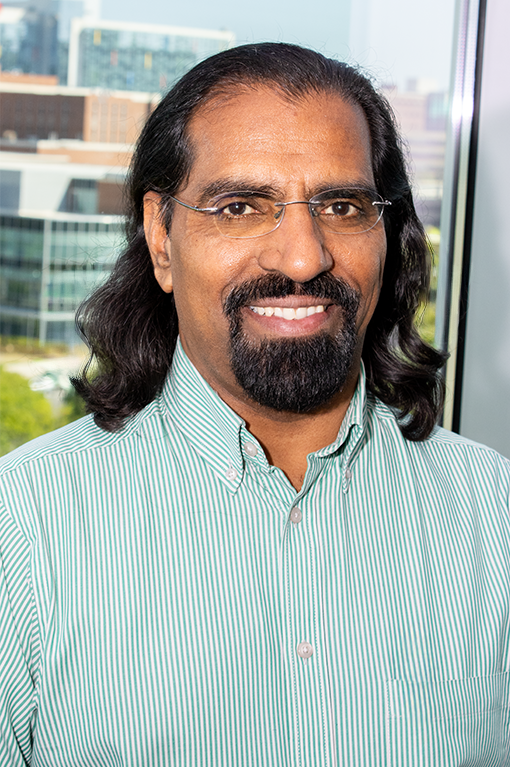
Dr. Vinoy Thomas is an Associate Professor and Graduate Program Director at the Department of Mechanical and Materials Engineering at UAB. He has published more than 100 peer-reviewed articles, authored over two dozen book chapters, and co-edited three books. A life member of the Alabama Academy of Sciences and its former president, he serves on the editorial boards of several journals in polymers, nanotechnology, biomaterials, tissue engineering, and materials science.
Dr. Thomas has mentored students from K–12 through postdoctoral levels, including nine PhD students, 26 master’s students, 57 undergraduates, and nine high school students, and has co-advised three additional PhD students. His mentees have received major honors, including Outstanding Graduate Student awards and federal fellowships from NSF, NASA, and NIH. Beyond his direct mentorship, he has contributed to more than 50 dissertation committees across UAB and other Alabama institutions, supporting students in engineering, physics, dentistry, and public health.
One of his nominators shared, “Beyond the classroom, Dr. Thomas actively creates opportunities for students to grow through outreach and mentorship activities. He regularly involves his research group in initiatives such as the McWane Science Center outreach events, Society of Plastic Engineers UAB chapter industrial visits, the NSF Research Experiences for Undergraduates (REU) program, and the CORD program for high school students. Through these programs, I had the opportunity to mentor CORD students, which strengthened my leadership and mentoring abilities. These experiences highlight Dr. Thomas’s philosophy that mentorship extends beyond research training and should inspire the next generation of scientists.”
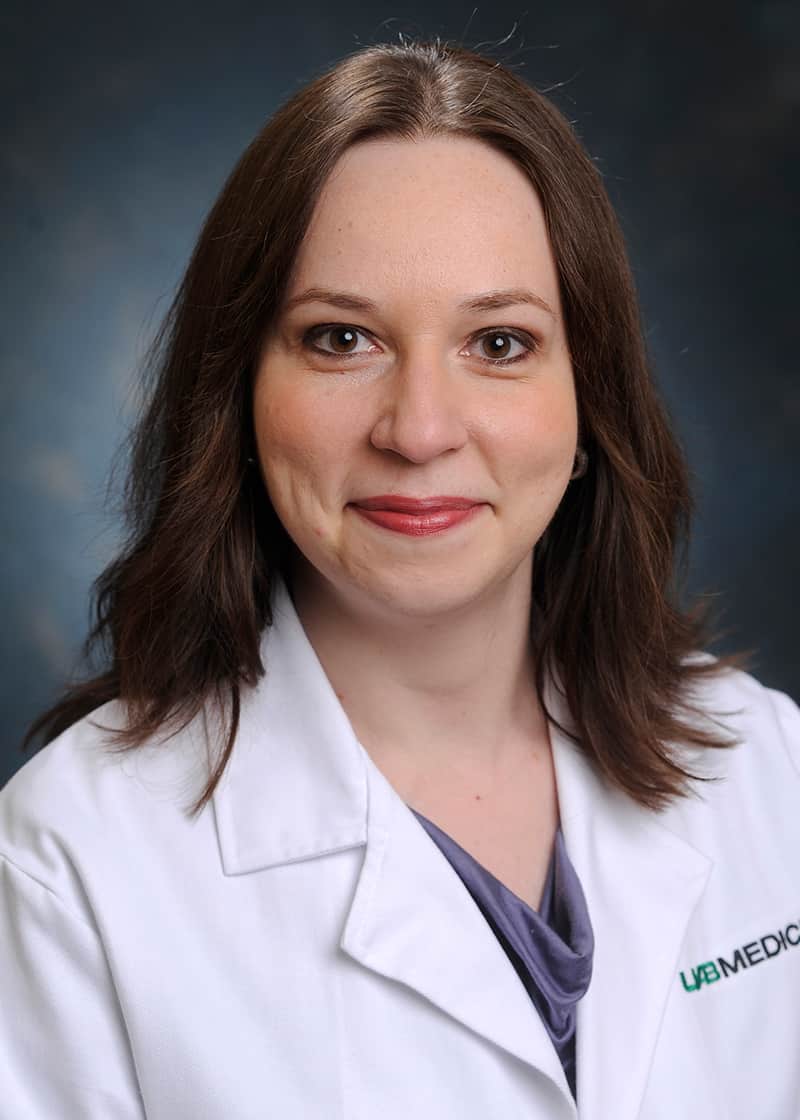 Christina Muzny, MD, MSPH – Heersink School of Medicine
Dr. Christina Muzny is a Professor in the Division of Infectious Diseases, with secondary appointments in Epidemiology and Obstetrics & Gynecology at UAB. Her clinical and research focus is on HIV and sexually transmitted infections, particularly vaginal infections such as bacterial vaginosis and trichomoniasis.
Dr. Muzny leads NIAID-funded research on the pathogenesis of bacterial vaginosis and optimal treatments for trichomoniasis in women and men. She serves as Medical Director of the UAB Vaginitis Clinic and Sexual Health Research Clinic, and as Chair of the UAB Institutional Review Board. She has mentored more than 30 trainees, including medical students, graduate students, postdoctoral scholars, residents, and fellows. Her mentees have earned competitive awards such as K23 career development funding, F31 fellowships, and research fellowships from the American STD Association.
One of her nominators wrote, “Dr. Muzny’s mentorship is student-centered. She takes the time to understand each trainee’s goals, strengths, and challenges, tailoring her guidance to support individual development. She creates an environment where questions are welcomed, ideas are thoughtfully considered, and growth is celebrated. Her mentorship does not end at the task level because she invests in the long-term success and well-being of every student she works with.”
Jason Warram, Ph.D. – Heersink School of Medicine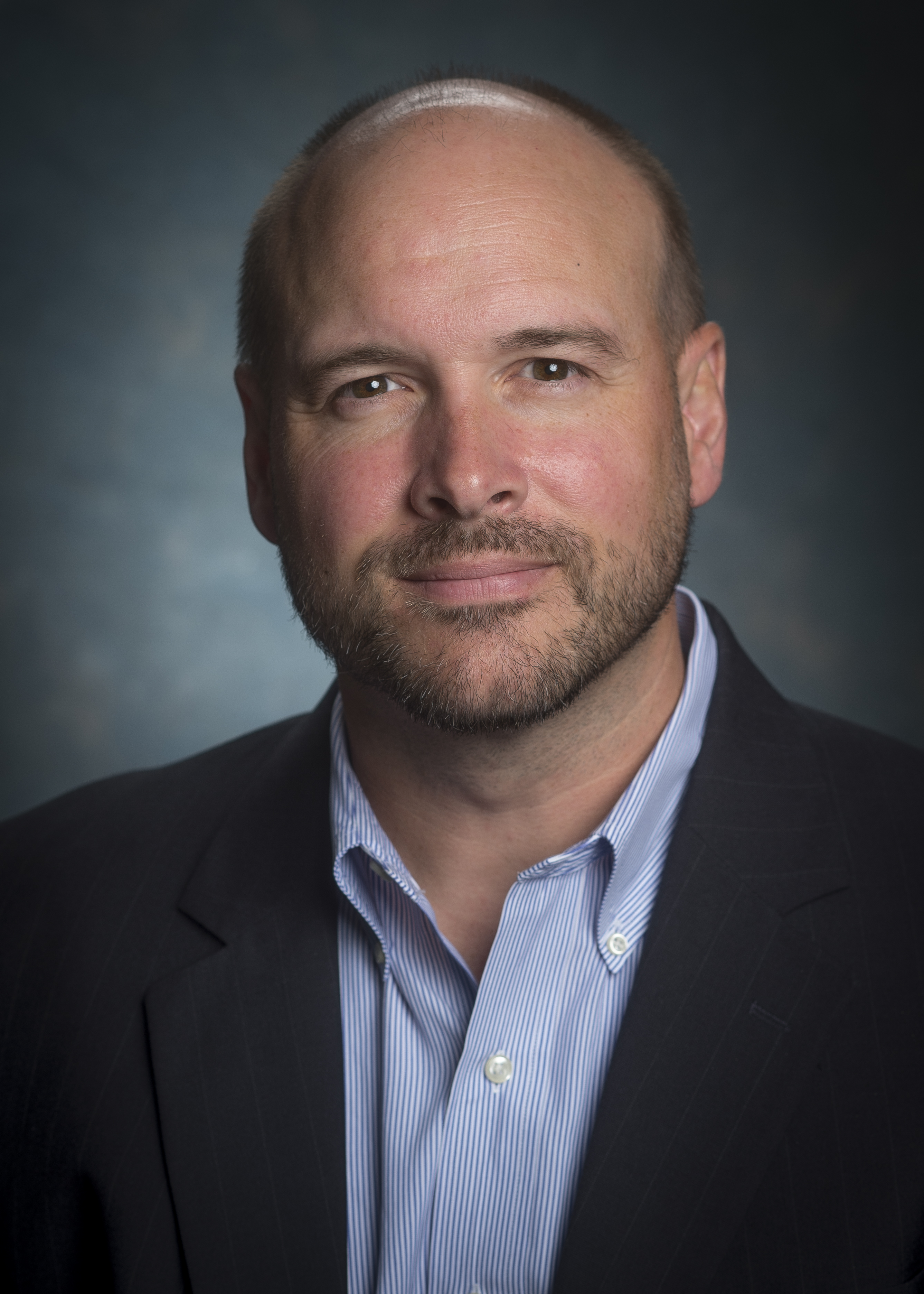
Dr. Jason Warram is a Professor in the Department of Otolaryngology, with secondary appointments in the Departments of Surgery and Radiology at UAB. He also serves as an associate scientist at the O’Neal Comprehensive Cancer Center.
An internationally recognized leader in fluorescence-guided and molecular imaging for cancer surgery, his research focuses on improving intraoperative tumor detection and surgical margin assessment through preclinical models, biomarker validation, and clinical translation. His work has advanced precision surgical oncology, particularly in head and neck cancer, and is supported by competitive funding, including multiple NIH awards. Dr. Warram is also a dedicated mentor, training undergraduate, medical, graduate, and postdoctoral scientists. His trainees have gone on to earn competitive fellowships, academic positions, and leadership roles in translational cancer research
One of his nominators said, “Dr. Warram possesses remarkable perseverance, consistently pushing through research challenges with determination and focus. His strong commitment to his mentees is evident in the time and energy he invests in each individual. He is deeply inquisitive, always encouraging critical thinking, innovative approaches, and a genuine curiosity about science. Above all, he is compassionate and kind—a rare combination in high-pressure academic environments. These qualities created a supportive lab culture where students felt valued and empowered to succeed.”