 Congress established the EPSCoR program to ensure that research universities in all states participate in and benefit from Federal science and technology activities. Although EPSCoR states have 20% of the nation's population, and close to 25% of its doctoral research universities, these states only receive about 10% of the Federal research outlays. EPSCoR provides a mechanism to address these geographical imbalances. The program has been a huge success—investments have generated growth in state economies, attracted students into STEM fields, and created a broader base of research expertise available to the agencies to meet their missions.
 Professor Chris Lawson Testifies to the House Committee on Appropriations Subcommittee on Commerce
Faculty Excellence
CAS News
April 22, 2012
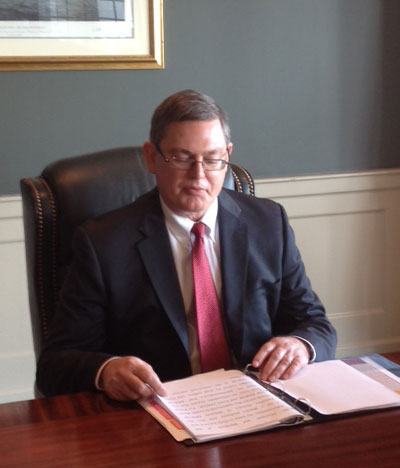
On behalf of the EPSCoR/IDeA Coalition Dr. Christopher M. Lawson from the University of Alabama at Birmingham testified in front of the House Committee on Appropriations Subcommittee on Commerce, Justice, Science and Related Agencies on March 22, 2012.
Congress established the EPSCoR program to ensure that research universities in all states participate in and benefit from Federal science and technology activities. Although EPSCoR states have 20% of the nation's population, and close to 25% of its doctoral research universities, these states only receive about 10% of the Federal research outlays. EPSCoR provides a mechanism to address these geographical imbalances. The program has been a huge success—investments have generated growth in state economies, attracted students into STEM fields, and created a broader base of research expertise available to the agencies to meet their missions.
Congress established the EPSCoR program to ensure that research universities in all states participate in and benefit from Federal science and technology activities. Although EPSCoR states have 20% of the nation's population, and close to 25% of its doctoral research universities, these states only receive about 10% of the Federal research outlays. EPSCoR provides a mechanism to address these geographical imbalances. The program has been a huge success—investments have generated growth in state economies, attracted students into STEM fields, and created a broader base of research expertise available to the agencies to meet their missions. More News
-
 Seventeen CAS faculty members receive promotionsThe College of Arts and Sciences is proud to announce that 17 faculty members across 12 departments have been awarded promotions (including four faculty members who also were awarded tenure).
 -
 CAS launches new Religious Studies minor to help students understand religion’s role in the worldFrom art and politics to history and culture, religion touches nearly every aspect of human life. A new minor in Religious Studies within the College of Arts and Sciences will give students a scholarly way to explore those connections and better understand the role religion plays in the world around them.
 -
 Oct. 14-18, UAB Theatre kicks off season of power plays with “We Are Proud to Present”This meta-theatrical drama by Jackie Sibblies Drury tells the story of six actors wrestling with the history of colonial genocide in Namibia and its impact on human relations in the present day.